





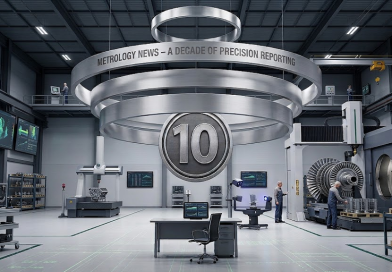


Latest Metrology News View All Posts
Featured Stories View All Posts

General Announcements View All Posts

Sponsored Video

Machine Tool Volumetric Error Compensation
API’s Active Target and Radian Pro laser tracker work together to capture the data needed for volumetric error compensation. Using Freeform point capture, the Active Target is moved throughout the machine’s working volume while the Radian Pro precisely tracks its position, collecting data that reveals positioning errors and geometric inaccuracies across the machine’s workspace.
Editors Choice View All Posts

Coordinate Measuring Machines View All Posts
Smart Manufacturing View All Posts



Automated Robotic Metrology View All Posts


Sponsored Video
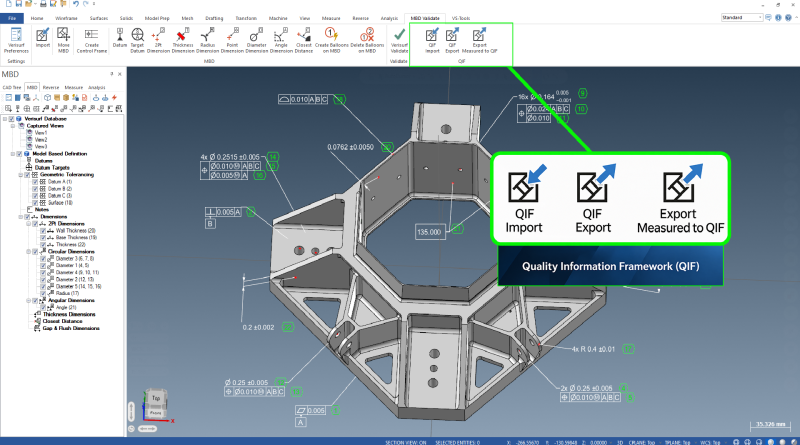
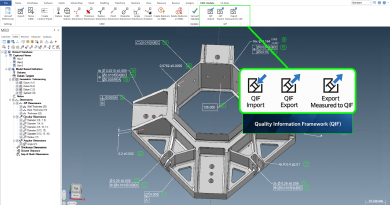
Verisurf 2027 Feature Highlight – QIF Inspection Workflow
Verisurf 2027 expands Model-Based Inspection with support for Quality Information Framework (QIF), connecting engineering-defined inspection requirements with inspection planning, measurement, and results. Using engineering requirements contained within the QIF file.
Portable Metrology View All Posts
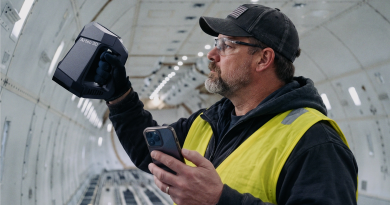
Optical & Video Metrology View All Posts
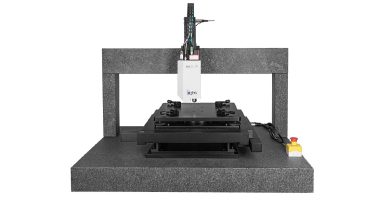
GBS Metrology Introduces Configurable Optical 3D Profilometer Systems
GBS metrology, a supplier of optical 3D sensors based on white light interferometry (WLI), also known as coherence scanning interferometry (CSI), is expanding its portfolio of complete optical 3D profilometers.


Computed Tomography View All Posts
Software View All Posts
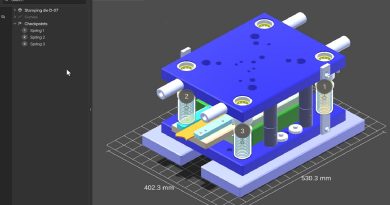
SuPAR Enhances Augmented Reality Inspection with New AI Capabilities
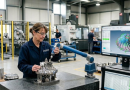
SuPAR has announced its 2026 release, expanding its augmented reality quality inspection platform with new capabilities for collaboration, guided inspection, AI-supported checks and documentation.

Sensors View All Posts
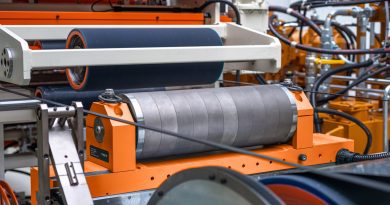
REDEX Advances Metal Strip Flatness Measurement and Control
REDEX USA has announced its Unflatness Measurement System PRO, designed to improve flatness measurement and control in metal strip processing through a combination of high- and low-tension measurement technologies.



Machine Vision View All Posts

Artificial Intelligence View All Posts

Text Fidelity in Processed Images: Why an Independent Reference Matters
In “AI Inspection Needs A Disagreement Audit Before Quality Teams Scale It” (Metrology News, 15 September 2026), Gleb Tsipursky argues that quality leaders should “measure disagreements between automated inspection and qualified human judgment before reducing human review”. Our case is small and sits outside the factory, but the principle carried over directly: an automated result is only as trustworthy as the independent reference it has been checked against.



Additive Manufacturing View All Posts

Application Stories View All Posts
Robot-Mounted 3D Inspection Combines DepthScan Imaging with PolyWorks Measurement
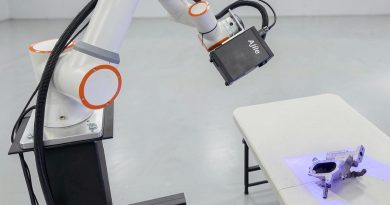
A solution combining the Ajile DepthScan 3D Imager with PolyWorks inspection software uses robot positioning to capture features from multiple viewing angles, then measures the resulting point cloud against CAD models and engineering drawings.

3D Scanning Streamlines Inspection of Complex Fabricated Assemblies
T3DMC assessed TBI’s need for faster tooling and component validation, portable measurement and more efficient reporting. Drawing on its experience of industrial scanning and inspection applications, the team recommended combining the NimbleTrack Gen2 E wireless 3D scanner and probe with PolyWorks to connect shop-floor data capture with CAD comparison and shareable inspection results.
HBK Launches Inline Acoustic Testing System for Tapered Roller Bearings
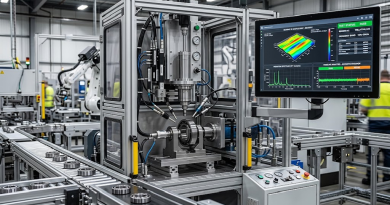
Designed for inline use within production, and based on Discom’s HBK OrbitSync technology, the system runs before the bearings are installed in a gearbox or E Drive. Tapered roller bearings are used to carry combined radial and axial loads in electric drives, multi-speed gearboxes and high-speed motors.
Turning In-Situ AM Monitoring into Production Intelligence
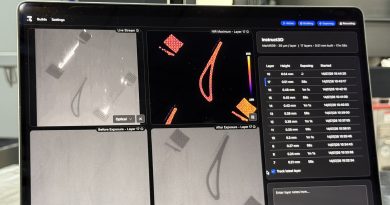
As metal additive manufacturing moves deeper into production environments, the industry’s quality challenge is changing. Manufacturers are no longer asking simply whether in-situ monitoring can capture process data. They are asking whether that data can help accelerate qualification, reduce inspection burden, and support more confident production decisions.
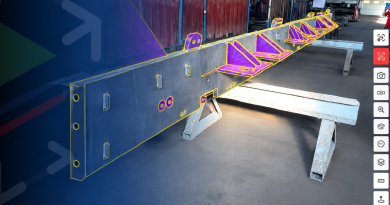
AR-Based Visual Inspection for Heavy Fabrication and Welded Structures
In heavy fabrication environments, quality inspection often involves large welded structures with multiple features that must be checked against engineering requirements. Accessing the correct reference information, verifying structural details, and documenting findings consistently can become especially challenging when inspection is performed directly in the welding or production area.

AI-Based Inspection Detects Surface Defects on Highly Reflective Components
Metallic, highly reflective surfaces are among the most challenging objects to inspect in machine vision applications. Reflections obscure details, defects often only become apparent from certain angles, and the quality of manual visual inspections varies throughout the working day.

Augmented Reality Transforms Visual Quality Inspection at MAFO
MAFO Systemtechnik AG, a specialist in contract manufacturing and integrated production processes, has introduced Visometry’s Twyn augmented reality (AR) solution for visual quality inspection. The technology enables employees to compare physical components directly with their CAD data, helping the company reduce inspection times, identify more deviations and simplify quality documentation.
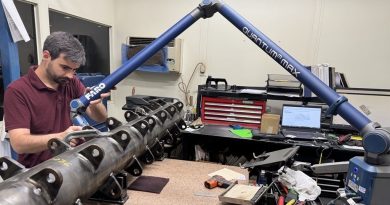
Quality Manufacturing Corporation Transforms Its 3D Inspection Data into Practical Insights
Quality and inspection specialists on the production floor apply Advanced Product Quality Planning (APQP) for new parts, which includes evaluating manufacturing capabilities, identifying and managing potential risks, and ensuring control over critical product features.
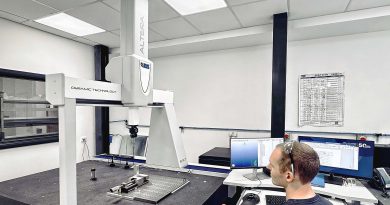
CMM Transforms Quality and Raises Productivity 30 Percent
The company invested in a bridge-type Altera C 15.9.7 CMM from LK Metrology, together with the supplier’s CAMIO 2026 software. The quality department at DWS uses the CMM to verify dimensional accuracy before components proceed to production or spares are dispatched to customers, providing confidence that every component conforms to specification.

High-Speed X-Ray Reveals EV Battery Failure in Real Time
Highly dynamic X-ray technology reveals what happens inside large battery cells in fractions of a second under load – accelerating the development of safer next-generation cells for the European automotive industry.
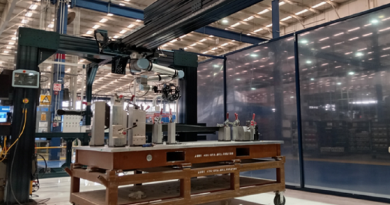
Automated Scanning Cuts Large-Part Inspection Times
Conmed Labmet, based in Mexico, is developing a new generation of automated dimensional inspection systems designed to address one of the most persistent challenges facing automotive and other high-volume manufacturers: the rapid measurement of large components.

Siemens Energy Enhances Visual Inspection and Quality Control with Augmented Reality
Siemens Energy is advancing its digital transformation in quality assurance by integrating SuPAR, an Augmented Reality (AR)-based inspection solution, into selected visual inspection and quality control processes.