China Unveils National Roadmap to Strengthen AI Metrology Capabilities
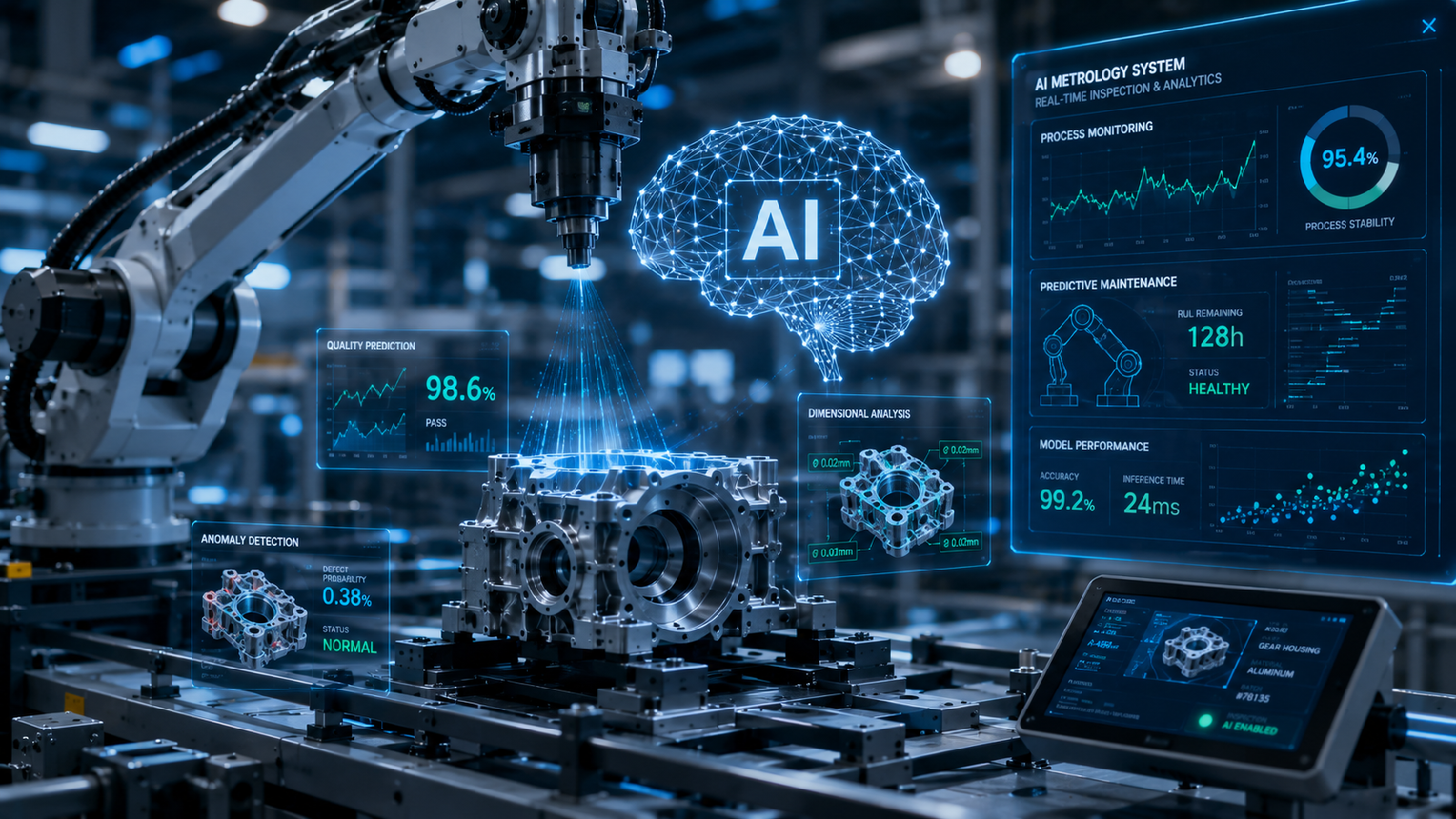
China has taken another significant step in its artificial intelligence strategy with the release of a national roadmap aimed at strengthening AI metrology capabilities—an emerging field focused on the measurement, evaluation, verification, and standardization of AI systems. The new guideline, jointly issued by China’s State Administration for Market Regulation (SAMR) and the National Development and Reform Commission (NDRC), outlines a comprehensive framework for developing an AI metrology system and enhancing the country’s capacity to assess and regulate AI technologies.
The initiative reflects Beijing’s growing emphasis on AI quality, reliability, and governance as the technology becomes increasingly integrated into economic and industrial development. According to SAMR, the roadmap signals a shift in China’s AI strategy from a primary focus on expanding computing power and model scale toward improving foundational capabilities and ensuring the trustworthy deployment of AI systems.
Building the Foundations of AI Measurement
Metrology—the science of measurement—has long played a crucial role in manufacturing, engineering, and quality control. Applying these principles to artificial intelligence presents new challenges, particularly as advanced AI models often operate as complex “black boxes” whose decision-making processes can be difficult to interpret or verify.
The newly released guideline focuses on six major areas: foundational support, general technologies, core technologies, metrological technical standards, the metrology service industry, and the intelligent empowerment of metrology itself. Together, these pillars are intended to create a systematic framework for measuring AI performance, reliability, safety, and effectiveness across different applications.
Industry observers note that AI metrology could become increasingly important as governments and businesses seek standardized methods to evaluate AI systems. Such standards can help ensure that algorithms are measurable, comparable, traceable, and verifiable – qualities that are essential for deploying AI in critical sectors such as healthcare, transportation, and manufacturing.
Supporting China’s ‘AI Plus’ Strategy
The roadmap aligns closely with China’s broader national development agenda. The country’s 15th Five-Year Plan (2026–2030), released earlier this year, places strong emphasis on the ‘AI Plus’ initiative, which seeks to accelerate the adoption of AI across industries and public services.
By creating a robust measurement and standards infrastructure, policymakers aim to facilitate the deeper integration of AI into the real economy. Chinese authorities have argued that improving AI quality and trustworthiness will help drive what they describe as ‘new quality productive forces’ – advanced technologies and industries expected to support future economic growth.
The initiative also supports China’s broader push for technological self-reliance amid intensifying global competition in advanced technologies. Analysts suggest that establishing domestic AI evaluation frameworks and technical standards could reduce dependence on foreign benchmarks while increasing China’s influence in shaping international AI governance.
Implications for Industry and Global AI Governance
The roadmap’s significance extends beyond technical measurement. Standardization frameworks often influence how technologies are developed, certified, and adopted across markets. By investing early in AI metrology infrastructure, China is positioning itself to play a larger role in defining how AI systems are evaluated and regulated.
The guidelines are also expected to support the creation of high-quality reference datasets, testing environments, and research centers dedicated to AI measurement and certification. Such infrastructure could accelerate the deployment of AI in strategic sectors while helping address concerns related to reliability, transparency, and safety.
As governments worldwide grapple with the challenge of regulating rapidly evolving AI technologies, China’s latest move highlights a growing recognition that measurement and standards may become as important as breakthroughs in algorithms or computing power. Whether the country’s AI metrology framework will influence international standards remains to be seen, but the initiative underscores an emerging global trend: the race to build not only more powerful AI systems, but also the tools needed to measure and govern them effectively