Uncovering Composite Damage Beneath the Surface
Drop towers are a crucial tool for materials engineers testing for repeatable composite damage. As the use of advanced composites continues to grow across industries, reliable methods of assessing impact resistance have become increasingly important. In this article, Stephanie Williams, senior product specialist at composites testing instrumentation manufacturer Instron, explains how drop towers are key to Compression After Impact (CAI) testing.
Investigating a composite’s condition is difficult because it is difficult to know where the damage has occurred. CAI testing allows engineers to learn how and where the damage is situated, avoiding potential real-world accidents.
Automotive, aerospace and defence are just a few of the industries that use CAI testing for testing composites. Drop towers, also known as drop weight impact testers, aid the CAI testing process because they measure and evaluate where the damage starts, how it is initiated and the severity of the impact.
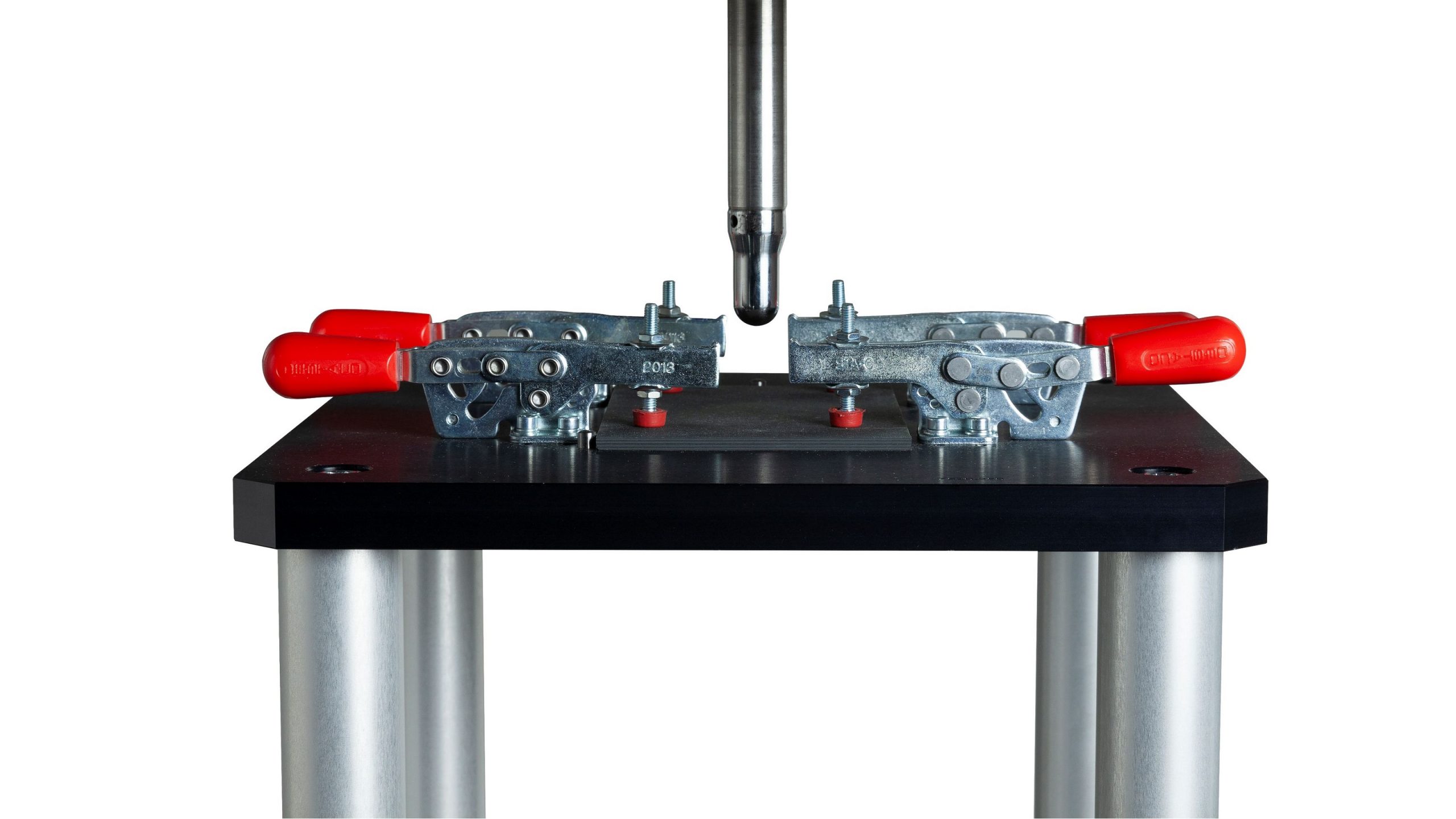
CAI testing typically involves a two-stage process. This enables engineers to assess potential composite damage in panels. The first step involves using an impact drop tower to cause Barely Visible Impact Damage (BVID) on the panel, followed by a compression test. This test uses an electromechanical testing unit that measures the composite’s strength after being damaged by the impact event.
CAI testing is not about how strong a composite is but how the damage develops internally. The most important things to consider with this kind of test are where the first crack originates, the load or energy level of the crack and how the internal damage spreads over time.
In a typical scenario, you can have a panel that visually looks fine, but internally, has significant damage. For materials engineers, the most dangerous composite damage is the damage you can’t see. With CAI testing, the goal is creating a very specific, repeatable damage state for the material being tested.
Let’s take an aircraft wing skin for example. Visually inspecting composite damage isn’t always easy for engineers. On the outside, the wing skin may look undamaged at first, but by looking more closely, internal damage can be found, weakening the structure of the composite.
Just because the damage isn’t visible, it doesn’t mean it isn’t there. Furthermore, that internal damage can impact the compressive strength of the composite’s structure.
Why are drop towers essential to achieving CAI standards?
The aerospace industry is bound by standards that were created as the result of numerous failures that have happened in real world scenarios. The standards are very specific about the fixture, mass, geometry and how the impact is delivered for the composite.
In December 2025, Airbus had to inspect ‘as many as 600 planes’ to review a ‘supplier quality issue with metal panels’ on their aircraft, as reported on BBC News. The metal plates were located at ‘the front of the aircraft’ and found to be ‘overly too thick or too thin’. This example highlights the commercial and reputational risk of insufficient testing during component design.
Historically, aerospace companies had their own internal standards, but a lot of those have now been rolled into American Society for Testing Materials (ASTM) standards, like ASTM D7136.
As explained by the ASTM, the ASTM D7136 standard outlines the impact test, the evaluation and documentation of impact damage post-test. The ASTM specifies the test format for this method, using “a flat, rectangular composite plate, previously subjected to a damaging event” that is “tested under compressive loading using a stabilisation fixture.”
The International Organization for Standardization (ISO) has a standardised test method for CAI testing called ISO 18352:2009. The ISO 18352:2009 method is “suitable for continuous-fibre-reinforced polymer matrix composites”.
The standard also outlines that it’s limited to “fibre-reinforced plastic laminates with multidirectional reinforcements manufactured from unidirectional prepreg tapes/fabrics or woven fabrics.”
One Instron customer worked with a renowned global aerospace company, designing a carbon fibre component to help the OEM reduce weight. Aerospace manufacturing giants like Boeing and Airbus are known to be very strict about component specifications, with every fixture being created from steel.
In that instance, when an inspector came in, the customer was told its self-designed setup didn’t meet the required CAI testing standard. Moving to a professionally manufactured and installed drop tower with the correct fixtures made it easier to demonstrate compliance.
In the aerospace industry, you must repeat the damage state with the panels reliably, shift after shift. Drop towers make it easier to achieve CAI standards because having a system that controls the impact energy, fixture, mass and height removes the variability that the standards are trying to eliminate.
Improper CAI Testing and Loss of Customer Trust
Choosing the right materials testing equipment is key for performing gold standard CAI tests. Users want reassurance that the unit delivers consistent CAI testing for composites. Using gold standard CAI testing units means delivering composite tests that exceed expectations for both users and customers.
 An improper CAI test with a drop tower leads to a loss of customer trust. If the customer doesn’t trust how the damage was introduced, then they are likely not to trust the compression data that comes from it.
Improvising CAI testing from a drop tower can undermine customer confidence, even if the results look good. Even if the engineer thinks they are doing everything right, if the impact setup is not controlled, the user will question the legitimacy of the results.
The end user wants to know how the composite damage was created in the drop tower and not just the outcome value of the test. This trust must be earned, because not reproducing the same damage state reliably makes it harder to obtain consumer confidence.
When the end user questions a set of CAI test results, it makes it difficult to move a programme forward, particularly for electronics, construction, sports equipment, aerospace and automotive companies.
Why CAI Testing Matters
In the real world, things get dropped, things get hit and composites get damaged. CAI testing should be designed for this reality, not ideal, accident free, conditions. Failing to assume that impact damage will happen leads to a lack of understanding about how and why composites get damaged.
Drop tower testing offers a controlled way to understand what happens to a composite structure after it has been impacted. Knowing how CAI testing works when designing composites is key for recognising how they behave when it is damaged.
Instron’s range of drop tower machines are built to test the damage of composites, including plastics and light alloys. Materials engineers with research and development teams can ensure composite panels meet CAI testing compliance requirements.
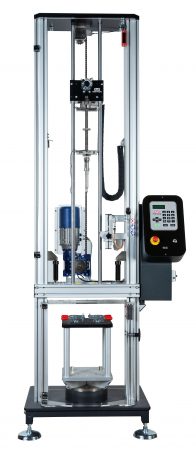
The Instron 9400 series of drop tower testing units are designed for handling highly demanding analysis for materials and composites. Every 9450 unit comes with high-speed cameras and extra wide test chambers, ensuring users don’t miss an impact test event.
For more information: www.instron.com
Author: Stephanie Williams has almost 40 years’ experience working in impact testing for materials and composites and has provided technical and application support for Dynatup and now Instron as a Senior Product Specialist.