Augmented Reality Transforms Visual Quality Inspection at MAFO
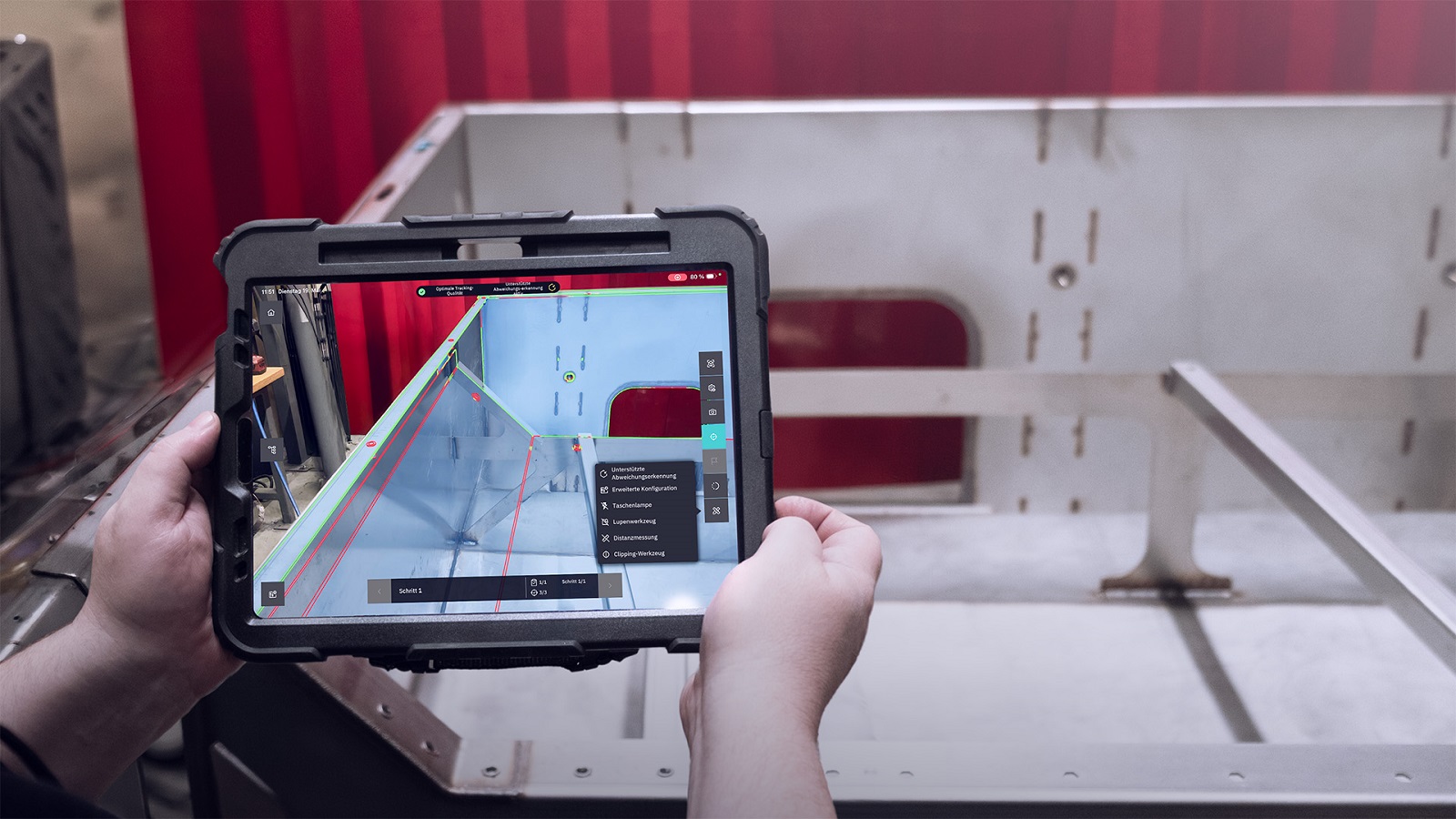
MAFO Systemtechnik AG, a specialist in contract manufacturing and integrated production processes, has introduced Visometry’s Twyn augmented reality (AR) solution for visual quality inspection. The technology enables employees to compare physical components directly with their CAD data, helping the company reduce inspection times, identify more deviations and simplify quality documentation.
MAFO provides customers with a complete manufacturing process from a single source, covering everything from design and production through to the assembly of complete modules and systems. The company combines foundry operations, welding, machining, painting and assembly under one roof, producing a wide range of components and assemblies for a variety of industries.
Its portfolio ranges from small precision components to welded structures several metres in size. However, small production batches, a high level of product variety and frequently changing products make it difficult to standardise inspection processes in the same way as would be possible in high-volume production.
Augmented Reality Streamlines Quality Inspection
 The company’s high level of vertical integration and wide range of products place particular demands on its quality assurance processes. Before introducing Twyn, visual quality inspections involved comparing physical components with CAD models displayed on a computer. Where necessary, inspectors also referred to 2D drawings.
This required inspectors to continually switch their attention between the physical component, computer screen and technical drawing. For complex assemblies and fabricated welded structures in particular, the visual inspection process could be time-consuming.
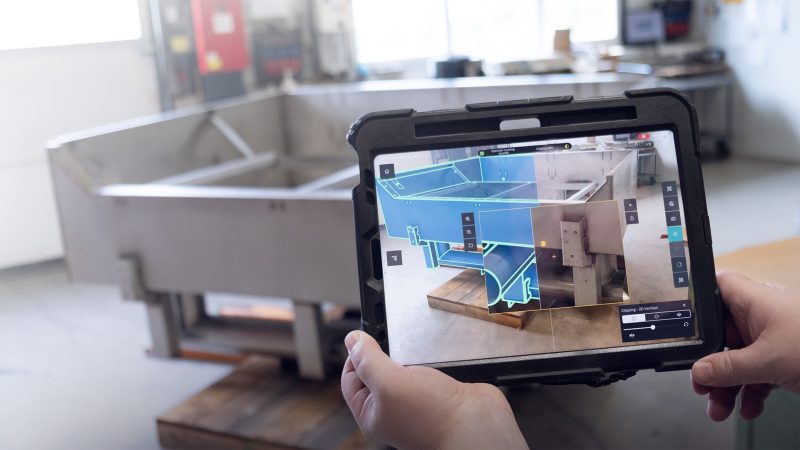
With Twyn, MAFO has reduced inspection times by enabling employees to carry out the visual comparison directly on a single iPad, eliminating the need to repeatedly move between the component, computer display and drawing.
“Employees understand Twyn within about 30 minutes and can practically start working with it immediately. This is one of the reasons why Twyn has become an integral part of our daily quality inspection,” said Manuel Mayer, Director of Quality, MAFO Systemtechnik AG.
MAFO now uses Twyn for a range of visual quality inspection processes, including operator self-inspection during production, incoming inspection of sheet-metal and welded components, outgoing inspection and first-article inspection.
Using Visometry’s AR technology, quality inspectors perform the visual comparison on an iPad, directly comparing physical components with their CAD data. Twyn overlays the digital twin onto the physical component in real time.
“The real added value comes from the overlay. It allows deviations to be identified immediately – quickly and easily,” explained Mayer.
Complementing Precision Metrology
Twyn complements MAFO’s existing dimensional measurement systems. High-precision measurements of characteristics such as concentricity, parallelism and form and positional tolerances continue to be performed using coordinate measuring machines (CMMs).
Twyn is instead used where rapid visual quality inspection provides the greatest benefit. Applications include checking for missing components, incorrectly positioned welded parts and obvious deviations from the CAD model.
The technology also helps inspectors determine whether a component requires further, more detailed inspection using a CMM.
Faster Inspection and Reduced Costs
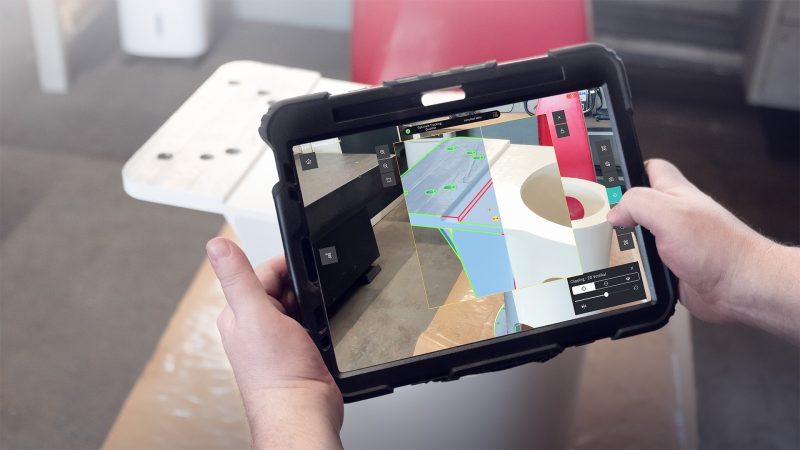 Twyn delivers particular benefits when inspecting complex assemblies, large components and welded structures manufactured externally. The system helps quality inspectors identify potential problems at an early stage, including whether threads are present, welded components have been correctly positioned and individual components are missing.
The components inspected by MAFO range from just a few centimetres to several metres in size. For large components, Twyn enables inspection to be carried out directly on the production floor, eliminating the need to transport components to a separate inspection area.
At the same time, MAFO is able to identify more defects than previously. Deviations that might not yet have affected production can be detected at an early stage and addressed proactively. This can reduce both rework and transportation costs.
Twyn has also simplified the documentation of quality inspections. With MAFO’s high level of product variety, inspection checklists would continually become more extensive as new products and inspection requirements were added. Instead of continually expanding its checklists, the company can now document that a CAD-based visual quality inspection has been performed.
According to MAFO, the combination of faster inspection, earlier detection of deviations, reduced transportation and rework costs, and simplified documentation has made Twyn an important part of its quality assurance processes.
The company is continuing to use the technology across multiple stages of its manufacturing operation, from operator self-inspection through to first-article inspection.
For more information: www.visometry.com