Advances in Humanoid Robot Sensing Highlighted at Automate 2026
At Automate 2026 in Chicago, developments in humanoid robot sensing took centre stage as multiple companies demonstrated how advances in tactile perception, force measurement, and multi-modal data acquisition were reshaping robotic dexterity. The Humanoid Robot Pavilion provided a focused showcase of technologies aimed at closing the gap between human and machine interaction in manipulation tasks.
Across exhibits from XELA Robotics and DexRobot, the common thread was a shift toward richer sensing modalities – combining tactile, force, vision, and motion data – to enable robots not only to grasp objects, but to understand and adapt to them in real time.
High-Resolution Tactile Sensing for Human-Like Dexterity
XELA Robotics demonstrated a series of upgrades to its uSkin tactile sensing platform, reinforcing its role in high-resolution robotic touch measurement for humanoid manipulation systems.
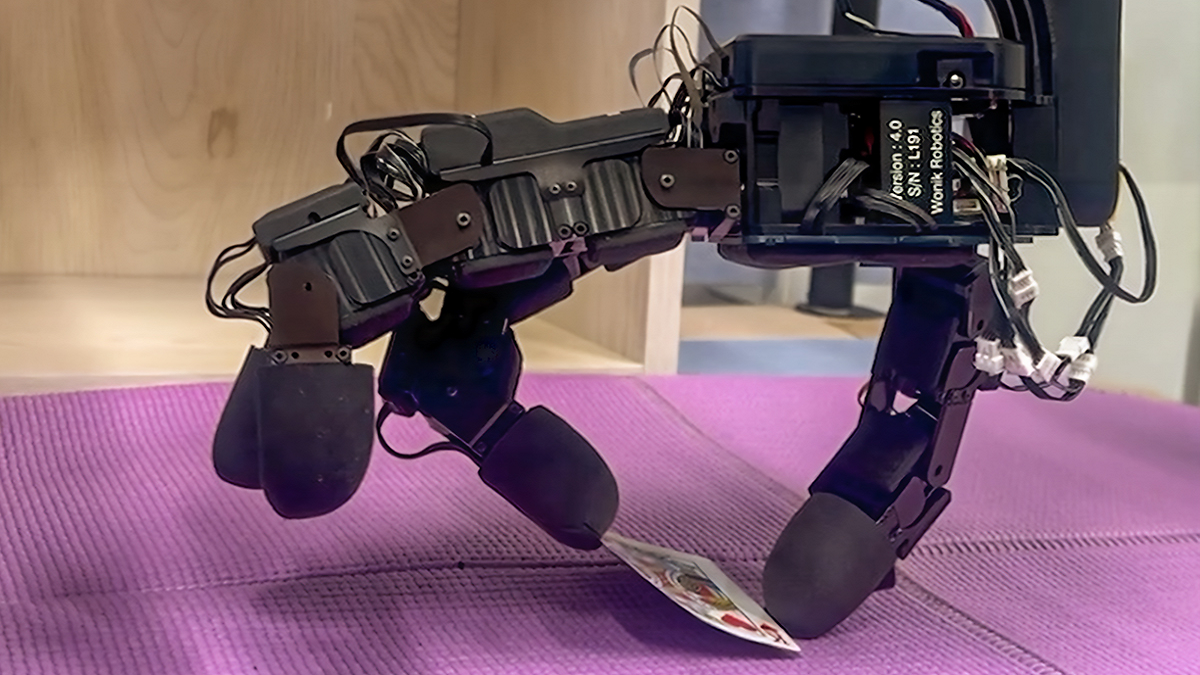
A key highlight was a robotic fingertip integrating what the company described as an industry-first six-axis force-sensitive nail, combined with 30 tri-axial sensing points in the fingertip pulp. This configuration extended sensing coverage beyond traditional contact surfaces, enabling more complete reconstruction of interaction forces during manipulation.
In collaboration with Waseda University, the system was used to demonstrate dexterous manipulation of thin and fragile objects, including autonomous picking of a playing card after learning from human demonstration.
Sensor-Driven Learning and Skill Transfer
XELA Robotics also advanced its integration of tactile sensing into AI-based learning frameworks through the Universal Manipulation Interface (UMI) gripper platform. The system supported human-to-robot skill transfer by capturing demonstration data and translating it into executable robotic actions.
The inclusion of distributed force-vector measurements from uSkin significantly enriched training datasets, combining tactile feedback with vision-based observation to improve learning efficiency in manipulation tasks involving contact-rich interaction.
Robust Sensing in Industrial Environments
Another major development presented by XELA Robotics was an enhanced magnetic interference compensation capability designed to improve sensor reliability in industrial environments.
The update addressed challenges associated with ferromagnetic materials and strong magnetic fields, enabling more stable force measurements in applications such as metal handling, assembly operations, and precision tooling.
Alongside this, improvements in software and control systems enabled more reliable handling of fragile objects. Demonstrations included delicate pick-and-place operations involving an origami crane and a quail egg, illustrating refined force control and real-time adaptation during contact.
Durability and Adaptive Object Characterisation
To support industrial deployment, XELA Robotics introduced redesigned fingertip covers that improved durability while maintaining replaceability without full sensor replacement. This modular design enhanced serviceability in high-use environments.
The company also demonstrated automatic estimation of object properties such as weight and hardness during grasping, highlighting the increasing role of tactile sensing in real-time material characterisation and adaptive manipulation.
Integrated Sensing Across Robotic Platforms
XELA Robotics further highlighted interoperability by demonstrating uSkin integration across multiple robotic hands and grippers, including systems from Tesollo, the Allegro Hand platform from Wonik Robotics, and grippers from Robotiq.
These integrations underscored a broader industry trend toward modular tactile sensing systems capable of augmenting a wide range of humanoid and industrial robotic platforms.
Multi-Modal Teleoperation and Data-Driven Dexterity
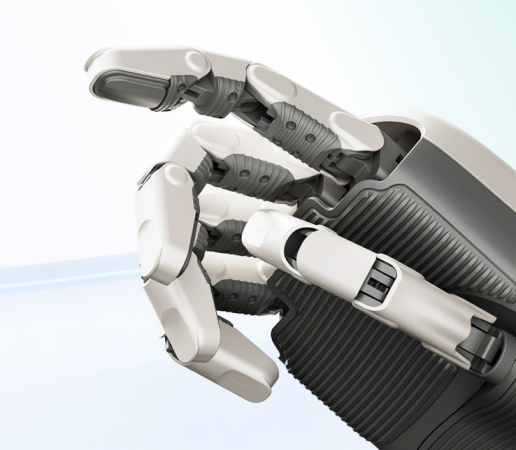 In parallel, DexRobot presented its full DexHand series alongside the debut of its DexTele Teleoperation Data Acquisition System, highlighting the growing importance of multi-modal sensing in data-driven robotics.
The DexHand series covered a range of dexterous manipulation capabilities, from research-oriented systems to industrial-grade platforms. The flagship DexHand021 Pro delivered 22 degrees of freedom with full-palm sensing and high durability, while mid- and entry-level models balanced functionality, cost, and accessibility for broader deployment.
Teleoperation as a Sensing and Data Infrastructure Layer
The DexTele system introduced a tightly integrated teleoperation and data acquisition architecture combining robotic hands, force-controlled arms, and synchronised data capture.
It enabled simultaneous collection of tactile, joint, pose, vision, and depth data, providing a unified dataset for training embodied AI systems. By linking demonstration, control, and data logging into a single workflow, DexRobot positioned teleoperation as a core sensing infrastructure for robot learning rather than a standalone control method.
Convergence Toward Multi-Modal Humanoid Perception
Taken together, the demonstrations at Automate 2026 reflected a clear convergence in humanoid robotics toward multi-modal sensing architectures. Rather than relying on isolated force or vision systems, both tactile-first and data-first approaches are increasingly being combined to support more adaptive and generalisable robotic behaviour.
XELA Robotics focused on increasing the fidelity and robustness of physical contact sensing, while DexRobot emphasised system-level integration of sensing and data acquisition for scalable learning.
The combined developments highlighted a broader shift in humanoid robotics: from mechanical execution toward perceptive systems capable of understanding objects, environments, and tasks through integrated sensory intelligence.
Strategic Focus on Humanoid Robotics in China
The event also reflected China’s accelerating strategic emphasis on humanoid robotics and embodied AI development. Companies such as DexRobot illustrated how Chinese robotics firms are increasingly investing in integrated hardware – software ecosystems that combine dexterous hands, teleoperation platforms, and large-scale data acquisition pipelines to support AI training and industrial deployment.
This direction aligns with broader national and industrial initiatives in China focused on advancing intelligent manufacturing, reducing reliance on manual labour in complex assembly tasks, and accelerating the commercialisation of humanoid robotics technologies. The strong presence of Chinese-developed dexterous manipulation systems at Automate 2026 underscored the country’s growing role in shaping global competition in humanoid robotics and next-generation automation technologies.