Verisurf 2027 Accelerates Model-Based Inspection from Shop Floor to the Enterprise
Verisurf Software has announced the availability of Verisurf 2027, the latest release of its model-based metrology software. New capabilities help manufacturers carry engineering requirements into inspection, automatically generate inspection plans, and return measurement results tied to the original design, from first article through production.
QIF is an open standard for exchanging engineering and quality information between compatible software systems. It gives manufacturers and their suppliers a common way to share what needs to be measured and the results of that inspection. Keeping those requirements and results connected supports the Digital Thread between engineering, manufacturing, and quality.
New in Verisurf 2027
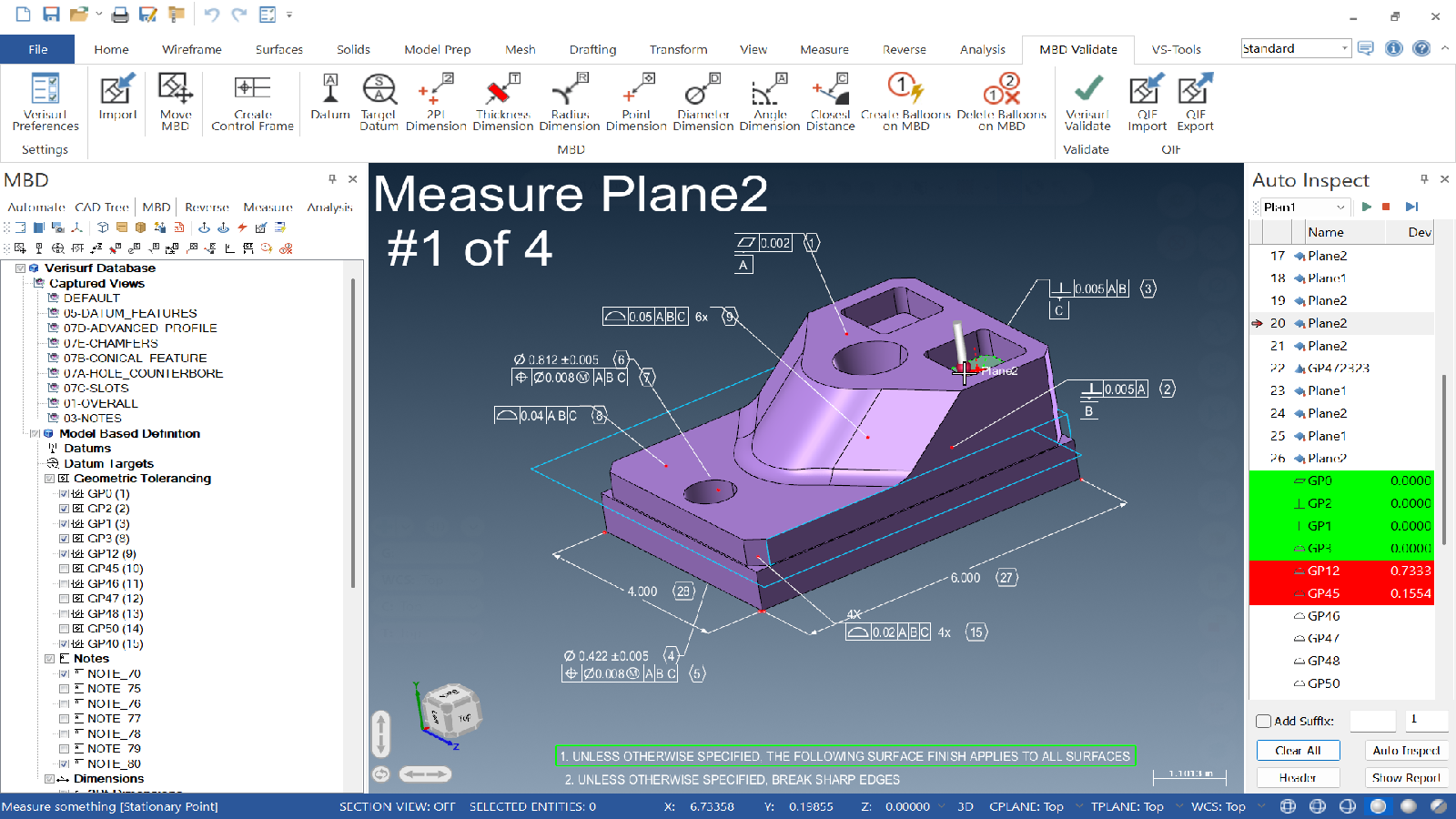
Create QIF Files From Native Engineering Models: Import supported native computer-aided design (CAD) files containing semantic Product and Manufacturing Information (PMI), then export QIF files while preserving the PMI, engineering-defined inspection characteristics, and their associated Persistent Identifiers (PIDs). Semantic PMI lets software read and use the model’s dimensions, tolerances, and related requirements directly, reducing manual data entry and the risk of transcription errors.
Automatically Generate Inspection Plans From QIF: Create the inspection plan directly from supported engineering information in an imported QIF file, including features, dimensions, geometric dimensioning and tolerancing (GD&T), datums, tolerances, and reporting relationships. This reduces manual programming and keeps the plan tied to the engineering requirements.
Connect Engineering Intent to Objective Evidence: Preserve the original PIDs through inspection planning, measurement, reporting, and QIF Results export. Each measured result stays connected to the engineering characteristic being evaluated, giving manufacturers a traceable record of what was measured, how it was evaluated, and whether it met the requirement.
Review Exported Results With an Included Viewer: The built-in QIF Results Viewer lets users review and examine exported QIF Results without requiring third-party utilities.
Expand Reporting and Aalysis: Automatically evaluate and report Rule #1 compliance for circles and cylinders under the American Society of Mechanical Engineers (ASME) Y14.5 standard. Feature-to-surface Construct Analysis lets teams reuse suitable measurement data for additional evaluations without remeasuring the part.
Reuse Engineering Information – Not Just The Model’s Shape
The native CAD-to-QIF workflow lets teams share engineering information before inspection begins. A manufacturer can open a supported native model in Verisurf and export a QIF file that retains its geometry, semantic PMI, inspection characteristics, and associated PIDs. Other compatible, QIF-compliant applications can then use that information for manufacturing and quality workflows.
The inspection workflow serves a different purpose. Teams use an engineering-defined QIF file to generate an inspection plan, measure the part, and export QIF Results. The original PIDs keep the requirements and results connected throughout that process.
Alongside supported native CAD formats, Verisurf supports the Standard for the Exchange of Product Model Data, Application Protocol 242 (STEP AP242). This standard allows compatible software systems to exchange three-dimensional models with machine-readable dimensions and tolerances. For manufacturers, that means sharing more than the shape of a part: teams can also reuse the engineering information needed to inspect it.
Verisurf’s device-independent platform supports portable measuring arms, laser trackers, scanners, and coordinate measuring machines (CMMs). Manufacturers can use a common software platform across supported equipment from different brands, including compatible devices already in their shops.
“For more than 25 years, we have worked to move inspection from disconnected measurements toward model-based, traceable manufacturing workflows,” said Ernie Husted, President of Verisurf Software. “Verisurf 2027 takes another major step forward by using STEP AP242, QIF interoperability, and Persistent IDs to maintain the connection between engineering intent and inspection results from the model, through the shop floor, and into the enterprise.”
For more information: www.verisurf.com