Persistent Identification for Connected Metrology
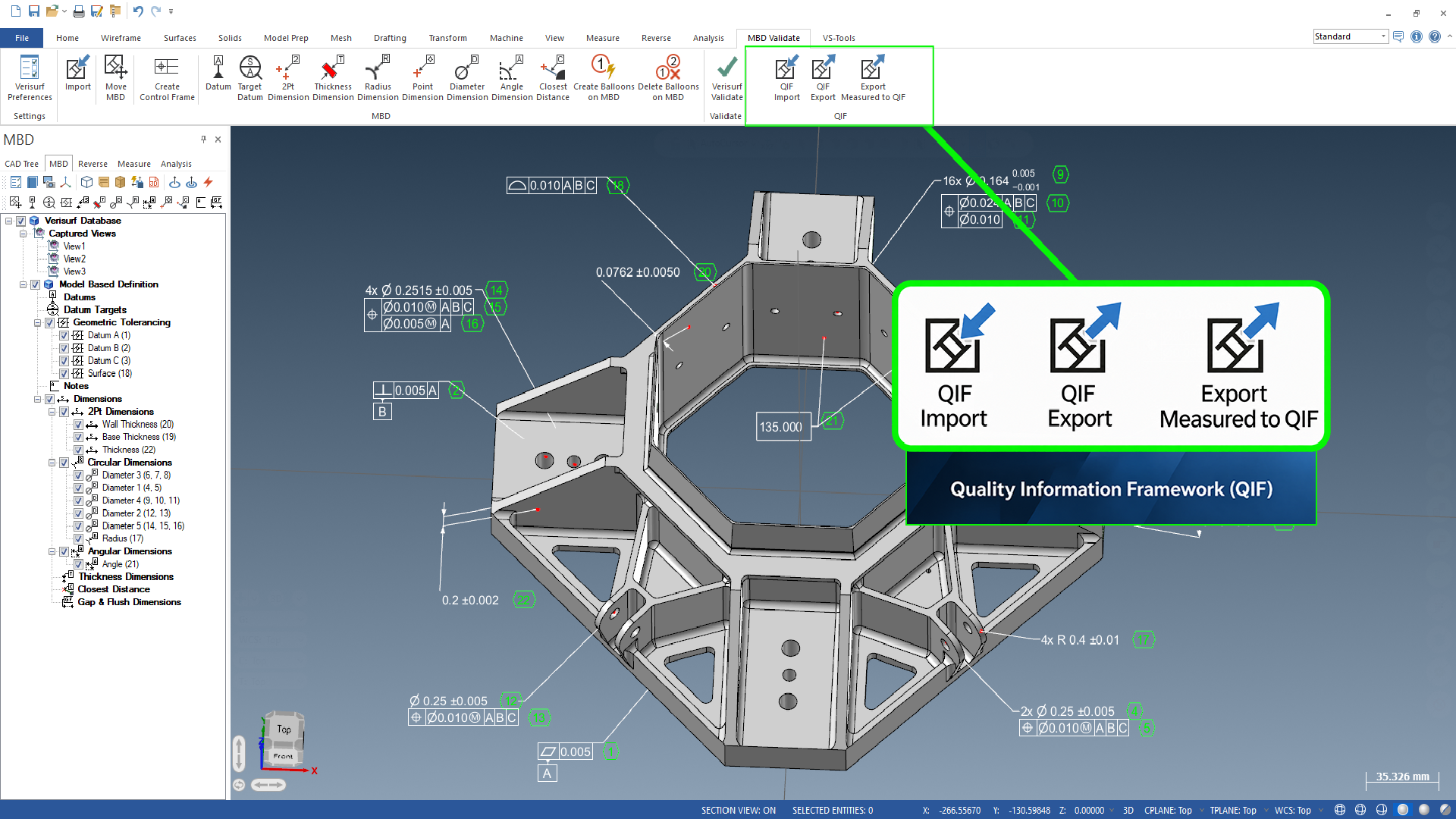
With manufacturing moving increasingly toward model-based and connected processes, the ability to maintain the identity of product and quality information across different systems is becoming a critical requirement. Verisurf 2027 can automatically create inspection plans from engineering-defined QIF data and export QIF Results after inspection, preserving Persistent IDs to maintain characteristic traceability between the product definition, inspection plan, and reported results.
A key element in this standards landscape is persistent identification using universally unique identifiers (UUIDs). QIF supports these identifiers to help maintain characteristic and feature identity across participating systems.
For Verisurf, this is particularly relevant to its approach to Model-Based Definition (MBD) metrology. Rather than treating inspection as a separate downstream process, MBD-based metrology uses the digital product definition as the foundation for measurement planning, inspection and reporting. Maintaining the identity of the information contained within that model is therefore an important part of creating a practical digital thread.
“Model-based metrology is fundamentally about maintaining the relationship between the product definition and the measurement process,” said Ernie Husted, president of Verisurf Software. “As that information moves between engineering, manufacturing and inspection systems, we need a way to preserve the identity of the characteristics and requirements being measured. PIDs offer an important foundation for doing that in an open and interoperable way.”
PIDs and Persistent Identification
The Quality Information Framework (QIF) provides an open framework for exchanging manufacturing quality information. It can represent information including product geometry and product manufacturing information, measurement plans, measurement resources, inspection results and statistical information.
Persistent identifiers, together with preserved data associations, help downstream systems link inspection information to its originating product definition.

A dimensional characteristic, for example, can be assigned a persistent identifier that remains associated with that characteristic as information passes from product definition into inspection planning, measurement and results. The same principle can apply to features, measurement plans, resources and other elements of the quality information model.
This creates an important distinction between simply exchanging data and maintaining a digital thread.
Data interoperability allows information to be transferred between systems. Persistent identification provides a mechanism for maintaining the relationships within that information, allowing downstream systems to understand what a particular piece of data represents and where it originated.
For model-based manufacturing, that distinction is significant.
MBD as the Foundation for Digital Metrology
Verisurf’s software is based around an MBD approach in which the digital product model provides the foundation for inspection. Its platform integrates CAD with measurement and supports a broad range of technologies, including coordinate measuring machines, portable measuring arms, laser trackers, and 3D scanners.
This approach places the product definition at the centre of the inspection process.
Rather than manually recreating dimensional requirements in a separate inspection system, characteristics contained within the model can be used to establish inspection requirements, measurement operations and reporting. The closer those downstream processes remain to the original model definition, the greater the potential for reducing manual interpretation and data translation.
PIDs can extend this principle by providing persistent identity across the information lifecycle.
The result is a potential connection between the characteristic defined in the product model, the corresponding inspection requirement, the measurement operation and the resulting inspection data.
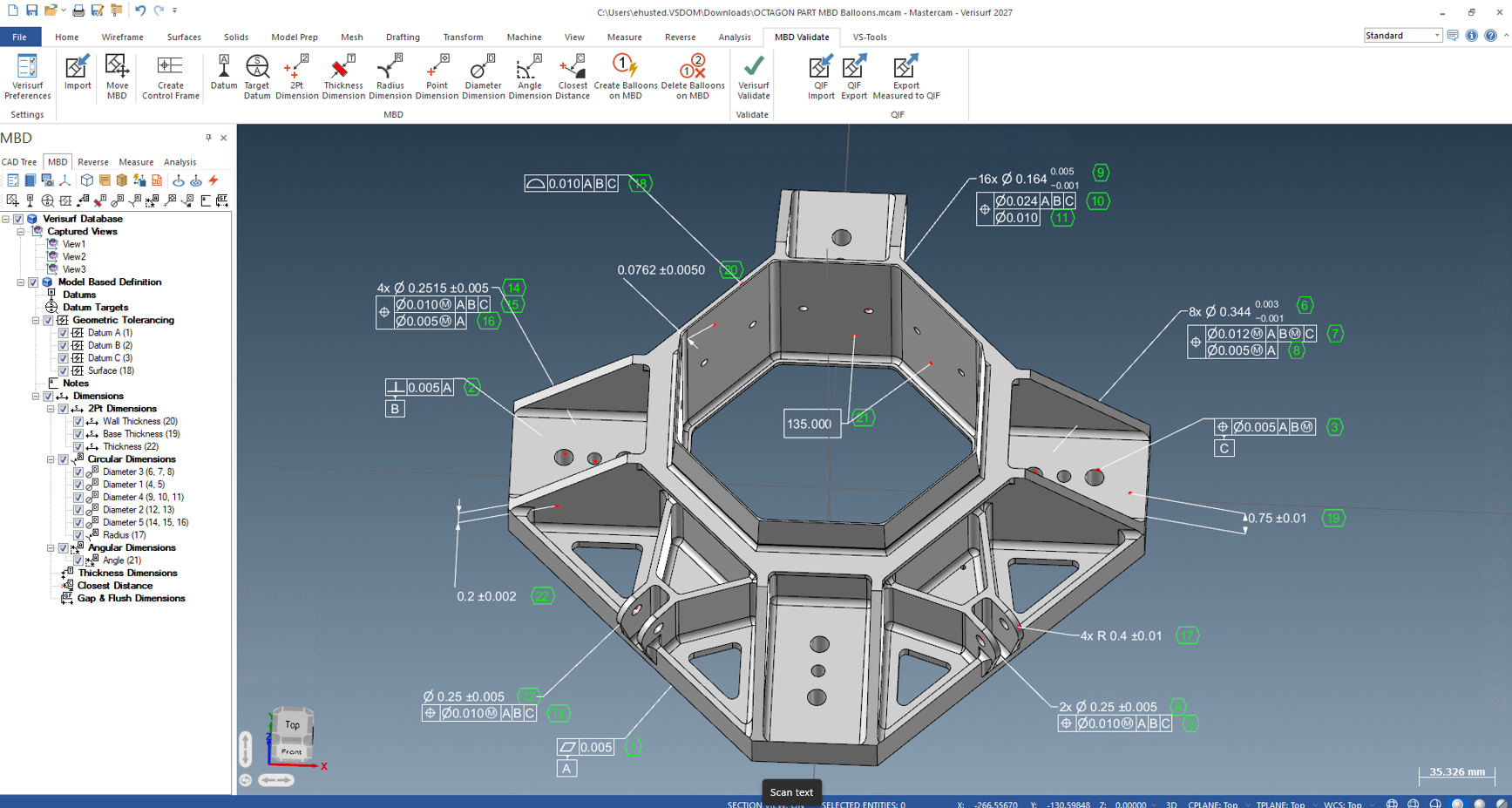
For manufacturers, this could become increasingly important as MBD develops from a design methodology into a broader Model-Based Enterprise (MBE) approach encompassing engineering, manufacturing, quality and inspection.
Persistent identification also has a practical, human-readable side. The Model-Based Characteristics (MBC) standard pairs a UUID for each product characteristic with a tag that engineers and inspectors can recognize. That tag can serve as the characteristic number in inspection reports, including AS9102 first article inspection forms, where such numbers have traditionally been assigned as drawing balloons.
When suppliers balloon the same drawing independently, they may assign different numbers to the same characteristic, making reports harder to compare and trace back to the product definition. If the OEM defines characteristic tags in the model and those tags are preserved through QIF-based inspection and reporting, suppliers can report against the same identifiers. The UUID maintains the digital link, while the tag gives people a consistent reference in their reports.
From Interoperability to a Persistent Digital Thread
Manufacturing systems have traditionally exchanged information through a mixture of proprietary formats, application-specific interfaces and manual processes. While these approaches can provide connectivity, they can also make it difficult to maintain the relationships between information as it moves through different stages of production.
Open standards offer an alternative.
QIF is designed to provide a standardized method of communicating manufacturing quality information between different applications and technologies. PIDs add the potential for persistent identification, allowing individual items within that information to retain their identity across the digital thread.

“Interoperability is about more than moving a file from one system to another,” said Husted. “The important question is whether the information remains meaningful and traceable when it gets there. Persistent identification can help maintain that connection between the original requirement and the inspection evidence generated from it.”
This becomes particularly relevant as manufacturers integrate CAD, PLM, MES, QMS, inspection planning, measurement equipment and analytics into increasingly connected production environments.
A digital thread built on open standards does not require every system to come from a single supplier. Instead, different technologies can participate in the same information flow while maintaining defined relationships between the data they exchange.
The Role of Open Standards in Metrology
The importance of this approach extends beyond software interoperability. Modern metrology increasingly involves a diverse range of measurement technologies and applications, from CMMs and portable arms to laser trackers, scanners and automated inspection systems.
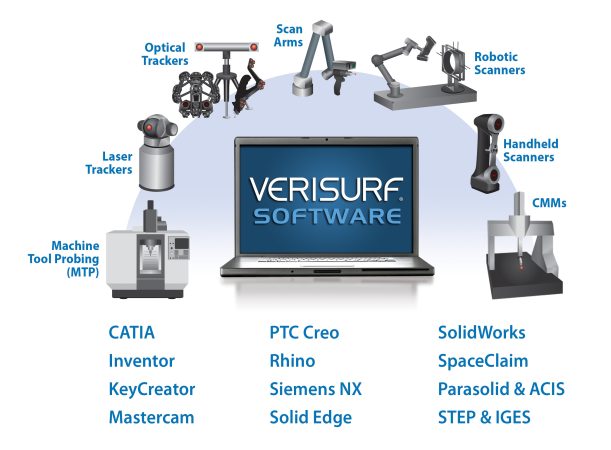 Verisurf has developed its platform around an open, device-independent approach to measurement, with MBD providing the digital foundation for inspection. The company’s interest in QIF and PIDs extends that philosophy from the measurement technology itself to the information generated by the measurement process.
This is significant because inspection results increasingly have value beyond a simple pass/fail decision. They can provide information for process control, manufacturing optimization, quality analysis and ultimately feedback into engineering.
Maintaining the identity of the characteristic being measured makes that information more useful. An inspection result is more valuable within a digital thread when it can be traced directly to the specific characteristic in the product definition, the applicable inspection requirement and the measurement process used to verify it. That traceability is particularly relevant in aerospace, defence, medical and other quality-critical manufacturing environments where organizations need to demonstrate the relationship between product requirements and inspection evidence.
An Emerging Standard for Connected Metrology
PIDs are therefore emerging as an important component of the standards-based approach to digital manufacturing quality. Their significance lies not simply in assigning unique identifiers, but in providing a mechanism for preserving the identity of information as it moves between systems.
For MBD-based metrology, this has the potential to strengthen the connection between the digital product definition and the physical measurement process.
“Open standards give manufacturers the opportunity to build a digital thread without being locked into a single technology or data ecosystem,” said Husted. “For metrology, the combination of model-based definition, QIF and persistent identification provides a path toward connecting what was specified, what was measured and what was ultimately verified.”
As manufacturers continue to adopt MBD, automated inspection and connected quality systems, interoperability will become increasingly important. The ability to exchange information is one part of that challenge; maintaining the identity and traceability of that information is another. The emergence of PIDs provides a potential foundation for addressing the latter, helping move digital metrology toward a more persistent, standards-based digital thread.
For Verisurf, whose software is built around MBD-based metrology, this represents an extension of an established philosophy: connecting the digital product definition directly to measurement while giving manufacturers the interoperability needed to operate within increasingly heterogeneous manufacturing environments.
The recently released Verisurf 2027 already supports QIF-based inspection planning and exports results while preserving Persistent IDs. Broad deployment of PID-enabled models from OEMs to their suppliers is still developing, with adoption expected to expand over the next one to two years. These capabilities position Verisurf users to support those workflows as customer requirements evolve.
Verisurf Software is a member of the Digital Metrology Standards Consortium (DMSC), which supports the development and adoption of open standards for digital metrology, including the Quality Information Framework (QIF).
For more information: www.verisurf.com
Editor