AI Vision and Collaborative Robots Target CNC Machine Tending
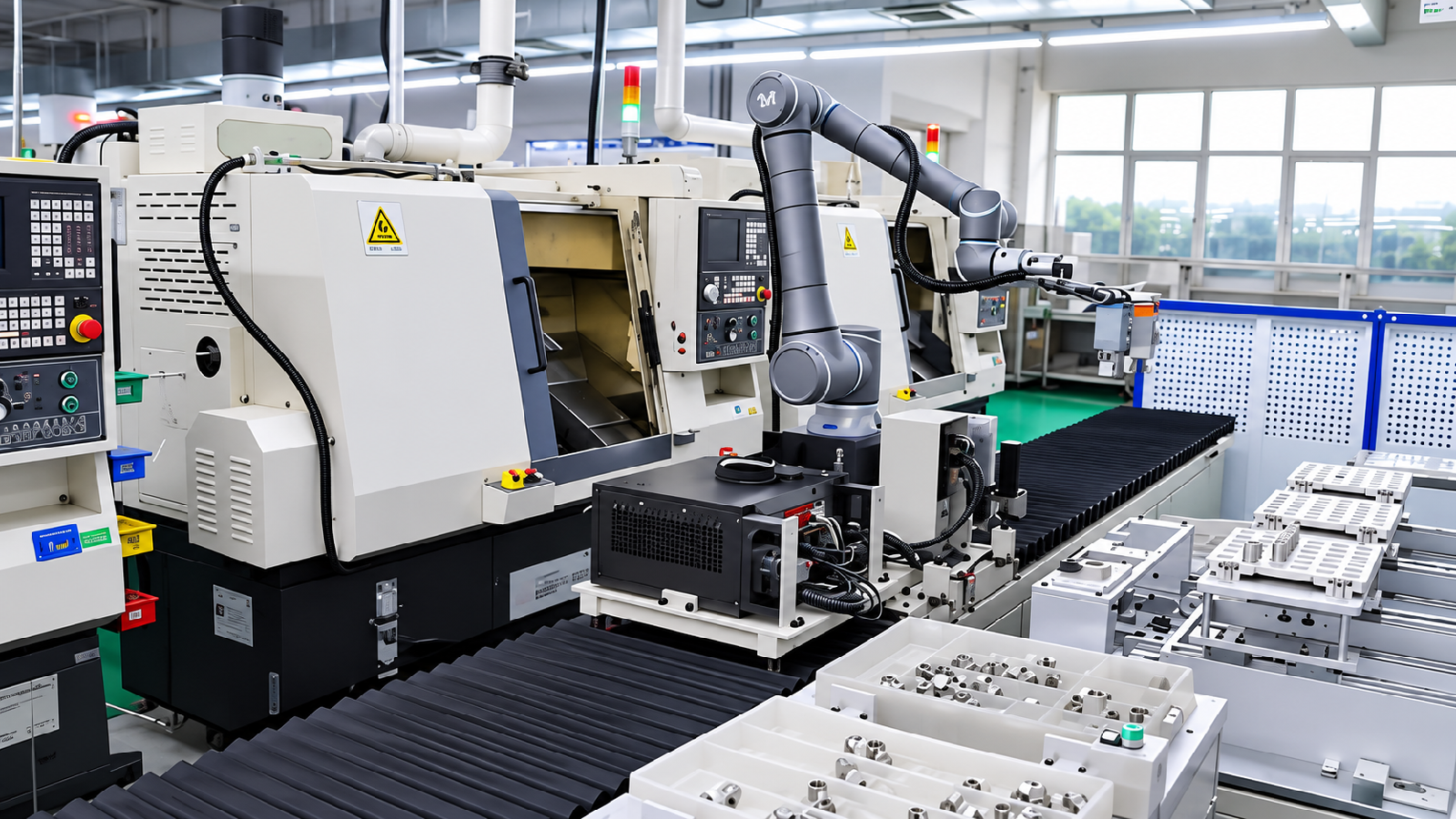
Techman Robot and Guorui Automation have developed an AI-powered robotic machine-tending solution designed to improve CNC machine utilisation, reduce manual handling and support more flexible manufacturing operations.
The availability of skilled operators, machine utilisation and the demands of repetitive loading and unloading operations remain significant challenges for manufacturers operating CNC machine tools. A collaborative robotics solution developed by Techman Robot and Guorui Automation aims to address these issues by combining AI vision, intelligent robotic handling and application-specific automation.
The system integrates Techman Robot’s TM AI Cobot platform with an AI vision system to automate key machine-tending operations, including workpiece identification, positioning, loading and unloading. The approach is intended to reduce operator involvement in repetitive tasks while enabling production personnel to concentrate on higher-value activities.
AI Vision for Workpiece Identification and Handling
An important element of the solution is its integration of AI-based vision technology. Depending on the application, 3D vision capabilities can identify the position and orientation of workpieces, enabling the robot to locate and handle components presented in different positions or orientations.
This is particularly relevant in manufacturing environments where components are not always presented in precisely defined locations. Vision-guided handling can provide greater flexibility than conventional robotic systems that depend on fixed part positions and dedicated mechanical fixtures.
The vision system can also support selected post-machining inspection tasks, including dimensional and visual checks. This creates opportunities to incorporate basic quality verification into the machine-tending process, although inspection performance will depend on component geometry, lighting conditions, optical configuration and the acceptance criteria established for each application.
Improving CNC Machine Utilisation
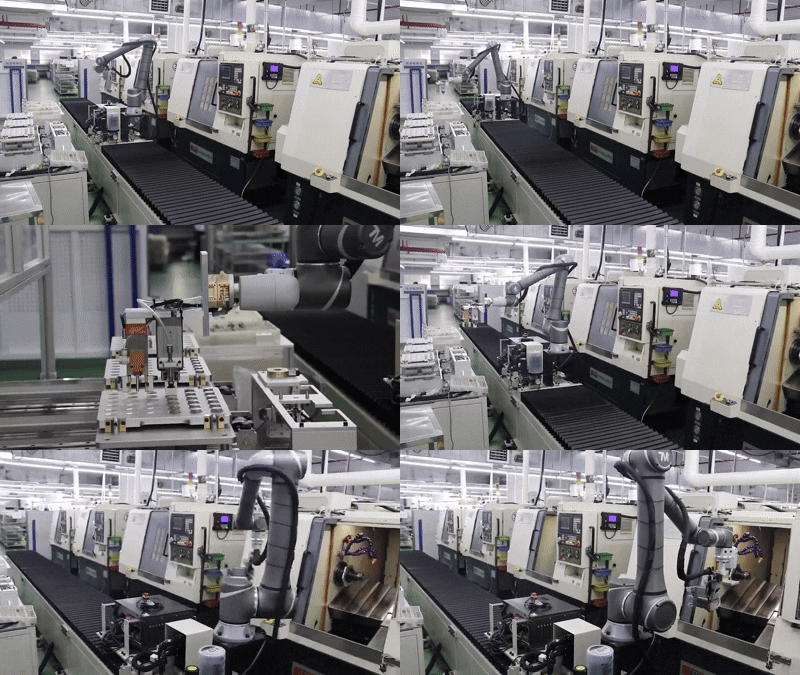 Automated loading and unloading can reduce the time CNC machines remain idle while waiting for operators to exchange workpieces.
The robotic system can undertake the transfer of raw materials into the machine and remove completed components, with additional functions such as part presentation, machine-door interaction and workpiece handling incorporated according to the requirements of the installation.
For suitable production layouts, a single collaborative robot may also be configured to tend multiple CNC machines. The feasibility of this arrangement depends on factors including robot reach, machining cycle times, machine positioning, material flow and the time required for each handling operation.
By reducing operator-dependent interruptions between machining cycles, manufacturers can potentially increase machine availability and support longer periods of unattended production.
Simplifying Programming and Production Changeovers
Programming flexibility is another consideration, particularly for manufacturers operating high-mix, low-volume production environments.
Techman Robot’s platform incorporates hand-guided teaching and a graphical programming interface intended to simplify robot setup and routine adjustments. This can reduce the programming expertise required when adapting an established automation process to different workpieces.
However, the complexity of individual applications will still depend on tooling requirements, CNC machine interfaces, component presentation and the extent of inspection integrated into the process.
Integrating Automation and Quality Control
Beyond the immediate benefits of automating repetitive machine-tending operations, the integration of AI vision provides an opportunity to bring selected inspection activities closer to the production process.
Workpiece identification, orientation verification and defined post-machining checks can help establish a more consistent approach to component handling and process monitoring.
For manufacturers, this could provide a foundation for connecting automated production with in-process quality verification, reducing the need for separate manual handling and inspection steps.
Techman Robot and Guorui Automation emphasise the importance of validating each application before full deployment. This includes establishing measurable performance criteria for workpiece detection, robotic picking, loading accuracy, cycle times and inspection results.
Application-Specific Integration and Safety
The complete robotic cell must also be evaluated from a safety perspective. Although collaborative robots incorporate features designed to support human-robot interaction, their use does not automatically eliminate the requirement for protective guarding.
A risk assessment covering the robot, end-of-arm tooling, workpiece, CNC machine and surrounding production environment determines whether additional measures such as safety scanners, interlocks, guarding or reduced operating speeds are necessary.
The partnership between Techman Robot and Guorui Automation illustrates how collaborative robotics and AI vision can be combined to address practical manufacturing challenges. By automating machine tending while introducing opportunities for integrated inspection, the approach offers manufacturers a potential route towards more flexible and efficient CNC production.
Source: Techman Robot – AI-Powered CNC Machine Tending: Techman Robot and Guorui Automation Case Study.
For more information: www.tm-robot.com