Mitsubishi Electric Develops CNC Error Compensation Digital Twin
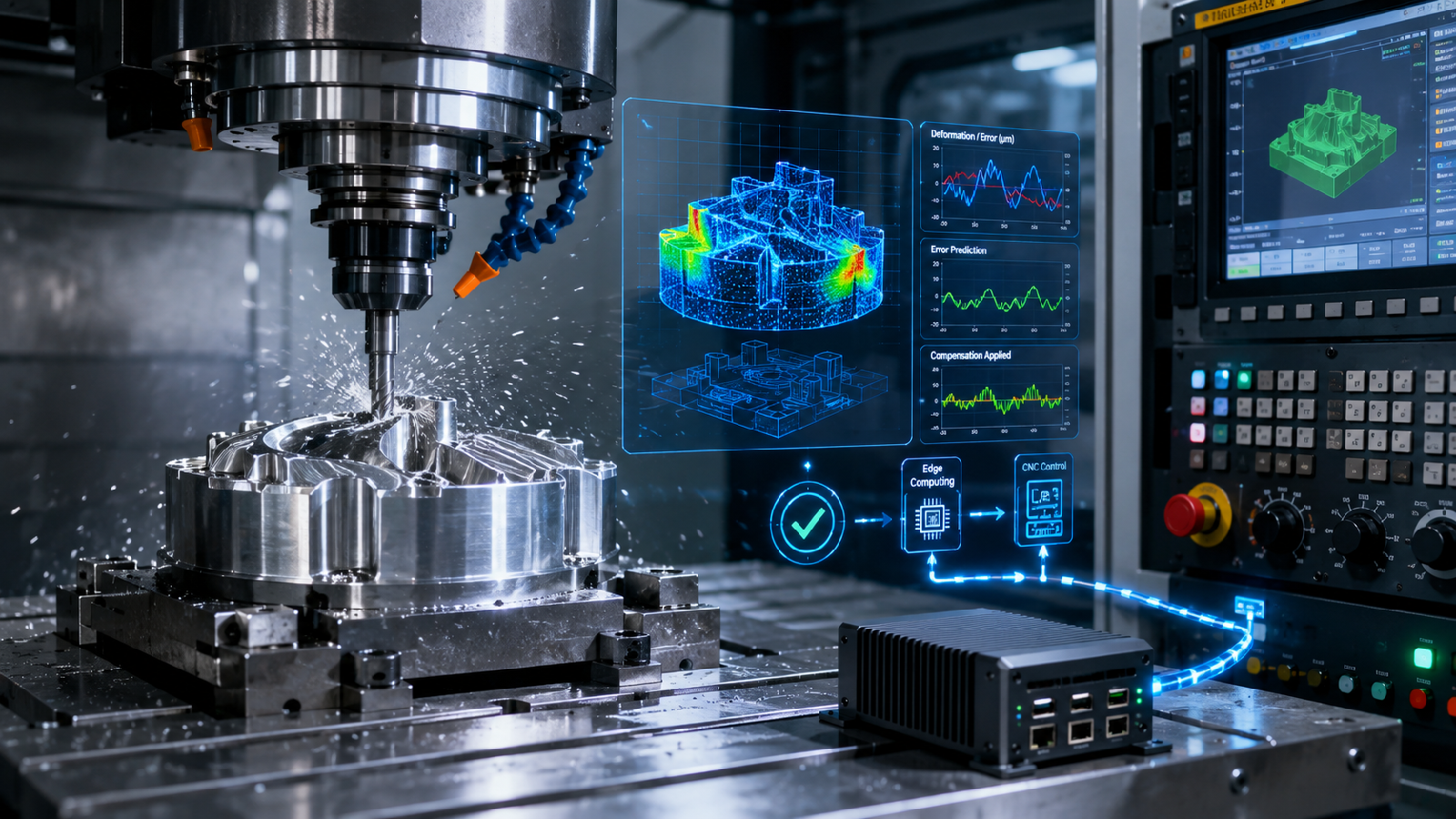
Mitsubishi Electric Corporation has announced the development of a new edge-based digital twin technology capable of correcting machining errors in real time on CNC machine tools, marking a significant advance in precision manufacturing and smart factory automation.
Developed in collaboration with RWTH Aachen University, the technology combines high-speed edge computing with a compact digital twin model to predict and compensate for machining deviations during the cutting process. According to Mitsubishi Electric, testing demonstrated that the system can reduce machining errors caused by slight workpiece deformation by as much as 50 percent.
Real-Time Compensation at the Machine Edge
The research partnership, conducted between April 2023 and March 2026, focused on enabling online edge computing for CNC machining applications. The resulting solution continuously estimates machining errors and feeds corrective adjustments back into the CNC control system in real time.
At the core of the development is a proprietary compact physical model designed specifically for high-speed processing at the machine edge. Rather than relying on large-scale simulations, the model uses a minimal set of equations derived from extensive operational data collected directly from the machine tool. Inputs include axis positions, motor currents, and cutting-force data sampled at high frequency.
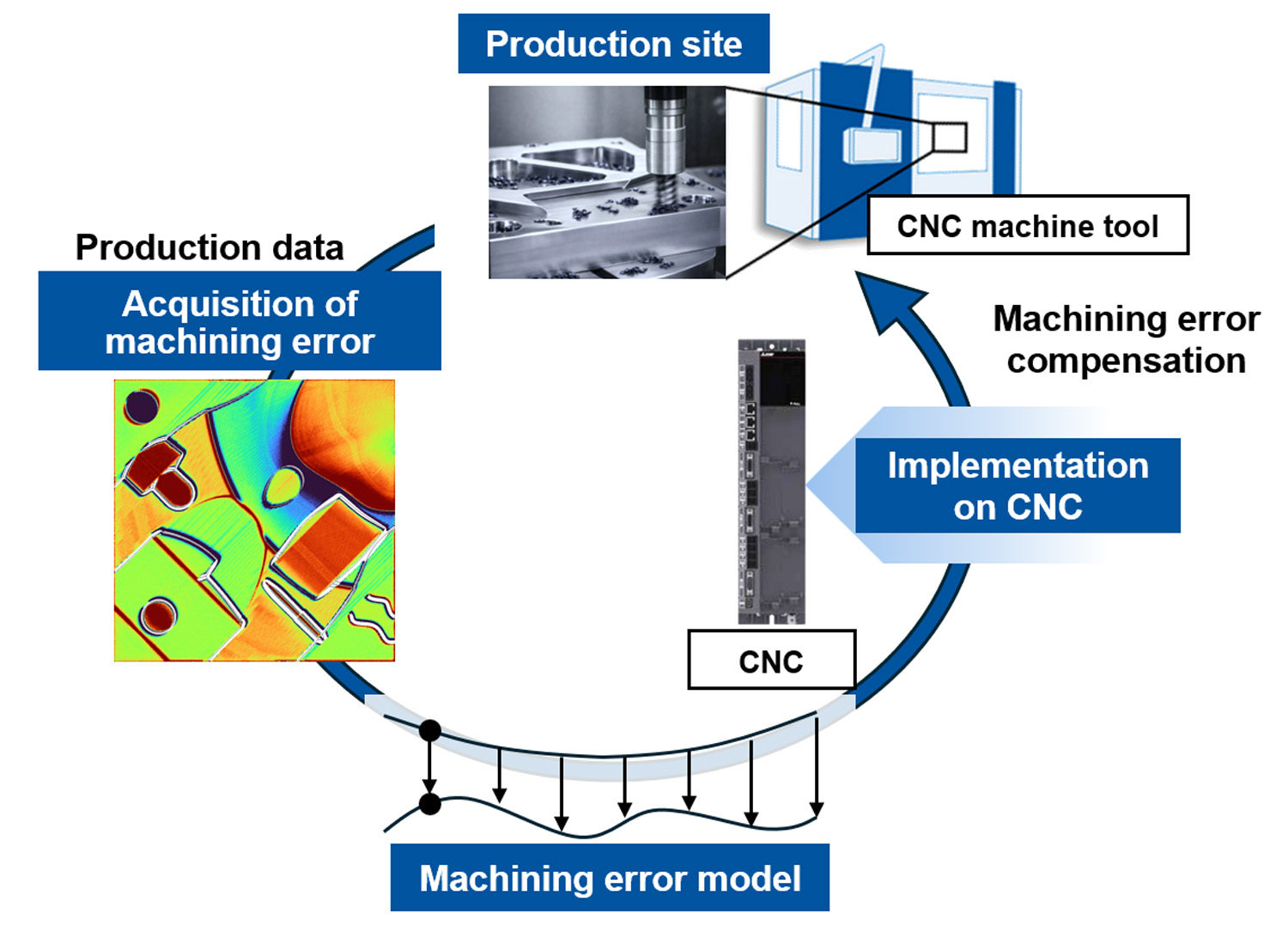
By extracting only the parameters required for error estimation, the system achieves the computational efficiency necessary for real-time operation without compromising predictive accuracy.
Addressing Tool-Induced Workpiece Deformation
One of the most persistent challenges in precision machining is slight deformation of the workpiece caused by cutting forces during machining. Even minimal deflection can lead to dimensional inaccuracies, poor surface finish, and part rejection, particularly in high-precision manufacturing sectors such as aerospace, automotive, medical, and semiconductor production.
Mitsubishi Electric’s digital twin technology dynamically predicts these deviations as they occur and automatically compensates for them through the CNC control loop. Real-world testing confirmed measurable improvements in machining accuracy and process stability.
The ability to reduce machining errors by up to half has the potential to significantly decrease scrap rates and improve first-pass yield, both of which are increasingly critical in high-mix, high-value manufacturing environments.
Supporting Sustainable Manufacturing
Beyond productivity gains, the technology also aligns with broader sustainability objectives within manufacturing. Reducing defective parts lowers raw material waste, minimizes rework, and decreases energy consumption associated with repeat machining operations.
As manufacturers continue adopting smart manufacturing and Industry 4.0 strategies, digital twins are becoming an increasingly important tool for predictive control, process optimization, and autonomous machining. Mitsubishi Electric’s latest development demonstrates how edge computing can bring these capabilities directly onto the shop floor with the speed required for real-time industrial applications.
The collaboration also highlights the growing convergence of academic research and industrial automation in advancing next-generation manufacturing technologies. With expertise in digital twin modeling, RWTH Aachen University played a key role in developing the high-speed estimation framework that enabled practical deployment on CNC systems.
Future Implications for CNC Manufacturing
Real-time adaptive machining represents a major step toward fully autonomous manufacturing systems capable of self-correcting during operation. By embedding digital twin intelligence directly within CNC machine tools, manufacturers could achieve tighter tolerances, improved consistency, and greater operational efficiency without increasing operator intervention.
As edge AI, sensor integration, and high-speed processing continue to evolve, technologies such as Mitsubishi Electric’s digital twin platform may become foundational components of future intelligent machining environments.
For more information: www.mitsubishielectric.com