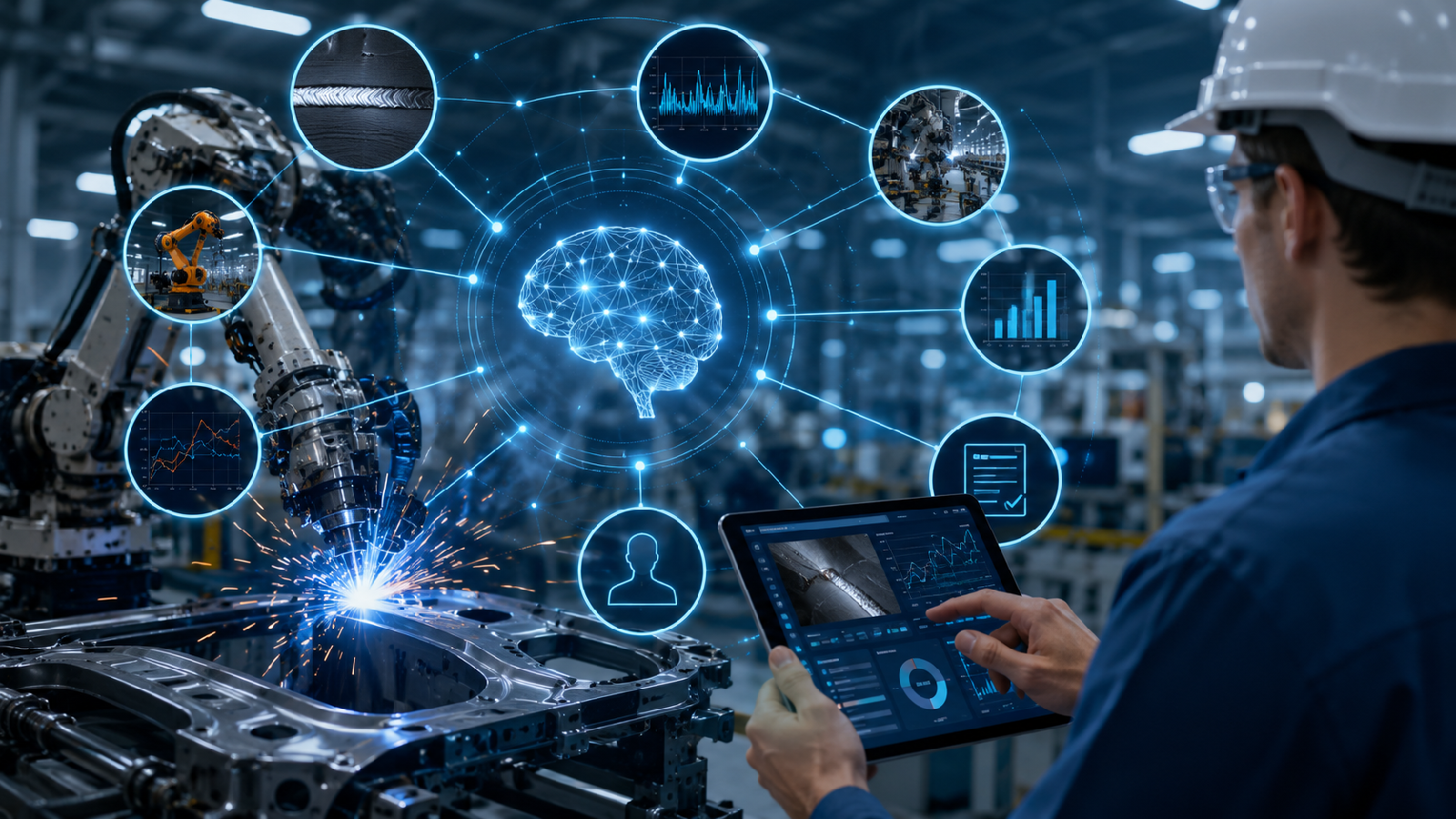
AI Agents Bring Contextual Intelligence to Manufacturing Quality Control
A new generation of AI systems is helping manufacturers move beyond defect detection to root-cause understanding, accelerating quality investigations and preserving critical operational knowledge.
Manufacturing facilities have never been short of data. Modern production environments generate vast streams of information from sensors, machine controllers, inspection systems, Manufacturing Execution Systems (MES), and operator observations. Yet despite this abundance of data, identifying the root cause of quality issues often remains a slow and resource-intensive process.
The challenge is not data availability—it is data fragmentation.
Inspection results, process parameters, maintenance records, and operator insights are typically stored in separate systems with limited connectivity between them. While conventional artificial intelligence solutions can identify defects within a specific domain, they rarely provide the broader operational context required to explain why a problem occurred.
A new class of industrial AI, known as AI agents, is beginning to address this gap.
From Defect Detection to Operational Reasoning
Traditional machine vision and quality inspection systems are generally designed to perform a specific task: analyse an image, classify a defect, and deliver a result. Once the decision is made, the process ends.
AI agents operate differently.
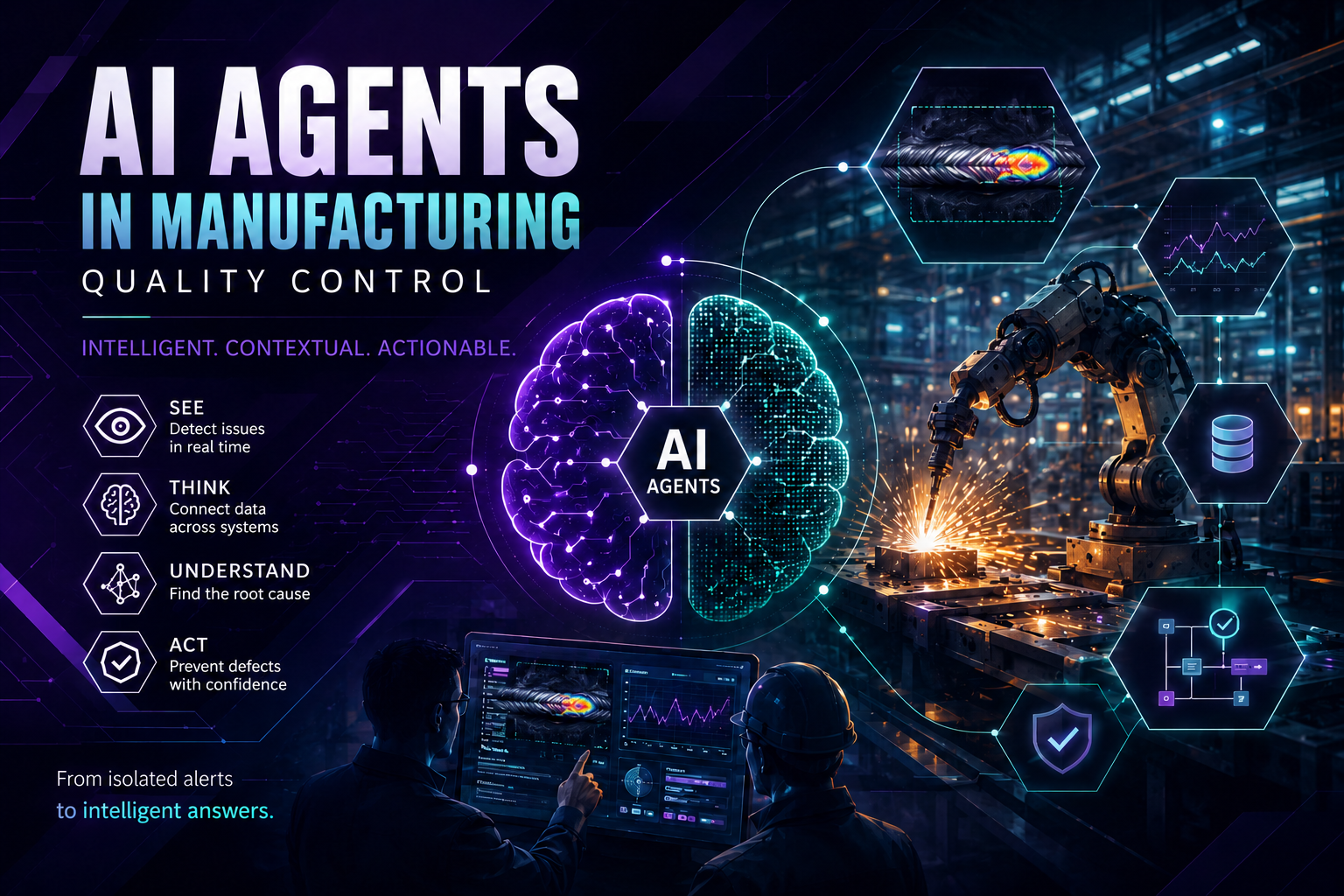 Rather than treating every event as an isolated occurrence, agents maintain awareness of historical and operational context. They can retrieve relevant information, correlate evidence from multiple sources, reason about possible causes, and support decision-making over time.
The concept is already gaining traction across a range of industries. Agent-based systems are being deployed in enterprise software, cybersecurity, customer service, and industrial operations to help users analyse information, automate workflows, and make faster decisions. The same principles are now being applied to manufacturing quality control.
How Industrial AI Agents Work
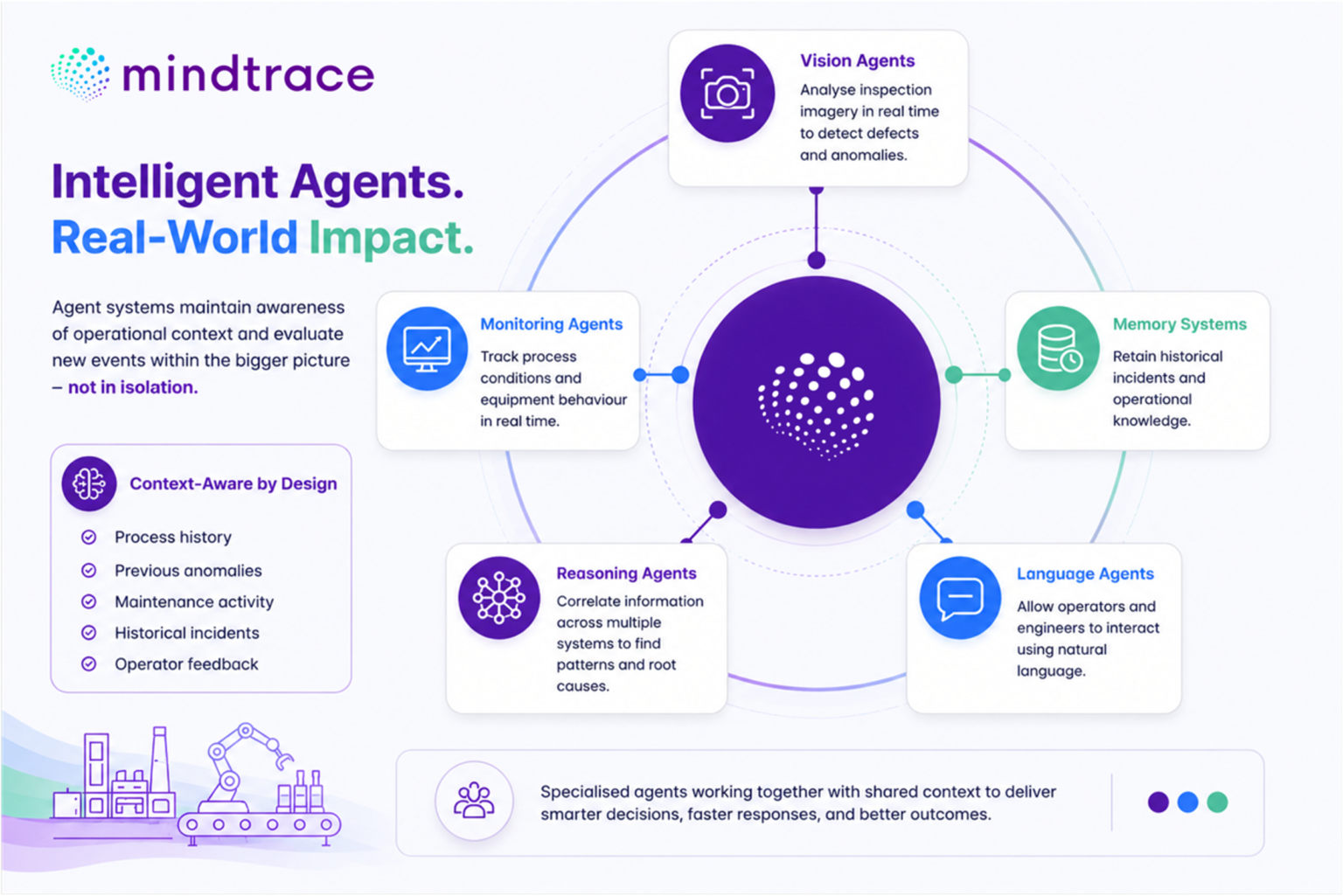
In manufacturing environments, AI agents typically function as a coordinated ecosystem of specialised systems, each responsible for a distinct aspect of operational intelligence.
These may include:
Vision Agents: Analyse inspection images and video streams in real time.
Monitoring Agents: Track process variables, machine behaviour, and equipment performance.
Memory Agents: Retain historical incidents, maintenance records, and process knowledge.
Reasoning Agents: Correlate information from multiple systems and evaluate likely causes of quality issues.
Language Agents: Allow engineers and operators to interact with production data through natural-language queries.
Working together, these agents provide a shared reasoning layer across previously disconnected manufacturing systems.
Practical Example – Laser Weld Inspection
One application area where agent-based reasoning is demonstrating value is laser weld inspection.
Heat trace inspection is widely used as an indicator of weld quality. Missing or incomplete heat traces can signal process instability that may ultimately affect weld integrity. Detecting the anomaly is relatively straightforward; determining its underlying cause is often far more complex.
Potential contributors can include power supply fluctuations, equipment drift, material variation, fixture alignment issues, or process parameter changes. Relevant evidence is frequently distributed across multiple systems, requiring engineers to manually investigate and reconstruct events.
AI agents can significantly streamline this process.
Connecting Previously Isolated Information
In a typical deployment, a vision agent continuously analyses weld inspection images and identifies missing or incomplete heat traces. At the same time, monitoring agents track operational signals such as voltage behaviour, current stability, and equipment condition.
Rather than treating these observations independently, the system consolidates inspection findings, machine data, historical incidents, and operator feedback into a unified contextual framework. This creates a more complete picture of production conditions and enables deeper analysis.
Identifying Patterns Before They Escalate
Once anomalies are detected, reasoning agents begin correlating inspection findings with operational events and historical records.
In one example, repeated occurrences of incomplete heat traces were found to coincide with intermittent low-power events during specific production windows. Historical records revealed similar incidents linked to unstable power delivery, while alternative explanations—such as fixture movement or camera instability—were unsupported by available evidence.
As additional data is evaluated, the system progressively strengthens or eliminates potential hypotheses until the most probable root cause emerges.
The result is not simply an alert, but an evidence-based explanation accompanied by prioritised recommendations for production teams.
Capturing and Sharing Expert Knowledge
A further advantage of agent-based systems is their ability to preserve institutional knowledge.
Instead of requiring engineers to search through multiple dashboards, inspection logs, and maintenance records, an orchestration layer can provide concise summaries of findings, supporting evidence, and recommended actions through a conversational interface.
In the weld inspection example, the system identifies the relationship between missing heat traces and power instability, references similar historical incidents, and presents a root-cause assessment for review.
Over time, as operators contribute observations and engineers resolve issues, the platform builds a searchable operational memory based on real production history. This allows newer employees to access process-specific knowledge that would traditionally reside only with experienced personnel.
Why AI Agents Are Emerging Now
Two key developments are accelerating the adoption of AI agents in manufacturing.
First, industrial data infrastructure has matured significantly. Connected equipment, real-time sensor networks, Industrial IoT platforms, and integrated MES environments provide the data foundation required for agents to reason across multiple operational domains.
Second, advances in natural-language interfaces have made complex industrial data more accessible. Engineers and operators can increasingly ask questions such as, “Why did first-shift yield decline yesterday?” and receive contextual answers based on production data rather than manually assembling reports from multiple systems.
These developments are transforming how manufacturing organisations interact with operational information.
The Future of Quality Intelligence
As manufacturers continue to pursue higher levels of automation and process control, AI agents represent a shift from isolated inspection technologies toward systems capable of contextual reasoning.
Rather than simply identifying defects, agent-based architectures aim to understand the relationships between process conditions, equipment behaviour, historical events, and quality outcomes. The result is faster root-cause analysis, more effective knowledge sharing, and improved decision-making on the factory floor.
For metrology and quality professionals, the emergence of AI agents signals a move toward a more connected and intelligent manufacturing environment—one where data is not only collected and analysed, but understood within the broader context of production operations.
For more information: www.mindtrace.ai
The above post was created from an authored article by Pankhuri Kulshrestha, ML Research Engineer at Mindtrace