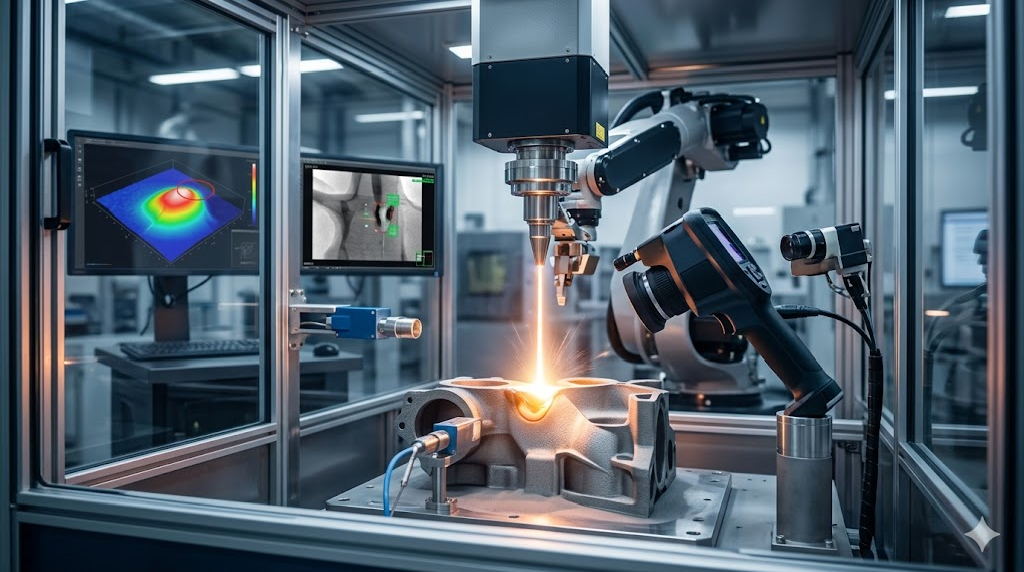
Scientists Develop New Approach for Defect Detection in AM Metal Parts
A team of researchers has developed a breakthrough method for detecting and predicting structural defects during metal additive manufacturing, potentially overcoming one of the most significant barriers limiting the wider adoption of industrial 3D printing.
Using a combination of advanced diagnostic imaging and machine learning, the researchers demonstrated a system capable of identifying the formation of microscopic pores in real time with near-perfect accuracy. The development could pave the way for future additive manufacturing systems that not only detect defects during the build process but also automatically correct them before they compromise part quality.
Addressing a Critical Additive Manufacturing Challenge
Metal additive manufacturing, particularly laser powder bed fusion (LPBF), has become increasingly important across industries requiring lightweight, complex, high-performance components. Aerospace, automotive, medical, and energy sectors now routinely use the technology to manufacture parts ranging from rocket engine nozzles and motorsport pistons to customized orthopedic implants.
However, ensuring consistent material integrity remains a persistent challenge.
One of the most problematic defects in LPBF processes is the formation of “keyhole pores” — microscopic voids created during laser melting that can weaken the structural performance of printed components. Even advanced thermal imaging systems integrated into today’s industrial printers can struggle to reliably detect when and where these pores form.
The new research addresses this limitation by combining high-speed X-ray imaging with thermal monitoring and artificial intelligence.
Combining X-Ray Imaging and Machine Learning
To observe pore formation directly inside dense metal during printing, the research team used high-intensity X-ray beams generated at the Advanced Photon Source, a U.S. Department of Energy Office of Science user facility.
By correlating internal X-ray images with external thermal imaging data from the melt pool, the researchers discovered that the formation of a keyhole pore creates a distinct thermal signature at the material’s surface — a signature that can be captured using conventional thermal cameras.
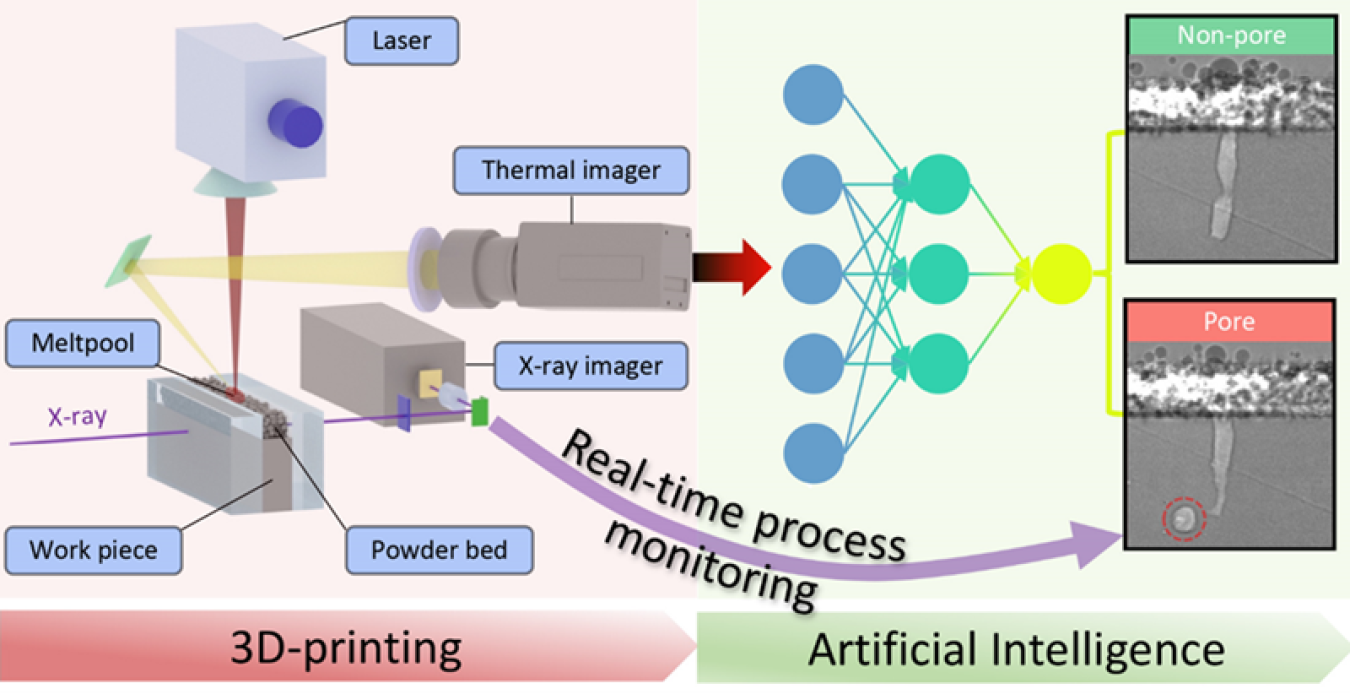
The researchers then .trained a machine learning model using synchronized X-ray and thermal imaging datasets. Once trained, the model was able to predict pore formation using thermal images alone, eliminating the need for continuous X-ray monitoring during production.
In subsequent tests on unlabeled samples, the AI system successfully interpreted complex thermal patterns and accurately identified the precise moment a pore formed during the printing process, operating on timescales of less than one millisecond.
Toward Self-Correcting Additive Manufacturing Systems
The implications for industrial additive manufacturing could be significant.
Real-time defect detection offers manufacturers the possibility of qualifying parts during production rather than relying exclusively on costly post-process inspection techniques such as CT scanning or destructive testing. This could substantially reduce production costs and improve confidence in critical components used in safety-sensitive applications.
The researchers say the next phase of development will focus on expanding sensing capabilities to identify additional defect types that occur during additive manufacturing processes.
Ultimately, the goal is to create intelligent additive manufacturing systems capable of both detecting and repairing defects during the build itself — a major step toward fully autonomous, closed-loop manufacturing.
Expanding Industrial Adoption
As additive manufacturing continues to move from prototyping into full-scale production, technologies that improve process reliability and part certification are becoming increasingly important.
For aerospace and other industries that depend on high-performance metal parts, the ability to monitor internal material integrity in real time could help unlock broader adoption of additive manufacturing for mission-critical applications.
The integration of AI-driven diagnostics with advanced sensing technologies also reflects a wider trend toward data-centric manufacturing environments where machine learning enables smarter, more adaptive production systems.
If successfully commercialized, this approach could represent a transformative advance in the future of metal additive manufacturing quality assurance.
For more information: www.anl.gov