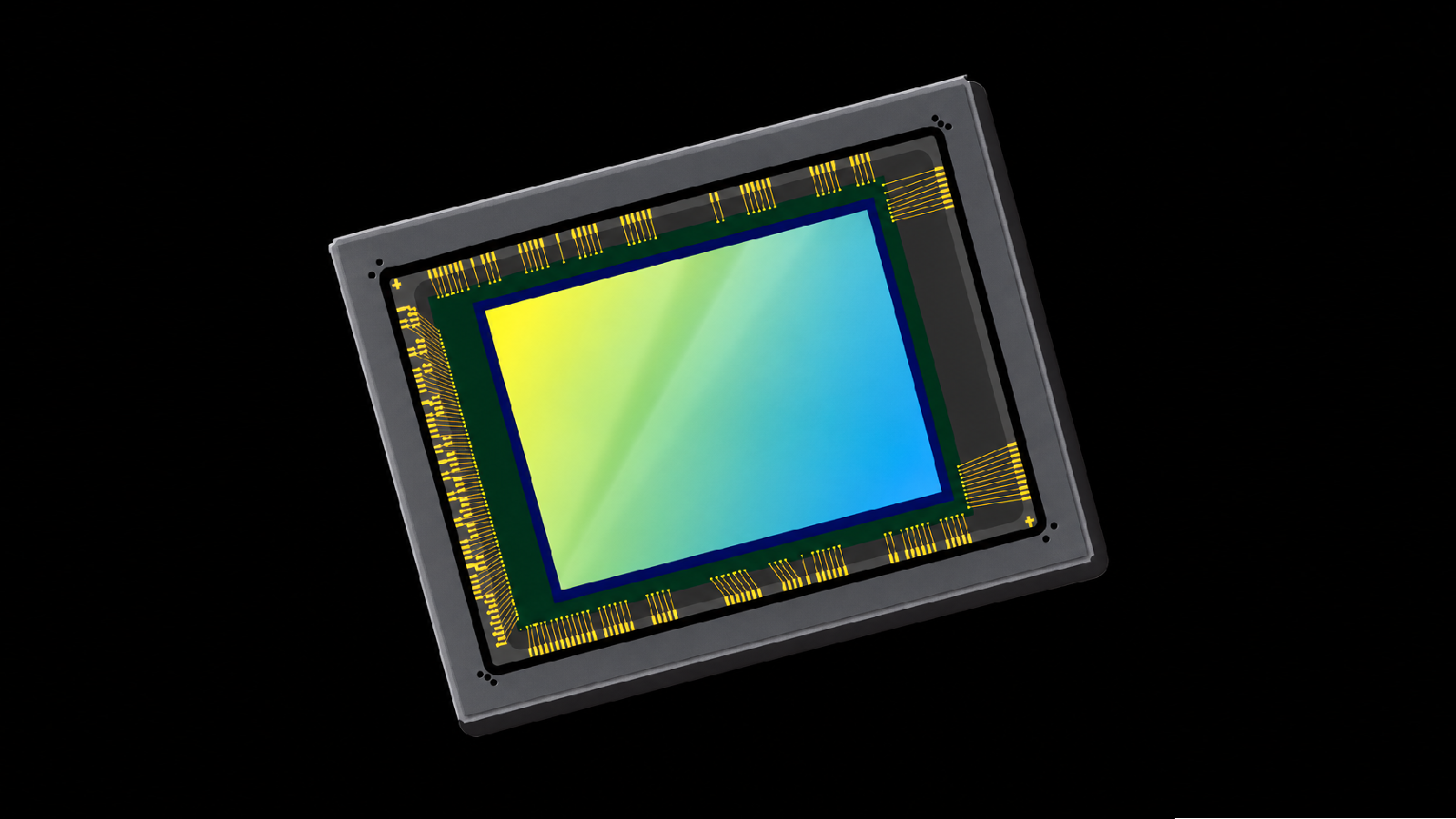
OMNIVISION Expands Global Shutter Imaging for Industrial Vision and Robotics
OMNIVISION has introduced two new global shutter CMOS image sensors aimed at the next generation of industrial machine vision, factory automation, intelligent transportation and robotics applications.
The new 5MP OG05D and 12MP OG12S10 sensors address different requirements within industrial imaging. The OG05D combines a compact 2.2-micron pixel with high-speed imaging, HDR and low power consumption for applications including barcode scanning, embedded AI cameras and robotics, while the OG12S10 uses larger 3.45-micron pixels to deliver high sensitivity, resolution and extremely short exposure times for demanding factory automation and intelligent transportation applications.
Both sensors use backside-illuminated (BSI) global shutter architectures and OMNIVISION’s Nyxel near-infrared technology, enabling accurate image capture of moving objects without the motion distortion associated with conventional rolling-shutter sensors.
Compact High-Speed Imaging
The 5MP OG05D is positioned as a compact, power-efficient imaging solution for industrial and robotic systems where camera size and energy consumption are important considerations. Its 2.2-micron pixel is claimed by OMNIVISION to be the industry’s smallest global-shutter pixel capable of more than 70dB HDR.
The sensor provides a maximum output of 146 frames per second in linear mode, representing a 143% increase over the previous generation. It also reduces power consumption by 30% compared with the previous-generation 5MP device.
The 1/2.5-inch optical format and 6.6 x 5.3mm package are suited to compact camera designs, including robotic vision systems and embedded AI cameras. The OG05D supports RGB, monochrome and RGB-IR configurations, with on-chip RGB-IR re-mosaicing.
HDR is provided through dual conversion gain (DCG), including 60fps single-exposure HDR and a three-exposure HDR mode. Single-exposure HDR can help reduce motion artifacts compared with multi-exposure approaches, while maintaining image detail across scenes containing both bright and dark areas.
Nyxel technology provides enhanced near-infrared sensitivity, with quantum efficiency exceeding 55% at 850nm and 35% at 940nm. OMNIVISION also uses dual conversion gain to combine high sensitivity with low noise.
These characteristics make the OG05D particularly suited to machine vision systems operating in changing lighting conditions, including factories, warehouses and outdoor environments, as well as robotic data-collection systems used for AI training.
Higher Resolution for Demanding Automation
The 12MP OG12S10 targets applications where resolution and high-speed image capture are priorities. Its 4096 x 3072 resolution is combined with a 3.45-micron BSI pixel in a 1.1-inch optical format.
The sensor can operate at up to 75fps and supports exposure times as short as 1 microsecond. OMNIVISION specifies a shutter efficiency of 106%, allowing the device to capture fast-moving objects with reduced motion-related distortion.
The OG12S10 incorporates DCG HDR, providing a dynamic range of 74dB, while its 20,000-electron full-well capacity and 2.8-electron read noise in DCG mode are designed to support high-quality image capture across demanding industrial scenes.
Nyxel technology provides 60% quantum efficiency at 850nm and 40% at 940nm. OMNIVISION says this represents a fivefold improvement in QE compared with its existing 3.45-micron product.
The sensor uses PureCelPlus-S die-stacking technology and incorporates a 12-bit ADC. Interface options include 16-lane sub-LVDS operating at up to 1.1Gbps and four-lane MIPI.
Global Shutter for Machine Vision
The common focus across the two new sensors is the use of global shutter technology to synchronize image capture across the entire frame. This is particularly important in industrial inspection and robotics, where cameras may be imaging rapidly moving components, vibrating machinery or robotic systems in motion.
For machine vision, maintaining the geometric accuracy of captured objects is critical. Rolling-shutter distortion can introduce positional errors when either the object or camera is moving. Global shutter imaging avoids this effect by exposing the pixels simultaneously, making it well suited to measurement, inspection, tracking and robotic guidance.
The two new sensors also demonstrate the increasing specialization of image sensor technology for industrial applications. Rather than relying on sensors originally developed for consumer imaging, machine vision cameras can increasingly be optimized around requirements such as high-speed global shutter operation, NIR sensitivity, HDR, low noise, compact packaging and low power consumption.
For more information: www.ovt.com