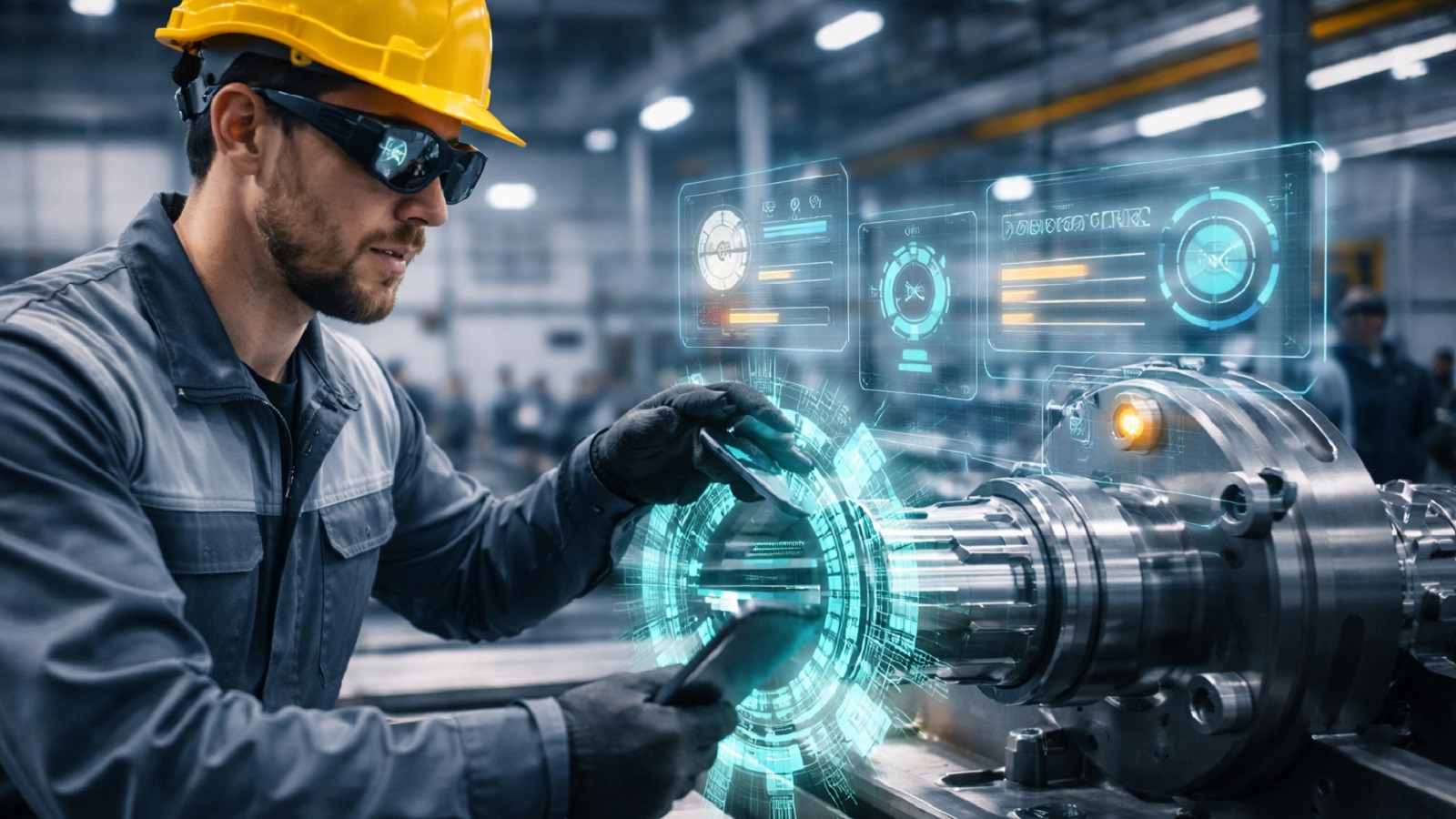
Augmented Reality Digitalizes and Optimizes Processes for Frontline Workers
Frontline workers remain central to production, inspection, and maintenance operations in manufacturing and industrial environments. Despite widespread digital transformation across engineering and design functions, many frontline processes still depend on paper-based instructions, fragmented data sources, and manual workflows. Augmented Reality (AR) is now emerging as a powerful enabler, bringing digital intelligence directly into the worker’s field of view and transforming how tasks are executed on the shop floor.
The concept of the digital thread has become increasingly important in manufacturing, connecting data from design through to production and quality assurance. However, the final link in this chain, the human operator, has often remained disconnected. AR addresses this gap by overlaying digital information onto physical assets in real time. Using smart glasses, tablets, or handheld devices, frontline workers can access contextual instructions, live data, and process guidance without needing to step away from their tasks. This seamless access to information reduces cognitive load, minimises errors, and improves overall efficiency.
From Static Instructions to Interactive Workflows
One of the most significant shifts enabled by AR is the move from static documentation to interactive workflows. Traditional work instructions are frequently outdated and lack responsiveness to changing conditions. In contrast, AR delivers dynamic, step-by-step guidance aligned directly with the physical environment. Operators can follow visual instructions superimposed on components, access real-time process data, and receive prompts based on system inputs or deviations. This ensures consistency and standardisation across operations, regardless of location or experience level.
Transforming Metrology and Quality Control
In metrology and quality control, where precision and repeatability are essential, AR introduces a new level of capability. By integrating inspection data into a visual context, AR allows operators to see exactly where measurements need to be taken and how results compare to tolerance requirements. Deviations can be identified and understood more quickly, enabling faster decision-making and corrective action. This not only reduces the likelihood of errors but also shortens inspection cycles and enhances overall quality outcomes.
Empowering the Frontline Workforce
AR also plays a critical role in addressing workforce challenges. As experienced workers retire, the loss of institutional knowledge becomes a growing concern. AR enables organisations to capture expert knowledge and deliver it in a visual, intuitive format that is accessible to less experienced employees. This accelerates training and reduces the time required to achieve competency. Additionally, remote collaboration capabilities allow experts to guide frontline workers in real time, regardless of location, improving problem resolution and reducing downtime.
Beyond guidance and training, AR serves as an interface for real-time data integration. When connected to IoT systems, manufacturing execution systems, and metrology software, AR becomes a live conduit for information exchange. Frontline workers can interact with real-time machine data, validate processes against current conditions, and instantly feed inspection results back into digital systems. This creates a continuous feedback loop that supports ongoing optimisation and more agile manufacturing operations.
Driving Efficiency, Safety and the Future of Digital Manufacturing
The benefits of AR extend to safety and compliance as well. By providing contextual guidance and highlighting potential hazards within the user’s field of view, AR helps ensure that procedures are followed correctly and safely. At the same time, digital workflows create comprehensive records of activities, supporting traceability and regulatory compliance.
Despite its advantages, the adoption of AR requires careful consideration. Challenges such as hardware usability, integration with existing systems, and the development of scalable content must be addressed to ensure success. Organisations need to focus on practical applications where AR can deliver measurable improvements, rather than treating it as a standalone technology initiative.
Looking ahead, AR is set to become a foundational component of the smart factory. Advances in wearable technology, spatial computing, and artificial intelligence will further enhance its capabilities. As AR converges with digital twins and real-time metrology data, it will play an increasingly important role in connecting people, processes, and data.
Ultimately, AR represents more than just a visual enhancement. It is a transformative technology that digitalises frontline operations and optimises performance at the point of execution. By embedding intelligence directly into workflows, it empowers workers, improves quality, and drives greater efficiency across the manufacturing landscape.
Editor