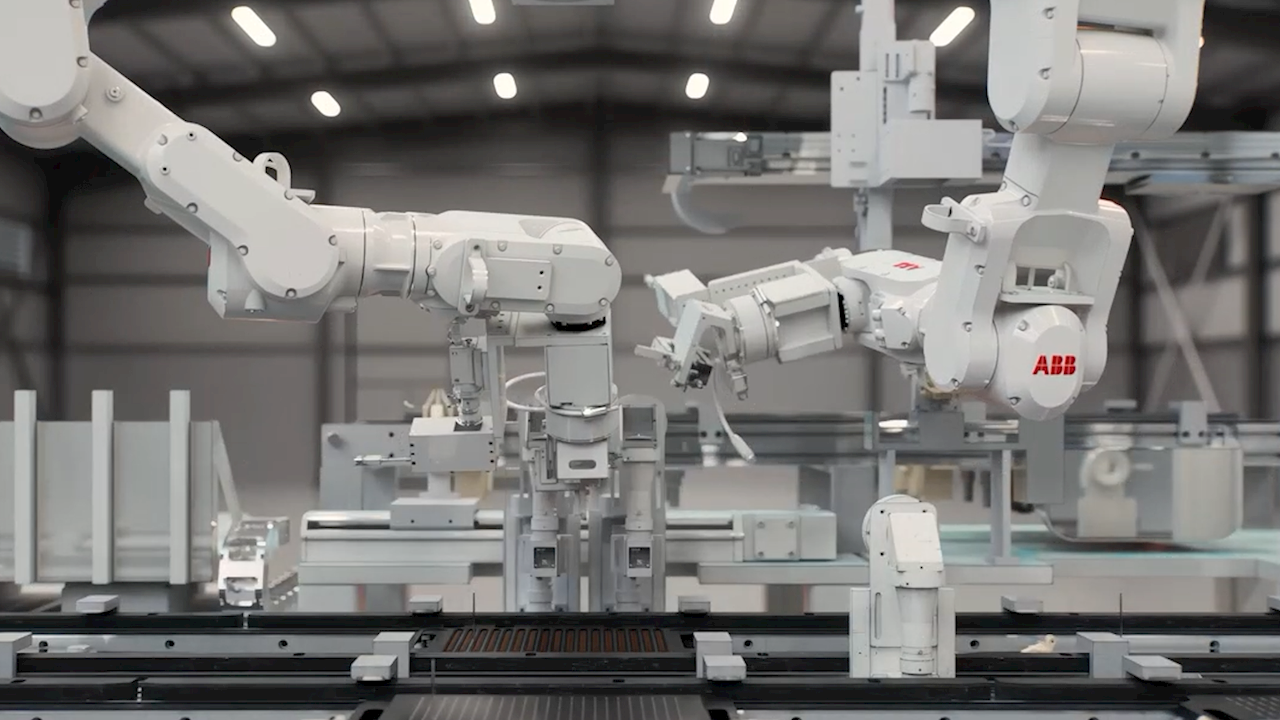
ABB and NVIDIA Outline Physical AI Blueprint for the Future of Precision Manufacturing
ABB Robotics and NVIDIA have jointly published a white paper, highlighting the transformative impact of industrial-grade physical AI on precision manufacturing, proposing a methodology for its rapid deployment, to revolutionize speed and versatility.
“Through the leap forward in generative AI, we are moving from robots that execute predefined tasks to more Autonomous and Versatile Robotics (AVR) that can understand, adapt and learn in real time,” said Craig McDonnell, Business Line Managing Director, Industries at ABB Robotics. “Physical AI fundamentally changes what robots do, where they operate and the value they create. Closing the gap between robotic digital twins trained on synthetic data and their real robot counterparts is a breakthrough. Only by combining these hyper-realistic digital twins within a repeatable, industrialized engineering process can the full potential of Autonomous Versatile Robotics be achieved.”
“Physical AI is transforming how intelligent systems are developed and deployed in the physical world,” said Deepu Talla, Vice President of Robotics and Edge AI at NVIDIA. “By combining simulation, synthetic data, accelerated computing and AI models, manufacturers can evaluate more scenarios, address edge cases earlier and accelerate innovation before deployment. The opportunity is not simply to build better models, but to create a continuous learning loop between the digital and physical worlds.”
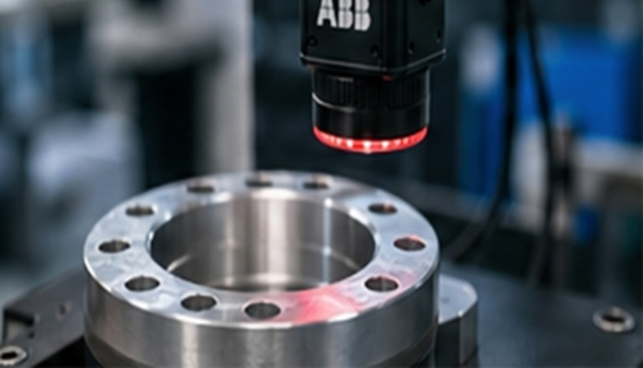
Developed with contributions from AsiaInfo, Deloitte and SKAI Intelligence, the paper presents a digital-first engineering approach that shifts robotic vision risk assessment upstream into the design phase. Using digital twins, task-specific synthetic data and AI validation before physical deployment, manufacturers can identify and address issues earlier while creating traceable, reusable and verifiable engineering assets. Real-world operational data then continuously refines and improves the digital model, creating a closed-loop process for ongoing optimization.
To support this approach, ABB Robotics is pioneering a Physical AI Toolchain that provides this pathway, enabling robots to be trained rather than programmed through a continuous learning workflow that combines simulated, synthetic and real-world data. Through an open and flexible AI ecosystem, customers can combine ABB Robotics’ industrial expertise with the most suitable data and AI models for their specific applications while maintaining industrial-grade accuracy and scalability.
The paper also explores why robotic vision risks should be addressed earlier in the digital engineering process and details how reference architectures, AI validation, robotic verification and continuous feedback loops can work together to accelerate the deployment of AI-powered automation at scale.
The publication builds on the strategic partnership announced by ABB Robotics and NVIDIA in March 2026. One of the first outcomes of this collaboration is RobotStudio HyperReality, which combines ABB’s industry-leading RobotStudio offline programming and simulation platform with the physically accurate simulation capabilities of NVIDIA Omniverse libraries. Together, they bridge the long-standing ‘sim-to-real’ gap, enabling manufacturers to design, test and deploy physical AI-powered robotic applications with greater speed, confidence and scalability.
RobotStudio HyperReality is set to transform how customers design, validate and optimize robotic applications at scale. Following successful trials with selected customers, the solution will be made available to ABB Robotics’ global community of more than 60,000 RobotStudio users in the second half of 2026.
White Paper Download