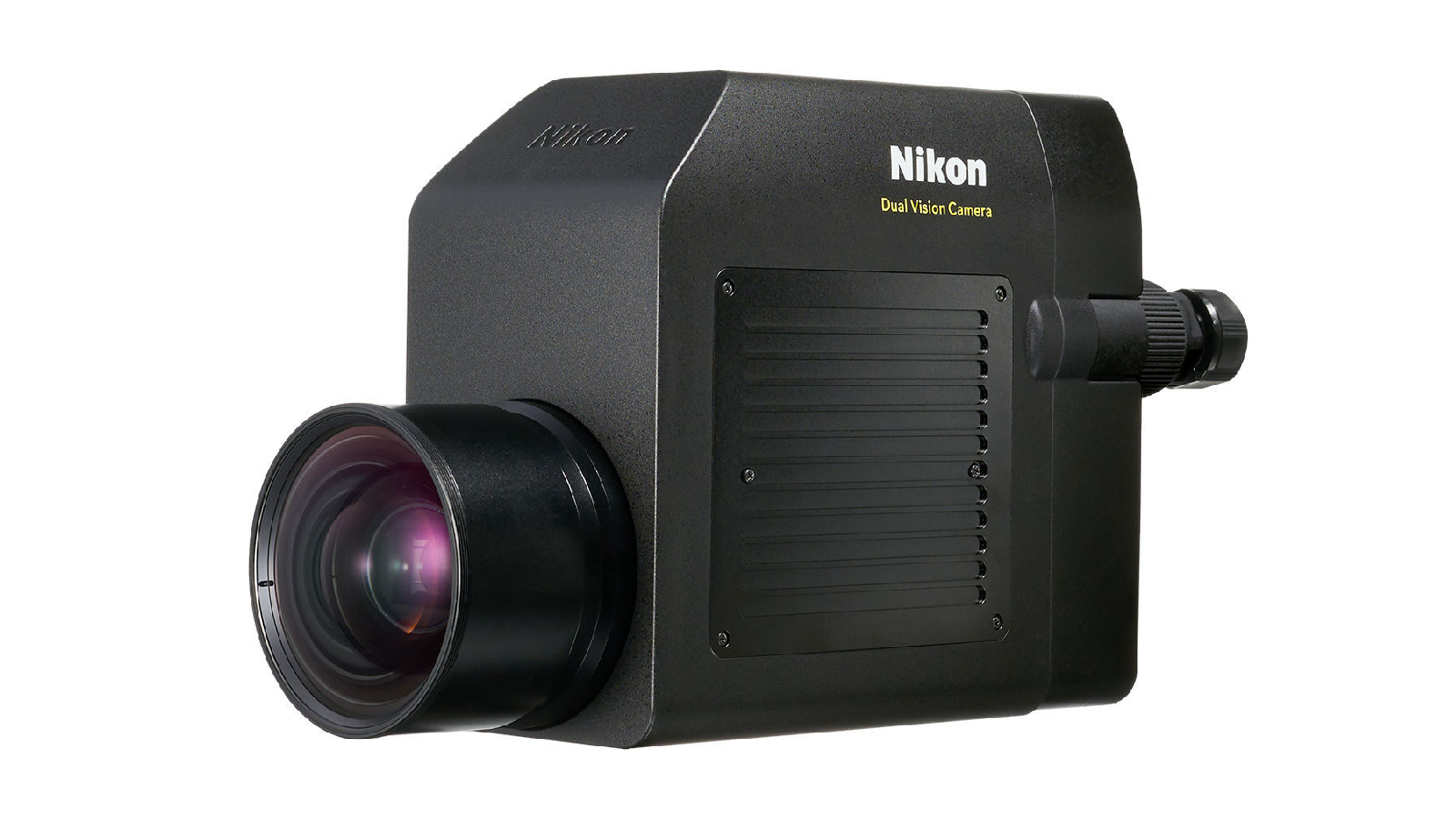
Nikon Develops Dual Vision Camera for Automated High-Precision Inspection
Nikon Corporation has announced that it will release the ‘Dual Vision Camera,’ a machine vision camera capable of simultaneously capturing wide-angle and magnified images with a single unit, in January 2027. The camera can optically magnify any specified area within its wide-angle field of view and capture high-resolution magnified images with a pixel resolution of up to 12 µm.*1 This contributes to the automation of visual inspection processes in manufacturing and helps ensure consistent quality control.
By enabling both wide-angle and magnified imaging with a single camera, which traditionally required multiple cameras, the Dual Vision Camera is expected to reduce installation and operating costs. Its design also facilitates integration into automated inspection and robotic systems, supporting smart factory initiatives across a wide range of manufacturing environments.
Development Background
Inspection is an extremely important process for maintaining product quality in manufacturing. However, manufacturers face challenges such as reliance on manual visual inspection by skilled workers and labor shortages, increasing the need for highly accurate automated inspection.
Conventional inspection systems often require multiple cameras to achieve both a wide field of view and highly accurate defect detection. This increases equipment costs and makes system configurations more complex.
Nikon developed the Dual Vision Camera to address these challenges and contribute to improved inspection quality and productivity through automation.
Key features include:
Single-Camera Wide-Angle and Magnified Imaging
Using dual sensors with the same resolution and Nikon’s proprietary coaxial optical system, the camera can capture a wide-angle image of the entire target while simultaneously acquiring a high-resolution magnified image of a selected area. Its 6x optical magnification minimizes the image-quality degradation associated with digital zoom and enables fine scratches and defects to be clearly captured at a pixel resolution of up to 12 µm. Wide-angle and magnified images can also be captured in association with each other, helping improve inspection quality and traceability.
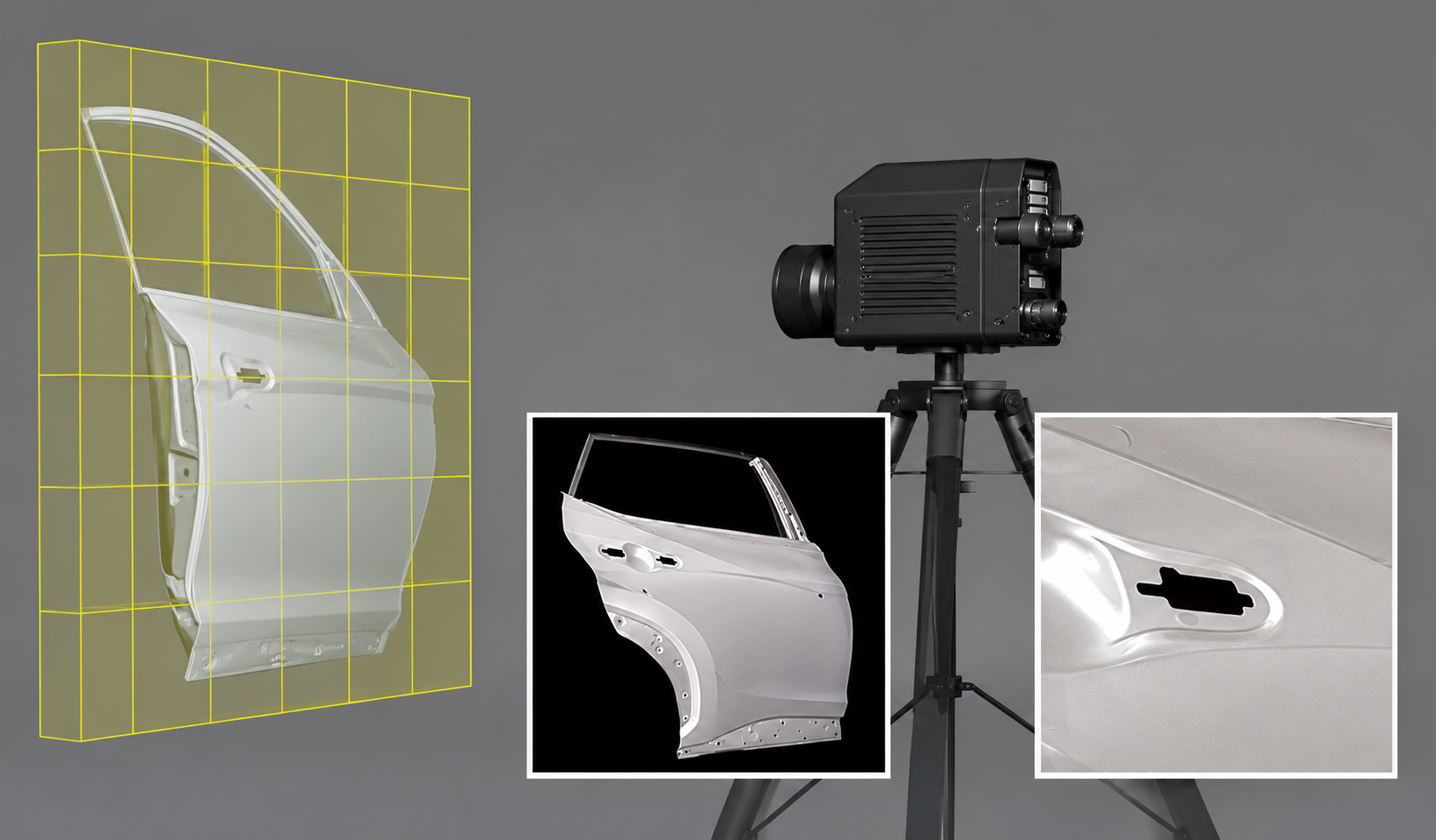
High-Resolution Recording of up to Approximately 288 Megapixels*2 Improves Inspection Quality
Equipped with an 8.1-megapixel sensor, the camera uses the Image Driving function*3 and its 6x magnification optical system to capture selected areas within the wide-angle field of view. This enables high-definition recording with an amount of information equivalent to up to approximately 288 megapixels.
From small electronic components to medium- and large-sized workpieces such as automotive components and door panels, the camera can record fine scratches and defects in high detail, helping reduce missed defects and improve inspection quality.
Shorter Imaging Cycle Times and Reduced Equipment Costs
 With the Image Driving function, users can easily obtain high-resolution magnified images simply by specifying the area they want to inspect in the wide-angle image. This reduces the number of times the imaging position needs to be changed using a robot, slider, or similar mechanism to one-ninth or less,*4 shortening the imaging sequence and contributing to improved productivity. Because the camera can cover a wide area at high resolution without requiring numerous dedicated magnification cameras, depending on the application, a system incorporating dozens of magnification cameras can potentially be replaced by a single Dual Vision Camera. This is expected to simplify system configurations and reduce installation and operating costs.
Supporting Automated Inspection and Smart Factories
The all-in-one design, integrating everything from the lens to the camera housing, reduces the complexity of lens selection and adjustment while also contributing to lower installation workload and capital investment. The camera is also designed for easy integration into automated inspection and robotic systems. By reducing reliance on manual visual inspection, it helps stabilize quality control, reduce labor requirements and maintenance workload, and support smart factory initiatives.
*1 A value indicating the level of fine detail that can be captured. A smaller value enables the capture of finer defects.
*2 Converted value based on the effective recording area obtained by sequentially capturing magnified images. Equivalent to the amount of information contained in approximately 36 images in the 8-megapixel class.
*3 A function that rapidly moves the magnification optical system inside the Dual Vision Camera to a specified position within the wide-angle field of view.
*4 Based on Nikon evaluation conditions. Comparison with a camera equipped with a 32-megapixel sensor capturing an equivalent field of view.
For more information: www.nikon.com