GeoDict Quantify Software Launched for Micro-CT and FIB-SEM Image Analysis
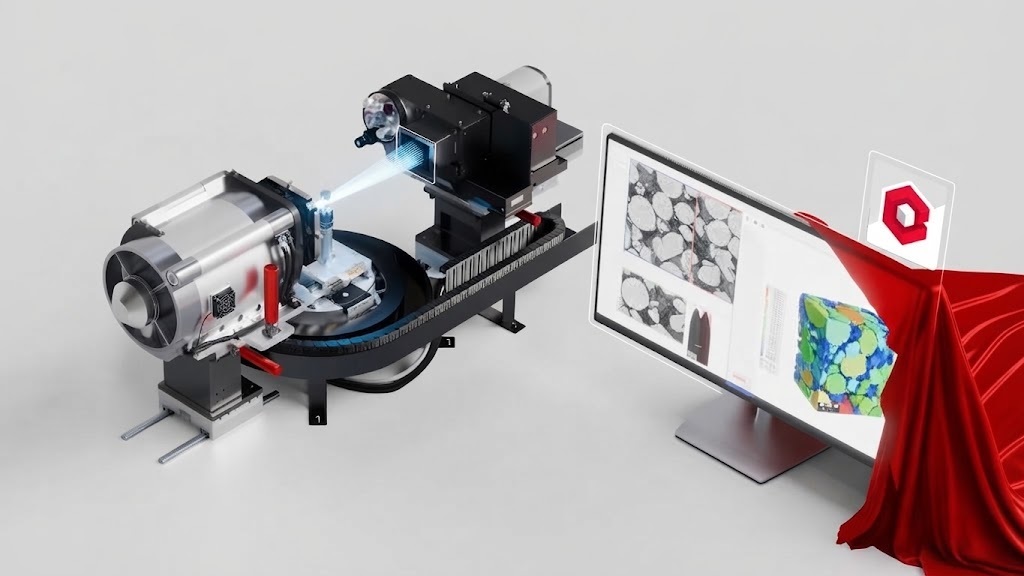
Math2Market GmbH has launched GeoDict Quantify, a focused software package for processing and quantitatively analyzing micro-CT, FIB-SEM, and other high-resolution 3D imaging data. The product brings established image-analysis capabilities to engineers, researchers, imaging laboratories, and industrial quality teams in a cost-effective package.
Modern imaging instruments reveal internal material structures in exceptional detail, but converting these datasets into reliable measurements remains challenging. Analysis workflows often require separate tools for image preparation, segmentation, characterization, visualization, reporting, and automation.
GeoDict Quantify brings these tasks together in a consistent engineering software environment.
 “High-resolution images are only the starting point. Their value comes from turning them into quantitative results that can be reproduced, reported, and compared,” said Anton du Plessis, PhD, Head of Image Processing and Image Analysis at Math2Market. “GeoDict Quantify gives micro-CT and FIB-SEM users a professional analysis solution that goes beyond visualization and basic measurements, while providing an accessible entry point to the GeoDict platform.”
GeoDict Quantify includes specialized tools for preparing micro-CT and FIB-SEM data. These include CT ring artifact removal, non-local means denoising, cropping, downsampling, FIB-SEM slice alignment, and curtaining correction. Complex microstructures can be segmented using threshold-based or AI-assisted methods, including the training of full 3D U-Net models for segmentation and image enhancement.
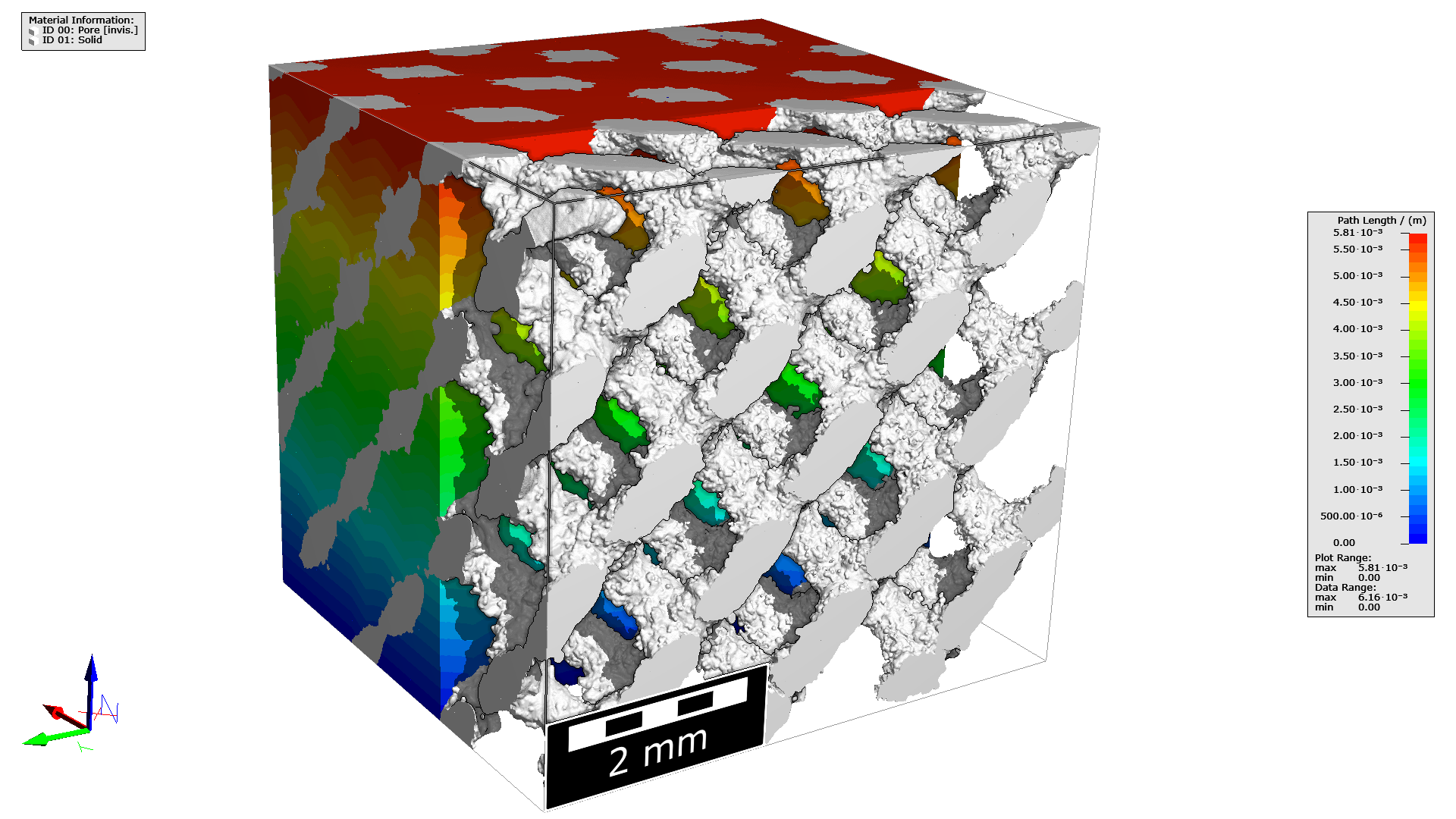
The software supports quantitative characterization of pores, fibers, particles, grains, wall thickness, defects, and deviations from nominal or reference geometries. Available descriptors include size distributions, sphericity, aspect ratio, orientation, connectivity, anisotropy, geodesic tortuosity, and many more advanced statistical measures.
These capabilities support applications in industrial quality assurance, non-destructive inspection, failureanalysis, and additive manufacturing, as well as the characterization of porous materials, composites, nonwovens, powders, batteries, geological samples, and biomedical microstructures.
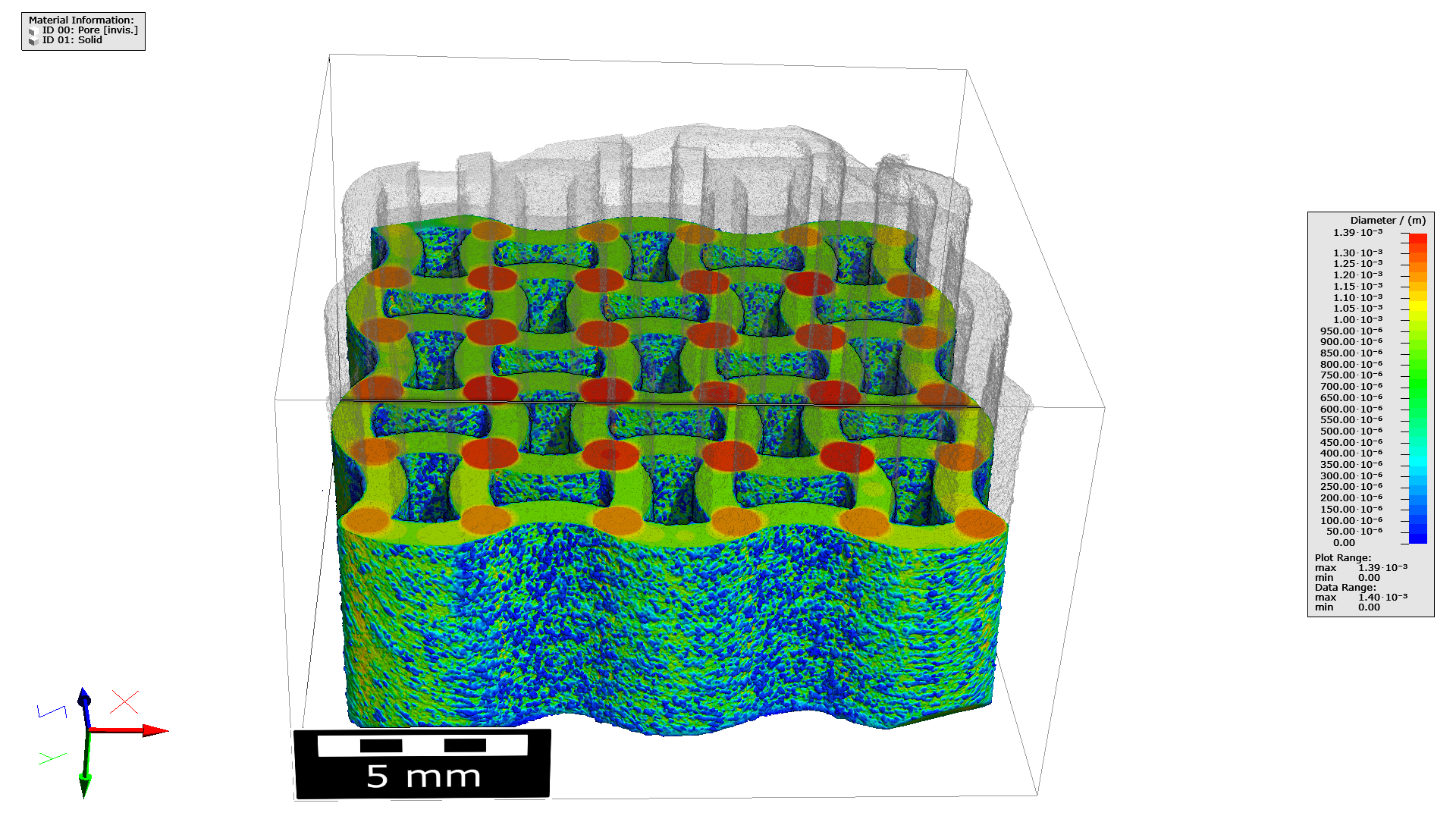 GeoDict Quantify also supports repeatable analysis across samples, users, and projects. Image-processing and analysis steps are automatically recorded as reusable workflows, or recipes. Users can generate standardized reports, result images, 3D visualizations, and animations directly from their analyses. Macros can automate repetitive tasks, while integrated Python scripting supports the development of customized workflows and application-specific tools. Geometries can also be exported as meshes or CAD files for downstream engineering applications.
“GeoDict Quantify brings together established image-processing, AI, and microstructure-analysis technologies in one coherent environment,” said Erik Glatt, PhD, Chief Technology Officer at Math2Market. “Full 3D AI, detailed structural characterization, recorded workflows, reporting, and open customization help users move efficiently from complex image data to reproducible quantitative results.”
GeoDict Quantify is offered as a focused entry package with a predefined combination of GeoDict modules. It is dedicated to image processing and quantitative image analysis and cannot be extended directly with simulation modules. Users who later require digital material modeling or multiphysics simulation can transition to a regular GeoDict configuration based on their technical requirements.
“GeoDict has long connected 3D image data with digital materials engineering,” said Andreas Wiegmann, PhD, Chief Executive Officer of Math2Market. “GeoDict Quantify makes this expertise available to a broader imaging community. It provides detailed image-analysis capabilities today, with a clear path to digital material modeling and simulation as requirements develop. Our long-term ambition is to make GeoDict a standard choice for 3D image analysis and materials characterization.”
GeoDict Quantify was introduced during the plenary program of the GeoDict Innovation Conference 2026.
For more information: www.math2market.com