Renault to Deploy 350 Humanoid Robots in Industrial Automation Push
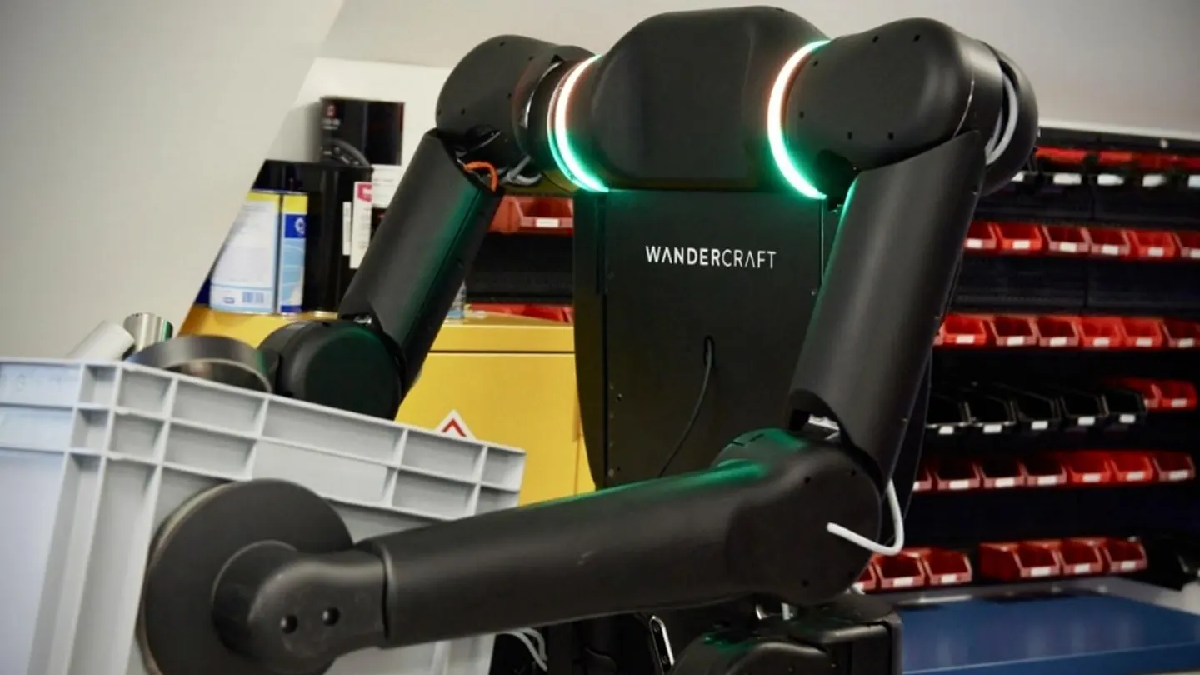
At its recent ‘futuREady’ strategy event, Renault Group announced plans to deploy 350 humanoid robots developed with Wandercraft across its manufacturing facilities within the next 18 months. The move represents one of the most ambitious large-scale implementations of humanoid robotics in automotive production and signals a decisive shift from experimentation to industrial deployment.
Unlike many humanoid robotics programmes that remain confined to controlled demonstrations, Renault’s Calvin humanoid is already operating on the factory floor. At the company’s Douai plant in France, the robot is performing tyre-handling operations, a physically demanding task long associated with ergonomic strain for human workers. This early deployment highlights a pragmatic approach, focusing on real-world applications where humanoid form factors can deliver immediate value rather than pursuing general-purpose capability.
The Calvin platform, particularly the Calvin-40 variant, has been engineered to function within existing production environments. Its ability to handle heavy components, navigate autonomously, and operate continuously within human-centric workflows reflects a design philosophy centred on practical industrial use. Rather than attempting to replicate the full dexterity of human labour, the system targets specific, repeatable processes where flexibility and mobility offer clear advantages over fixed automation.
Renault’s plan to scale to 350 units within a relatively short timeframe marks a significant escalation. The deployment is expected to support broader operational goals, including reductions in production costs and improvements in manufacturing efficiency. By introducing humanoid systems into established production lines, the company is targeting so-called ‘brownfield’ applications – tasks that are repetitive, physically demanding, or difficult to automate using conventional robotic cells. In this context, humanoid robots are not replacing existing automation but augmenting it, adding a layer of adaptability to environments that were not originally designed for robotics.
For the metrology sector, the implications of this development are considerable. As humanoid robots assume greater responsibility for material handling and intra-logistics, their interaction with inspection systems will increase. This shift is likely to drive demand for tighter integration between robotics and measurement technologies, particularly in the form of real-time feedback systems that allow production processes to respond dynamically to quality data.
At the same time, the deployment reflects a broader convergence between artificial intelligence, robotics, and the digital thread. The Calvin robots rely on AI-driven perception and navigation, enabling them to function in less structured environments than traditional industrial robots. This capability aligns closely with the ongoing evolution of connected manufacturing systems, where digital twins, in-line sensing, and closed-loop quality control are becoming increasingly central. Within such environments, humanoid robots may serve not only as labour assets but also as mobile data nodes, contributing to the continuous flow of information across the production ecosystem.
The introduction of humanoid systems also points to a gradual shift in automation strategy. Automotive manufacturing has historically depended on fixed robotic installations, highly structured workflows, and dedicated tooling. By contrast, humanoid robots introduce a degree of flexibility that could simplify reconfiguration and reduce the cost and complexity of integrating automation into existing plants. For metrology, this may accelerate the need for more adaptable inspection solutions capable of operating effectively in dynamic, less predictable environments.
Renault’s initiative builds on its 2025 partnership with Wandercraft, which included a minority investment and a joint development programme for the Calvin humanoid family. Wandercraft’s background in self-balancing robotic systems, originally developed for medical exoskeletons, underpins the stability and mobility of the Calvin platform. This technological foundation enables the robots to operate safely and effectively in spaces designed for human workers, a key requirement for large-scale deployment.
The planned rollout represents one of the clearest indications to date that humanoid robotics is moving beyond the prototype stage and into practical industrial use. While limitations remain, particularly in areas such as fine manipulation and complex assembly, Renault’s strategy avoids these challenges by focusing on high-value, lower-complexity tasks where current technology can deliver immediate returns.
Ultimately, the significance of this deployment extends beyond robotics itself. It reflects a broader transformation in manufacturing, where flexibility, connectivity, and data integration are becoming defining characteristics of the modern factory. For the metrology community, this reinforces the importance of developing measurement systems that are not only precise, but also seamlessly integrated into an increasingly automated and adaptive production environment.