The Rise of Humanoid Robots and Their Role in Smart Factory Metrology
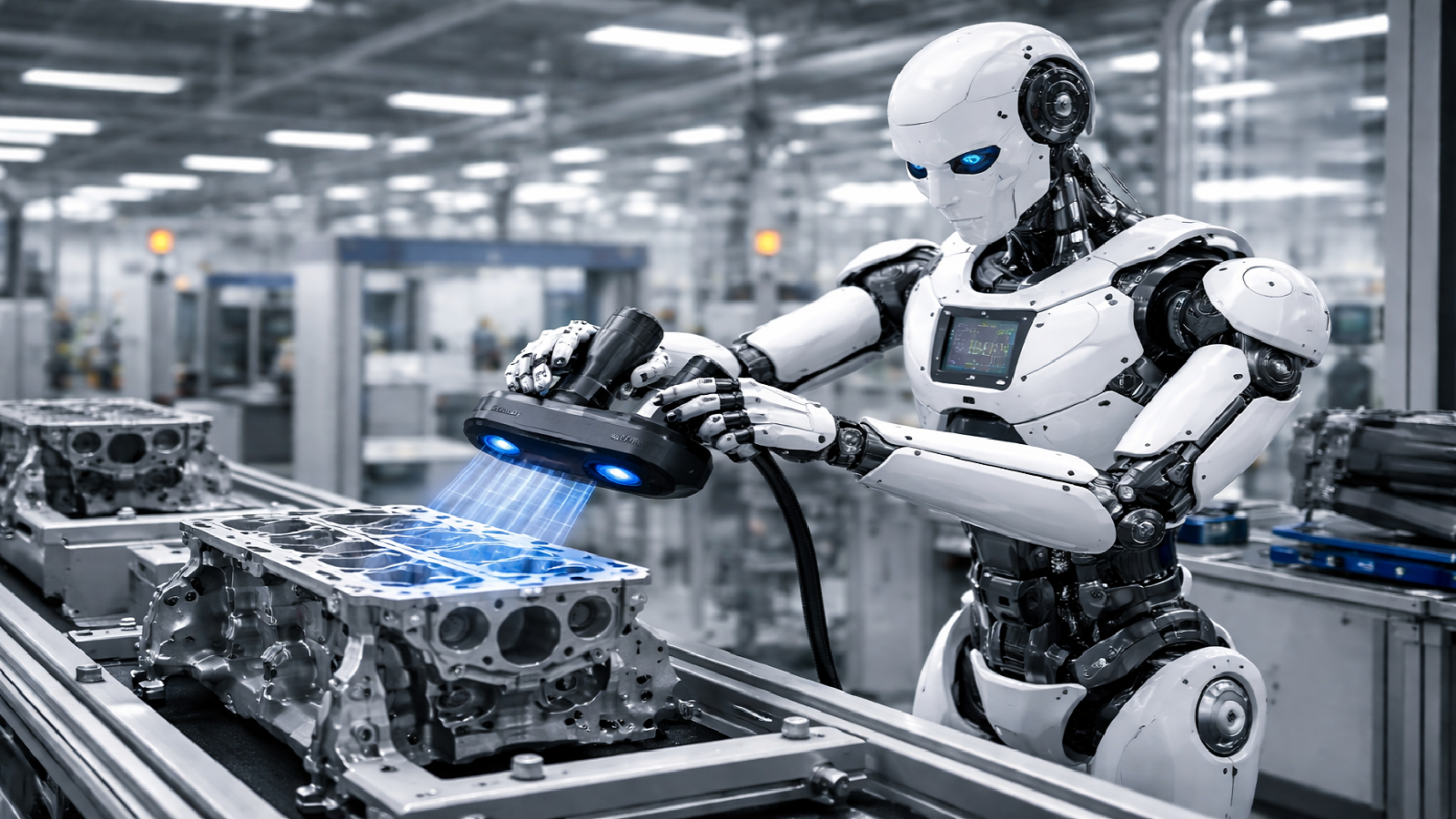
The smart factory is no longer defined by isolated automation cells. It is an environment where machines, systems, and people operate within a continuous data ecosystem – sensing, analyzing, and responding in real time. As this model matures, one of the most intriguing new participants entering the production floor is the humanoid robot. Far from being futuristic curiosities, these human-shaped, AI-enabled robotic systems are emerging as potential enablers of a more connected, adaptive approach to metrology.
Quality control has always been central to manufacturing, but in the smart factory it shifts from a gatekeeping function to a continuous, embedded process. Measurement is no longer something that happens at the end of production; it becomes a live stream of information feeding process optimization, predictive maintenance, and digital twins. Humanoid robots, with their mobility, dexterity, and sensor-rich awareness, align closely with this transition. They are uniquely suited to operate within the same physical and digital spaces as human workers, while acting as intelligent data collectors inside the broader factory network.
Why Humanoid Robots Represent a Different Kind of Automation
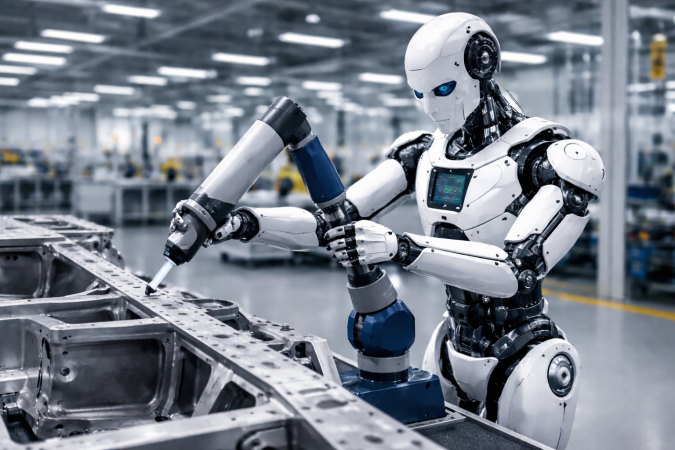 Traditional metrology automation has relied heavily on fixed systems such as CMMs and dedicated robotic inspection cells. These platforms deliver exceptional precision and repeatability, but they are inherently tied to structured layouts and predefined workflows. The smart factory, by contrast, values flexibility and reconfigurability. Production lines change more frequently, product variants increase, and customization becomes routine. Humanoid robots introduce a form of measurement automation that adapts to the factory rather than requiring the factory to adapt to it.
Mobility is central to this shift. In a connected production environment, large assemblies, in-progress builds, and even tools themselves become nodes in the digital system. A humanoid robot equipped with portable scanning or probing equipment can move between these nodes, performing inspection wherever it adds the most value at that moment. Instead of transporting parts to measurement stations, measurement capability travels through the factory. This reduces handling, shortens feedback loops, and supports the smart factory objective of minimizing disruption while maximizing information flow.
Dexterity and Human-Centric Tool Use
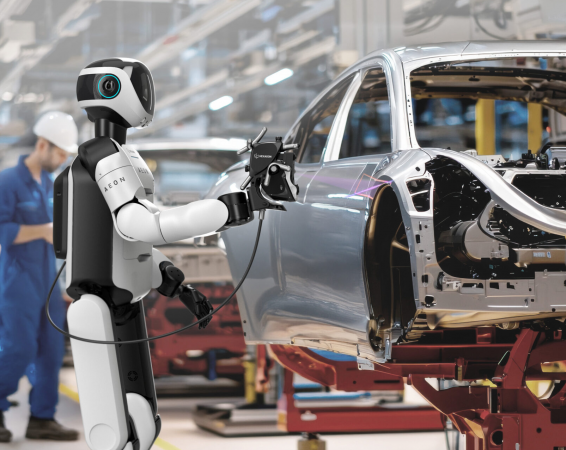
Dexterity expands the range of tasks such robots can perform. Smart factories still contain countless devices and tools designed for human hands. Humanoid robots, with articulated wrists and humanlike manipulators, can operate inspection instruments, position components, or adjust fixtures without extensive redesign of equipment. This ability to work within existing infrastructures accelerates integration and supports gradual, scalable automation rather than large, disruptive overhauls.
Perception as Part of the Factory Sensing Layer
Perception technologies further anchor humanoid robots in the smart factory paradigm. Advanced 3D vision, force sensing, and environmental awareness allow these systems to interpret both the physical state of parts and the dynamic conditions of the production floor. When connected to factory networks, this sensory input does more than guide local actions. It feeds analytics platforms, updates digital twins, and contributes to real-time dashboards that reflect the current health of processes and products. Measurement becomes part of a continuous sensing layer across the facility.
Human-robot collaboration is another defining feature. Smart factories are not lights-out environments devoid of people; they are collaborative ecosystems. Engineers, operators, and quality specialists still provide oversight, decision-making, and contextual understanding. Humanoid robots can function as physical extensions of these experts, carrying out measurement routines, holding sensors, or accessing difficult-to-reach areas while humans focus on interpretation and strategy. Natural interaction methods such as voice commands and intuitive interfaces help integrate robots into daily workflows without steep learning curves.
Within this framework, several applications stand out. In-process metrology becomes more practical when mobile robots can measure parts at critical stages and immediately feed results into control systems. Deviations can trigger automated adjustments in machining parameters, assembly alignment, or process settings. This closes the loop between measurement and manufacturing, a core ambition of the smart factory. Similarly, large-scale inspection of structures in aerospace, automotive, or energy production benefits from robots that can bring measurement tools directly to the workpiece while synchronizing results with centralized data systems.
Calibration activities also take on a new dimension. Rather than being periodic, isolated events, calibration in a smart factory can be integrated into routine operations. Humanoid robots performing consistent calibration checks contribute to a steady stream of verification data, helping detect drift early and maintaining confidence in measurement systems. Over time, the accumulation of robotic inspection and calibration data supports predictive models that anticipate quality issues before they manifest in nonconforming parts.
Integration Challenges
However, aligning humanoid robots with smart factory objectives requires overcoming significant challenges. Metrology demands extreme precision, and mobile humanoid platforms introduce complexities in kinematics, stability, and error compensation. Advanced control strategies, sensor fusion, and external referencing systems are needed to ensure that flexibility does not come at the expense of accuracy. At the same time, robust safety architectures are essential to allow these robots to operate in dynamic environments shared with human workers.
Integration is as much an organizational challenge as a technical one. To deliver value, humanoid robots must be connected into manufacturing execution systems, quality management platforms, and digital twin environments. Their measurement data needs to be contextualized, traceable, and actionable. Without this digital integration, even the most capable robot becomes just another isolated machine rather than a contributor to factory intelligence.
Role of Metrology Professionals
As adoption progresses, the role of metrology professionals will evolve in parallel. Engineers and technicians will increasingly supervise fleets of automated systems, interpret richer datasets, and refine measurement strategies at the system level. The combination of human expertise and robotic consistency supports a model in which quality assurance is continuous, predictive, and tightly interwoven with production.
The rise of humanoid robots in metrology ultimately reflects a broader transformation. In the smart factory, value lies not only in automation, but in connected automation that generates and uses data intelligently. Humanoid robots, acting as mobile, adaptable sensing platforms, have the potential to extend the reach of this data-driven approach across the physical space of the factory. As technologies in AI, sensing, and digital integration continue to mature, these systems may become key contributors to a future where measurement is everywhere, insight is immediate, and quality is engineered in real time rather than inspected at the end.
Once deemed futeristic fantasy humanoid robotics are fast becoming a reality. The way metrology companies respond to the rise of humanoid robotics will be a fascinating, and potentially defining, evolution to watch.
Author: Gerald Jones Editorial Assistant