Robotic CT Pushes Boundaries for Inspecting Complex Composite Structures
As advanced composite structures become larger and more complex, conventional inspection methods are increasingly challenged to keep pace. Bondlines buried deep within honeycomb cores, diagonal splices, multi-layer cores and thick carbon fibre laminates present inspection problems that cannot always be addressed using traditional ultrasonic or X-ray methods.
A new generation of robotic inspection systems is emerging to overcome these challenges. At the Advanced Inspection, Methods and Materials (AIMM) Center in Ogden, Utah, Omni NDE has upgraded its robotic computed tomography (CT) platform, demonstrating how robotic scanning, high-resolution detectors and advanced software can expand the possibilities for non-destructive evaluation (NDE) of composite and hybrid structures.
Centre Dedicated to Next-Generation NDE
 The AIMM Center was established to develop and demonstrate advanced non-destructive testing (NDT), non-destructive inspection (NDI) and NDE technologies for demanding industrial applications. Created through a partnership between Omni NDE (Tucson, Arizona) and composite inspection specialist CICNDT (Ogden, Utah), the facility brings together robotic inspection technologies, specialist engineering expertise and scan-as-a-service capabilities.
The centre houses a comprehensive suite of inspection technologies, including laser ultrasound, laser shearography, thermography, laser surface profiling, and X-ray computed tomography. A team of engineers and Level 3 inspectors with decades of experience across aerospace, defence, biomedical, wind energy and marine industries supports demonstrations and inspection projects. For manufacturers developing increasingly complex composite assemblies, the aim is to provide both technology development and practical inspection services.
Upgrading Robotic CT Platform
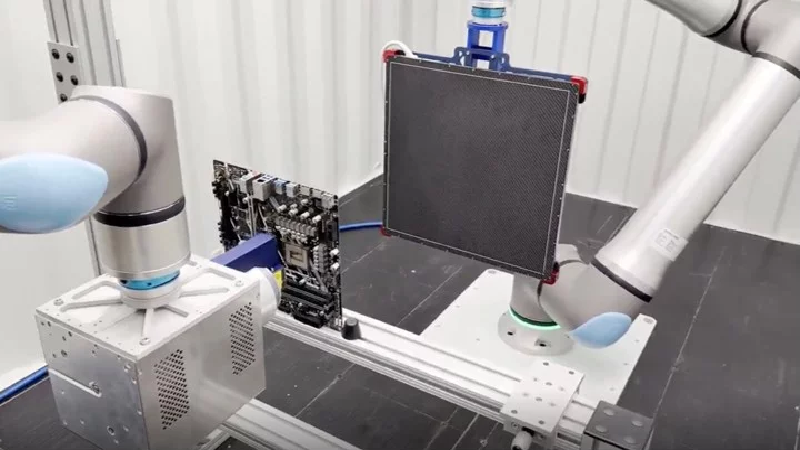
At the centre of the AIMM facility is Omni NDE’s Robot CT system, designed for automated scanning of large or difficult-to-inspect components. The latest upgrade replaces earlier collaborative robots with Univeral Robotics UR20 cobots, increasing payload capacity to 25 kg and enabling integration of a more powerful X-ray source and larger detector.
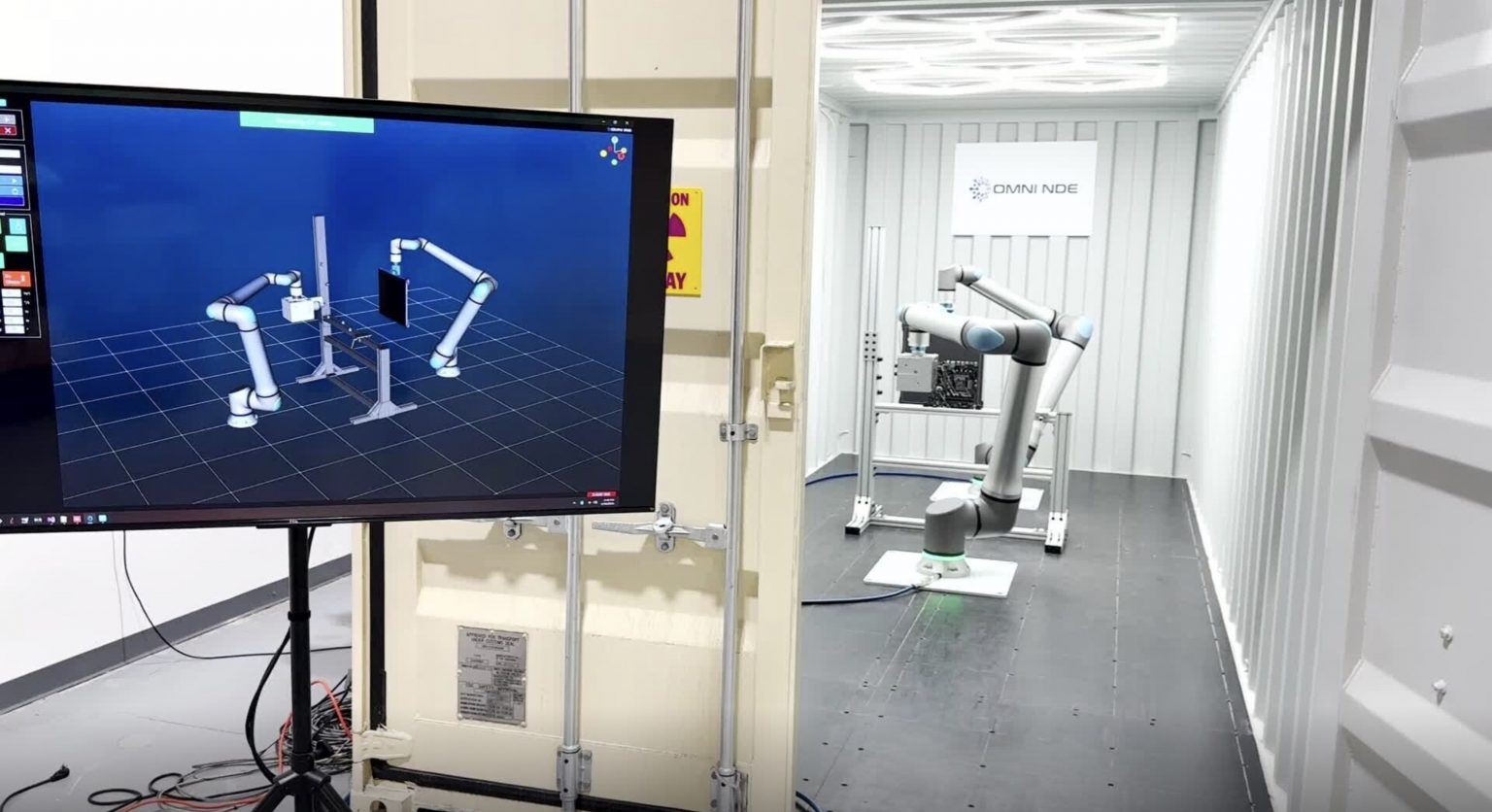
The upgraded system features a 130 kV X-ray source, a 43 × 43 cm detector, high-precision robotic motion control, and a 4K 360° monitoring system for real-time observation of scans. According to James Bennett, CEO of Omni NDE, the enhanced system significantly expands the range of parts that can be inspected.
“The new system allows us to scan larger parts while maintaining extremely high detail, down to around two-micron resolution,” he explains. “For example, we recently received a three-metre-long carbon fibre composite component that we can now inspect in ways that would have been difficult previously.”
The system is controlled using Omni NDE’s Iris scanning software, which enables operators to manage scanning parameters and monitor inspection progress in real time. Dual displays allow engineers to control the scan via the Iris platform while simultaneously observing the robot motion and detector output through the integrated camera system. This provides a clear view of the scanning process and enables on-the-fly adjustments during inspection.
Inspecting Difficult Composite Features
The robotic CT system has already been used to inspect a wide range of materials and assemblies for customers across the United States. These include metallic components as well as advanced composite structures made from carbon fibre reinforced polymer (CFRP) and ceramic matrix composites (CMC). Many of the inspected parts include complex core structures such as honeycomb panels. These structures contain internal adhesive bondlines and core splices that are notoriously difficult to inspect using conventional NDT methods.
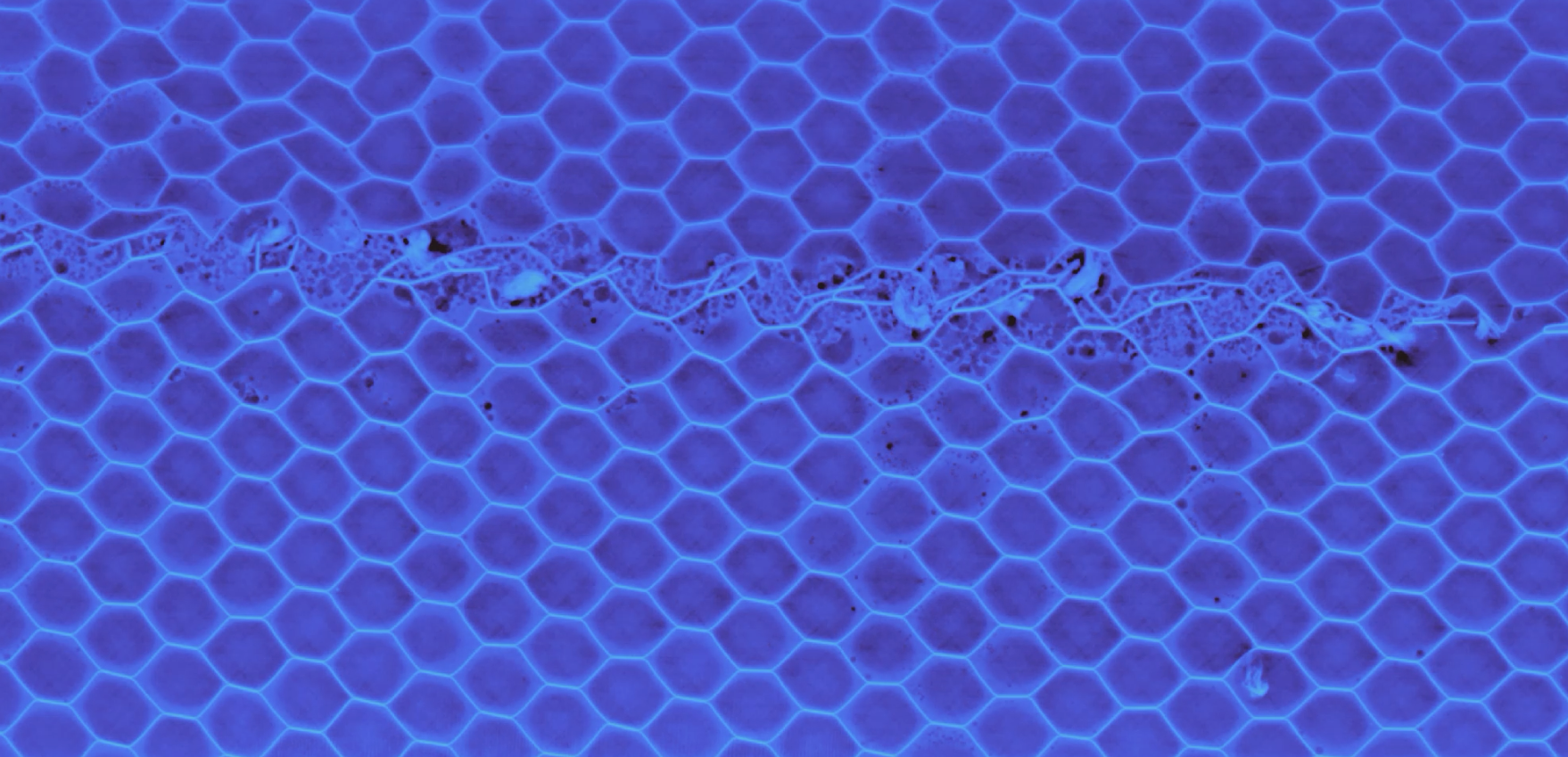
“We are able to inspect core splices and adhesive bondlines in considerable detail, even in multi-layer core structures,” Bennett says. In some cases, components have included up to seven layers of core separated by septums. The robotic CT system can visualise each individual layer and the adhesive fillets extending down the honeycomb cell walls.
Beyond detecting intentionally introduced defects, the system has also identified voids within adhesive layers, porosity in composite structures, foreign object debris (FOD), and subtle bonding anomalies. These defects can significantly affect structural integrity but may be difficult to detect using other inspection methods.
Moving Beyond Orthogonal Inspection
One of the key advantages of robotic CT and computed laminography is the ability to analyse features that are not aligned with traditional inspection planes. Many composite assemblies contain diagonal bondlines or splices, which present challenges for ultrasonic inspection and other NDT techniques.
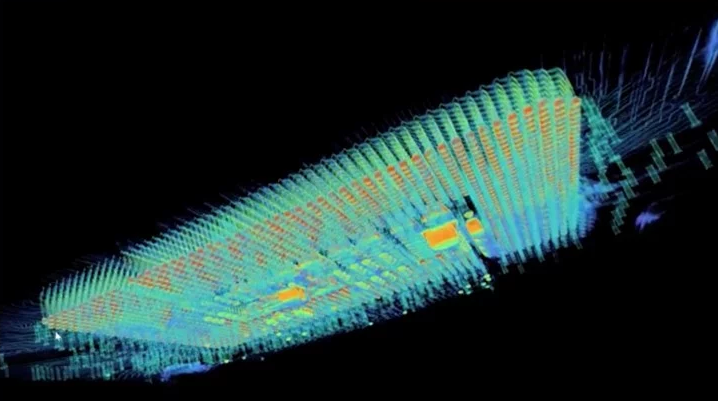
“Ultrasonic testing cannot follow diagonal splices and bondlines, and neither can shearography or thermography,” Bennett explains. Robotic CT overcomes this limitation by generating a full three-dimensional volume of the inspected component. Once the volume is created, operators can virtually ‘slice’ the data in any orientation.
Instead of restricting analysis to standard X, Y or Z planes, inspectors can align slices with the exact angle of a bondline or splice. This allows them to step through the thickness of the bond region in the same plane as the feature itself. The approach mirrors the way radiologists analyse medical CT scans, providing far greater insight into complex internal structures.
Targeted Inspection Using Computed Laminography
Traditional CT inspection often requires scanning an entire component, which can be time-consuming and impractical for large structures. Omni NDE’s robotic platform introduces a more flexible approach through computed laminography. Rather than scanning the whole part, laminography enables the system to focus on specific regions of interest within large structures.
This targeted inspection approach allows engineers to inspect only critical features or suspected defect areas, analyse bondlines or core splices within large panels, and investigate porosity or void clusters in localised regions. The method can also detect extremely subtle bonding problems, including so-called ;kissing bonds’ where surfaces are in contact but not fully bonded. In some cases, the system can even reveal thin tendrils of adhesive that touched during application but separated during curing, leaving weak or incomplete bonds.
According to Bennett, this capability provides a powerful diagnostic tool. “Our system offers a quick and efficient way to definitively show whether disbonds are present or not, and there are very few other inspection methods that can do that effectively.”
Expanding Inspection Possibilities
As aerospace, defence and energy industries increasingly rely on advanced composite materials, inspection technologies must evolve to match the complexity of modern structures. Robotic CT and computed laminography are emerging as valuable tools for inspecting thick laminates, complex bondlines and large composite assemblies that are difficult to evaluate using traditional techniques.
By combining robotics, high-resolution detectors and intelligent software, systems like those at the AIMM Center are demonstrating how automated inspection can deliver detailed insights into structures that were previously challenging to evaluate. For manufacturers developing next-generation composite components, such capabilities may prove critical in ensuring structural integrity, quality assurance and certification compliance in the years ahead.
For more information: www.omni-nde.com