Lumafield Expands Industrial CT Platform with High-Speed Metrology, Large-Part and Inline Inspection Solutions
Industrial X-ray computed tomography (CT) continues to reshape the way manufacturers understand product quality. By enabling full internal visibility without destructive testing, CT technology is increasingly central to metrology, quality control, and production decision-making.
U.S.-based technology company Lumafield has announced three new hardware solutions designed to extend the capabilities of its industrial CT platform: Neptune Performance, Saturn, and Mars. Each system targets a different stage of the product lifecycle—from high-precision metrology to large-part inspection and high-throughput production screening—while remaining tightly integrated with Lumafield’s software ecosystem.
Together, these new systems expand the Lumafield platform’s ability to deliver comprehensive product insights across global research, engineering, and manufacturing operations.
Advancing Metrology with Neptune Performance
At the heart of the announcement is Neptune Performance, Lumafield’s metrology-grade industrial X-ray CT solution designed to deliver faster, more accurate dimensional analysis.
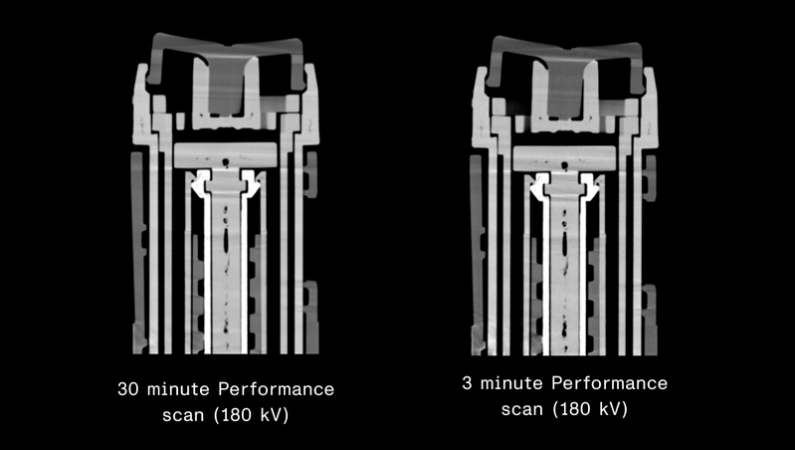
The system builds on the company’s Neptune hardware architecture to provide significantly improved scanning capability. According to Lumafield, Neptune Performance enables 15× faster scans while delivering four times the data quality, allowing engineering and metrology teams to generate reliable dimensional results in a fraction of the time required by traditional workflows.
For complex parts, internal geometries often present major challenges for conventional metrology techniques. Coordinate measuring machines (CMMs) and optical systems frequently require time-intensive fixturing and programming, and even then can struggle to capture hidden features.
Neptune Performance addresses these limitations by measuring internal geometry directly in full 3D. The system enables engineers to capture critical dimensions across intricate geometries—including features that are impossible to probe physically—without the need for part sectioning or sparse point measurements.
This capability is particularly valuable for modern components made from materials such as transparent or flexible plastics, where optical inspection methods can struggle. By capturing complete volumetric datasets, Neptune Performance allows teams to evaluate internal features alongside external geometry within a single digital model.
For metrology teams tasked with verifying functionality and ensuring dimensional compliance, the ability to rapidly access complete internal measurement data can significantly accelerate validation workflows while reducing the risk of undetected defects.
Large-Part CT Inspection with Saturn
While Neptune Performance focuses on precision metrology, Lumafield’s new Saturn system targets large and dense components that traditionally require specialized CT infrastructure.
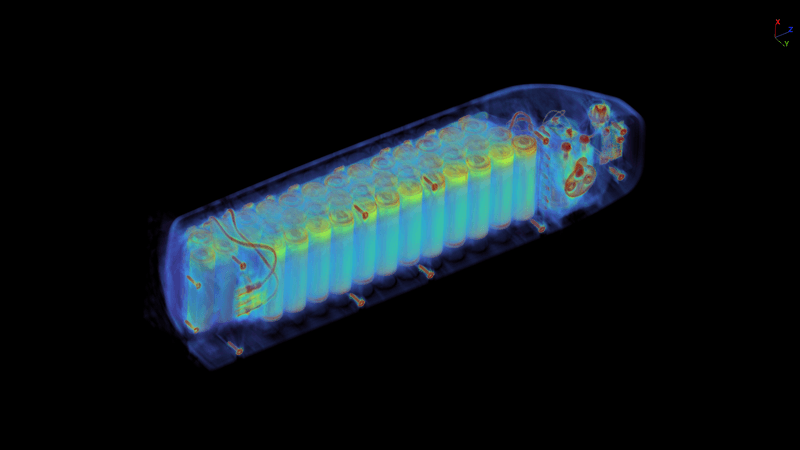
Saturn is a large-format industrial CT scanner designed to inspect full-scale assemblies and high-mass components. The system provides an extended-capacity, high-energy scanning solution with what Lumafield describes as the largest scannable volume of any industrial CT scanner designed to fit through a standard double door.
Large components, particularly in aerospace, automotive, and energy sectors, often present significant inspection challenges. Traditional non-destructive evaluation (NDE) techniques may rely on sample-based inspections or destructive sectioning, limiting the ability to fully understand internal quality.
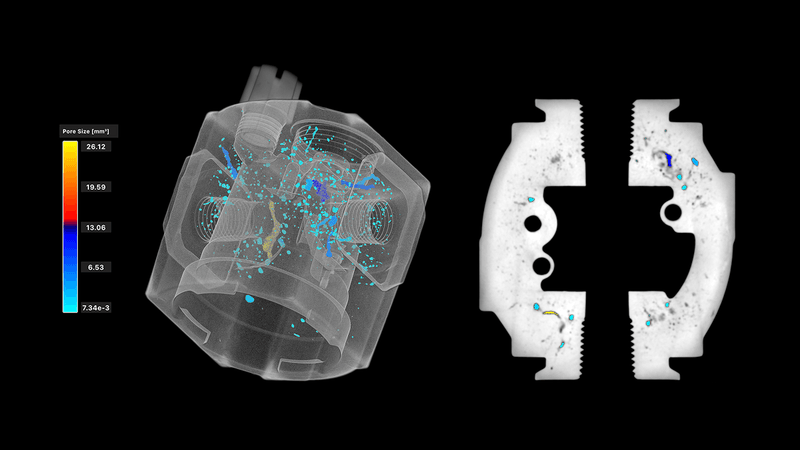
Saturn enables entire components to be scanned in a single setup, providing complete internal visibility. This allows engineers to evaluate features such as porosity in castings, wall thickness variations, bond integrity and weld quality. These characteristics are often hidden or only partially revealed by conventional inspection methods.
The system is designed to support high-value and safety-critical applications. For example, Saturn can capture digital radiographs compliant with AMS-2175, the aerospace standard for casting inspection, while also enabling full CT scans for detailed analysis of pores, cracks, and residual powder.
Potential applications span a wide range of large and complex structures, including aerospace castings, large additive manufacturing components, automotive structural castings, solid rocket motors and prismatic battery systems.
By combining its expanded scan volume with Lumafield’s automated analysis tools, Saturn aims to help engineering teams move faster from defect discovery to informed decision-making.
Scaling Inspection to Production with Mars
Completing the trio is Mars, an in-line X-ray inspection system designed to bring CT-driven insights directly into high-volume production environments.
While CT has traditionally been associated with laboratory and engineering use cases, manufacturers are increasingly seeking ways to apply advanced inspection technologies on the production floor—particularly where defect escapes carry significant financial or safety risks.
Mars addresses this need by enabling 100% screening at production-line speeds, helping manufacturers identify critical defects before products leave the factory.
The system uses a multi-linear detector architecture capable of generating 2.5D scan data in a single pass. Compared with conventional 2D X-ray inspection, this approach provides greater depth information, improving defect visibility without sacrificing throughput.
The additional dimensional insight allows manufacturers to detect issues that may be difficult to identify using traditional planar radiography.
Mars also integrates with Lumafield’s automated analysis software, which converts scan data into consistent, repeatable inspection decisions. Configurable sorting and rejection mechanisms allow defective parts to be automatically removed from the production stream, supporting real-time quality control.
Designed for seamless line integration, Mars enables manufacturers to deploy X-ray inspection without significantly disrupting existing workflows.
Unified Software-Driven Inspection Platform
Although Neptune Performance, Saturn, and Mars address different inspection challenges, they share a common foundation: integration with Lumafield’s software platform.
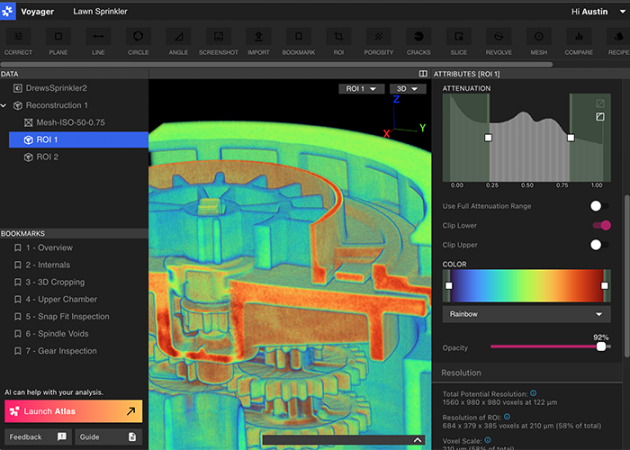 By connecting hardware systems across multiple facilities, the platform provides organizations with centralized visibility into product quality across research labs, pilot production lines, and full-scale manufacturing sites.
This unified digital approach enables teams to compare scan data across locations, track defect trends over time, and standardize quality decisions across global operations.
As manufacturing systems become increasingly digital and data-driven, the ability to connect inspection tools into a broader analytics ecosystem is becoming a key differentiator for industrial metrology platforms.
Expanding the Role of CT in Quality Assurance
The introduction of Neptune Performance, Saturn, and Mars highlights the continued evolution of industrial CT from a specialized inspection tool into a versatile, scalable quality solution.
From precision dimensional metrology and large-part inspection to high-throughput production screening, Lumafield’s expanded portfolio reflects a broader industry trend: integrating internal inspection directly into the digital manufacturing workflow.
As product complexity increases – particularly with additive manufacturing, advanced materials, and integrated assemblies—the ability to capture complete internal data quickly and reliably is becoming essential.
With these new systems, Lumafield is positioning industrial CT not just as a diagnostic tool, but as a core component of modern product development and manufacturing quality strategies.
For more information: www.lumafield.com