Comprehensive Reverse Engineering and Metallurgy Services Meet Aerospace Challenges
When a leading FAA-certified repair station faced the challenge of replicating critical components without original design documentation, it turned to NVision, Inc. NVision provides complete reverse engineering, encompassing 3D scanning, 3D CAD modeling, 2D drawings, and materials analysis. Leveraging its advanced scanning/measurement, engineering, and metallurgy capabilities, along with deep expertise in metrology, NVision delivered a complete solution that ensured top-to-bottom replication accuracy.
“Their thorough, comprehensive reverse engineering not only met but exceeded our expectations,” said the facility’s Quality Control Manager. “As a result, we experienced accelerated design turnaround and a significant reduction in manufacturing risks and associated costs. The best part was that we didn’t have to work with multiple companies–NVision is a one-stop shop. They handled every aspect of the process and knew the right questions to ask.”
The Repair Station
For over 40 years, the repair station has served the aerospace industry with precision and reliability. Specializing in aircraft components and assemblies, the company’s operations include Non-Destructive Testing (NDT), in-house machine shop services, parts sales and sourcing, and more. Over the decades, the company has earned a global reputation for quality workmanship and outstanding customer service, becoming a trusted partner to aerospace professionals worldwide.
A recent project presented a challenge that would have been nearly impossible to overcome in the past: to complete a complex assembly overhaul, the company needed accurate digital reproductions of two key components—a piston and an integrated sleeve—without access to their original 3D CAD files or material specifications.
When Incomplete Data Becomes a Costly Risk
Many aerospace specialists must work with legacy parts that lack up-to-date documentation. Without high-precision reverse engineering and metrology-driven validation, replicating these parts can result in:
- Improper fit
- Suboptimal materials
- Reduced product life
- Rework and costly delays
NVision’s comprehensive reverse engineering eliminates these risks by combining dimensional accuracy, 3D CAD expertise, and detailed materials analysis to ensure precision and performance.
Small Parts with Big Responsibilities
Pistons, integrated sleeves, and other parts are critical components in aerospace systems. The piston in this case is small, cylindrical, and transfers hydraulic force to an aircraft’s rotating components. The other part, a small ring-shaped integrated sleeve, regulates energy transfer and wear. Both components require extremely tight tolerances and must be made from materials capable of withstanding extreme pressure, heat, and wear.
The Reverse Engineering Challenge
The repair station needed three critical data sets: precise part dimensions, confirmed material composition, and production-ready blueprints. Without access to original documentation, the risk of delays, performance issues, and expensive rework loomed large.
NVision addressed the challenge with its full-service reverse engineering solution. To create functionally identical replacements, the team fully characterized each part, both dimensionally and metallurgically, prior to 3D CAD modeling. Using ultra-high-precision 3D scanners (employing laser, structured-light, and other technologies), NVision captured millions of data points within minutes, ensuring accuracy for even the most intricate geometries.
After scanning, the data was converted into detailed surface models and then into solid 3D CAD files for:
- Reverse engineering
- CNC machining
- Quality inspection
- Stress simulations
NVision’s metallurgical testing identifies alloy composition, heat treatments, and potential structural issues to ensure that replacement parts meet or exceed the original performance standards.
Inside NVision’s Complete Reverse Engineering Process3D Scanning
Parts Involved:
- Piston (approximately 2 inches in length and 1 inch in diameter)
- Integrated sleeve (roughly 0.3 inches in outer diameter, 0.12 inches in inner diameter, and 0.3 inches in height)
NVision examined five parts in total: two were designated for materials analysis and three for 3D scanning. Using ultra-high-precision laser systems, they captured geometry down to microns. Key considerations included:
- Multiple Sample Scans: To account for minor dimensional variations, NVision scanned multiple sleeves and averaged the data to ensure consistent and accurate modeling.
- Internal Geometry Capture: The piston required detailed internal scanning, a challenging process due to its compact, cylindrical structure.
3D CAD Model Creation : After scanning, NVision created high-resolution 3D CAD models. The client received models in multiple formats, including SolidWorks native files and IGES/STEP files.
NVision also provided optional 2D technical drawings to support machine shop manufacturing.
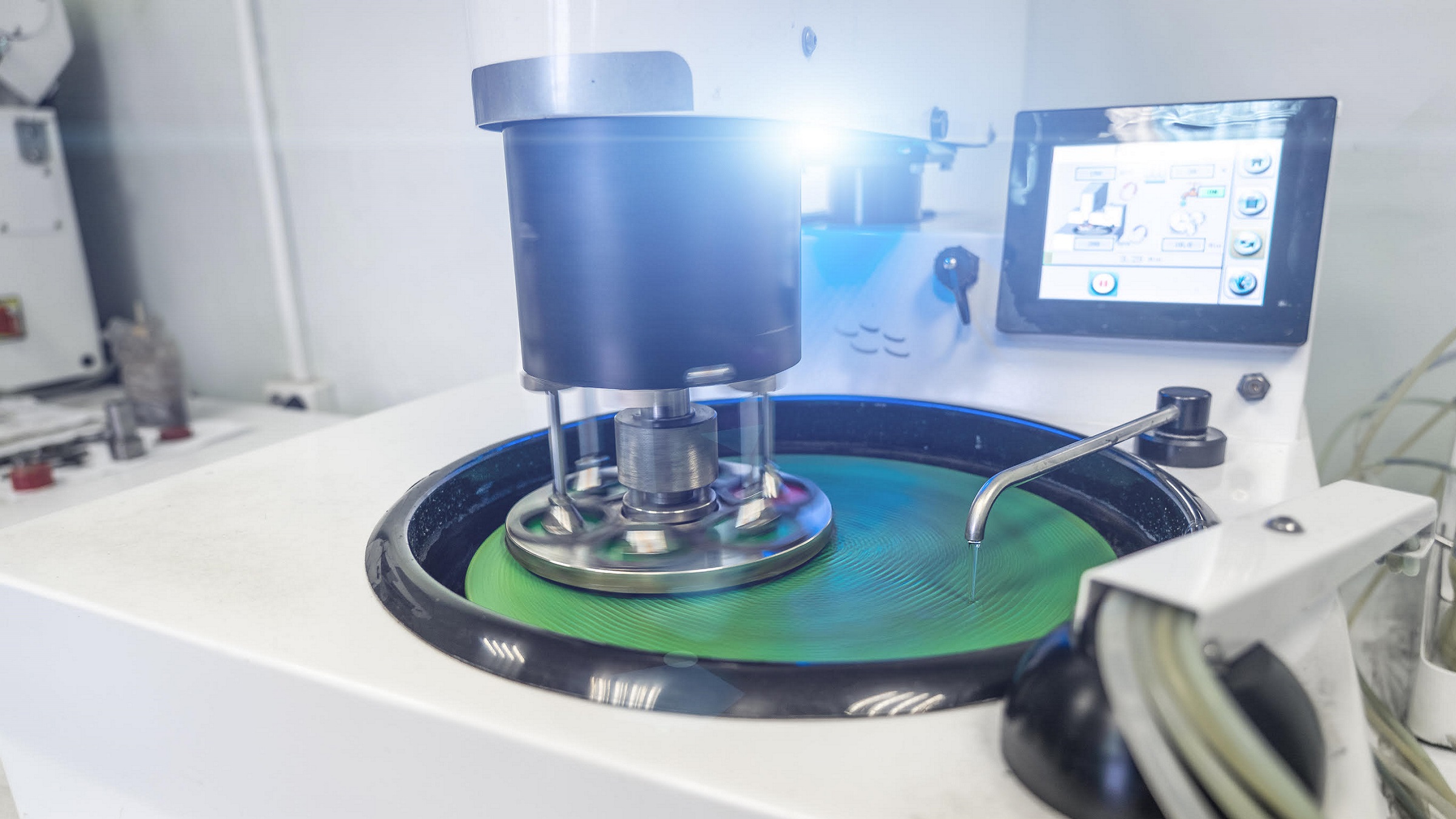
Materials Testing and Metallurgical Analysis: Since form alone doesn’t guarantee function, a critical element of NVision’s reverse engineering process is comprehensive materials testing.
“To fully duplicate a part’s performance, you need more than just its measurements; you also need to know its material composition,” explains Steve Kersen, NVision’s president. “For example, you may have the complete dimensional details of a gear, but if you make it from aluminum instead of steel, it could wear out prematurely or fail under normal loads.”
“We want to determine what type of metal the part is made from, what kinds of treatments—such as heat treatment—it has undergone, the composition of its surface finish, and its tensile strength. We conduct a wide range of analyses, including metallographic examination, hardness and impact testing, and identify and map corrosion, decarburization, and other structural conditions.”
Using advanced instrumentation, NVision performed both quantitative chemical and physical analyses to identify each part’s precise alloy composition, surface coatings, and any post-manufacturing treatments such as plating or heat treating.
For example, chemical analysis confirmed the piston to be a heat-treated martensitic chromium stainless steel alloy with a corrosion-resistant surface finish. Its uncoated surface had been bead-blasted using silicon carbide and alumina to enhance durability and surface integrity. The part contains elevated levels of carbon, nickel, and copper, which contribute to improved strength, hardness, and wear resistance – ideal for high-stress, high-wear applications.
The integrated sleeve was determined to be made from a material consistent with free-cutting brass, a copper alloy prized for its excellent machinability, wear resistance, and structural stability. The sleeve’s outer surface was revealed to be coated with silicone oil, and no plated metals were detected using energy-dispersive (ED) spectrometry.
By fully characterizing the material composition and treatment history of both parts, NVision enabled the fabrication of replacements that not only matched the original components in shape and size but also met, or even exceeded, their mechanical and thermal performance in real-world operating conditions.
Fast, Accurate Delivery
From part receipt to data delivery, the entire project was completed in just ten business days.
“I was very impressed with NVision’s quick turnaround time and the high level of detail they provided,” said the Quality Control Manager. “NVision even ran extra scans to calculate better averages. The result was far more accurate than anything we could’ve assembled in-house.”
A Successful Partnership
NVision’s comprehensive reverse engineering service, integrating high-resolution scanning, 3D CAD modeling, and materials analysis and metallurgical testing, delivered value in four key areas:
Speed: Project completed in under two weeks
Precision: Sub-millimeter accuracy in scanning and modeling
Material Insight: Metallurgical confirmation of all materials
Manufacturing Readiness: 3D CAD files and prints ready for fabrication
“The solution was complete, precise, and timely,” said the Quality Control Manager. “It gave us everything we needed to replicate the parts with confidence. Their one-stop solution reduces vendor complexity, improves technical accuracy, speeds time to market–and provides peace of mind.”
More and more manufacturers and facilities are discovering the advantages of NVision’s comprehensive approach to reverse engineering. By combining 3D scanning, 3D CAD modeling, materials analysis and metallurgical testing – and applying rigorous metrology principles throughout – NVision delivers results that are faster, more accurate, and more complete than traditional methods, benefiting a broad range of industries.
For more information: www.nvision3d.com