Compact 3D Scanners Target GD&T-Driven Inspection Demands
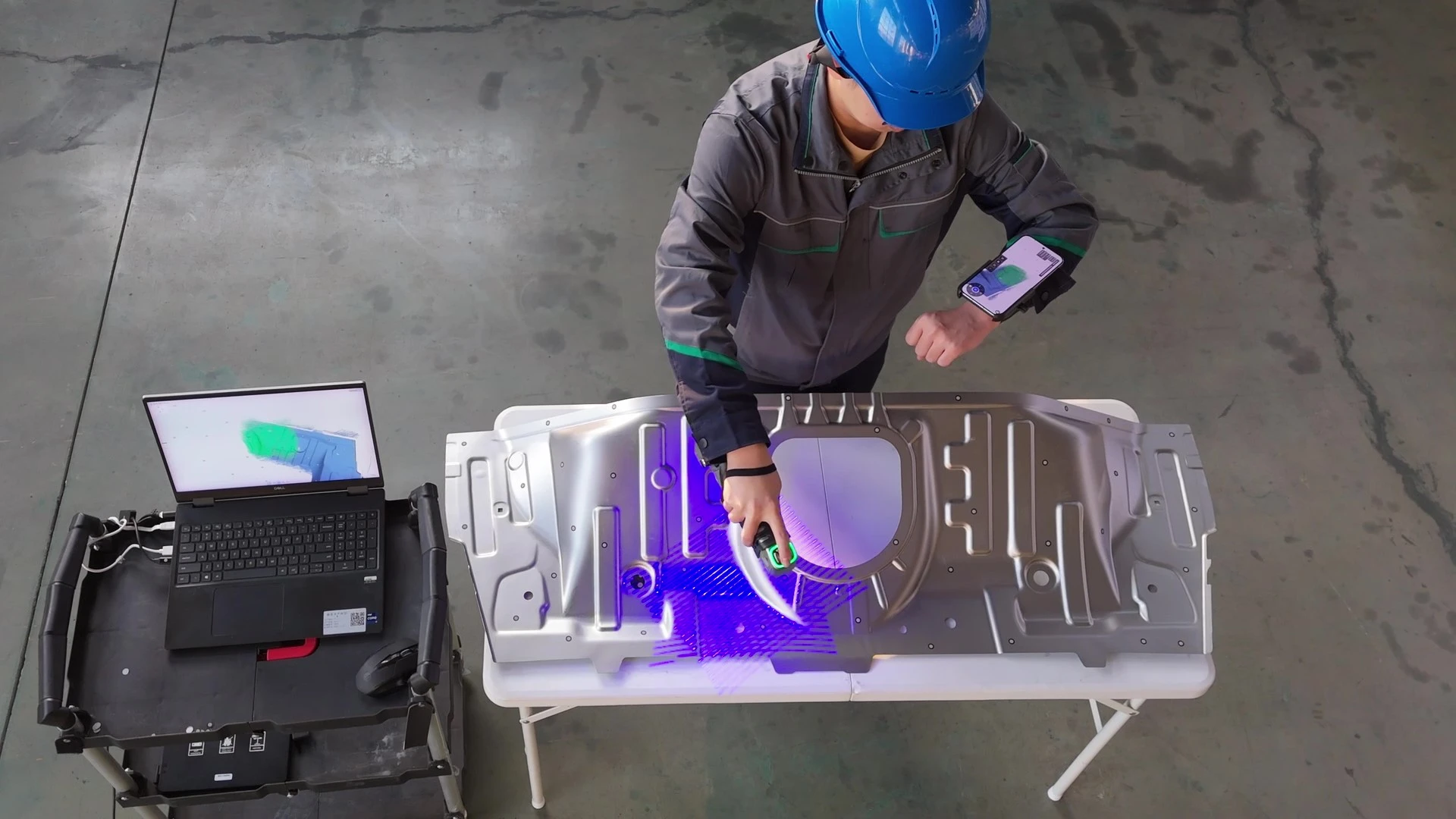
Chinese manufacturer SCANOLOGY has introduced the SIMSCAN-S Gen2, a palm-sized 3D scanner positioned for applications where measurement confidence and geometric fidelity are critical.
As sectors such as aerospace and precision machining continue to tighten tolerance requirements and place greater emphasis on GD&T compliance, the focus is shifting from rapid data capture alone to the reliability of that data. The SIMSCAN-S Gen2 reflects this trend, incorporating sphericity and flatness control within its accuracy framework to support more consistent geometric evaluation.
Focus on Geometry and Measurement Confidence
 The system combines updated optics with revised processing algorithms to achieve a stated accuracy of 0.015 mm. Its design places emphasis not only on dimensional capture but also on the assessment of surface form, enabling the detection of deviations relevant to functional features and assembly interfaces.
This capability supports inspection workflows where feature-level verification is required, particularly for precision-machined components and geometries that define part fit and performance. Compliance with ISO 10360 aligns the system with established international verification standards.
Portability and Workflow Integration
Weighing 560 g and housed in a magnesium-alloy structure, the scanner is designed for handheld use in a range of environments. A detachable charging base and integrated display allow operators to monitor scanning progress in real time, supporting more immediate feedback during data acquisition.
Wireless data transfer and onboard processing reduce reliance on tethered setups, which may be beneficial when working in confined spaces or on large components. These features reflect a broader industry move toward more flexible, shop-floor-compatible metrology solutions.
Data Capture and Application Range
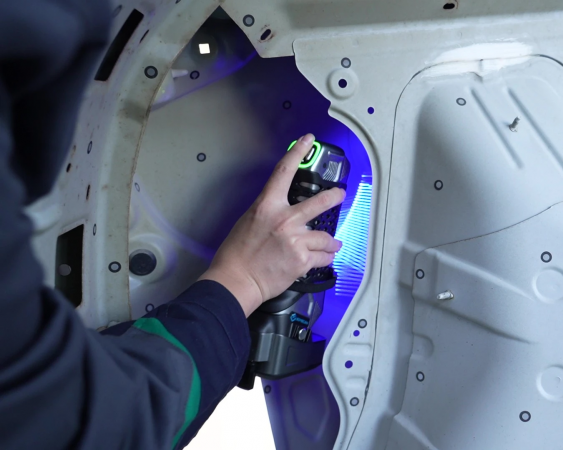
The SIMSCAN-S Gen2 utilises 108 blue laser lines and offers high data acquisition rates, supporting the capture of dense point clouds across complex surfaces. A short-baseline camera configuration enables access to recessed features such as deep holes, slots, and narrow channels—areas that can present challenges for conventional optical systems.
Multiple scanning modes allow users to prioritise either speed or detail depending on the application, from rapid overall geometry capture to higher-resolution inspection of specific features. This flexibility positions the system for use across inspection, reverse engineering, and product development workflows.
Overall, the SIMSCAN-S Gen2 reflects ongoing developments in portable 3D scanning, where compact form factors are combined with increasing emphasis on measurement traceability and geometric accuracy.
For more information: www.3d-scantech.com