Shape-Shifting Tooling – The Future of Agile Manufacturing?
Manufacturing industry may be on the brink of a fundamental shift. Over the next decade, a new class of shape-shifting, polymorphic manufacturing machines could redefine how products are designed, tooled, and produced – unlocking mass customisation at costs previously achievable only through traditional high-volume manufacturing.
According to Fyous, a pioneer in polymorphic manufacturing technology, this emerging approach addresses long-standing bottlenecks that have constrained both injection moulding and industrial-scale additive manufacturing. In a newly released whitepaper, Polymorphic Manufacturing: The Critical Factor for Mass Customisation, the company outlines how reconfigurable tooling systems could eliminate fixed tooling constraints and enable truly agile, high-speed production.
Breaking Tooling Bottleneck
Conventional manufacturing processes rely heavily on fixed tooling. In injection moulding, tooling can take months to design and manufacture, often representing up to 98% of total part costs at low to medium production volumes. While additive manufacturing has helped reduce tooling dependency, it still struggles to deliver the throughput, surface quality, and unit economics required for industrial-scale production.
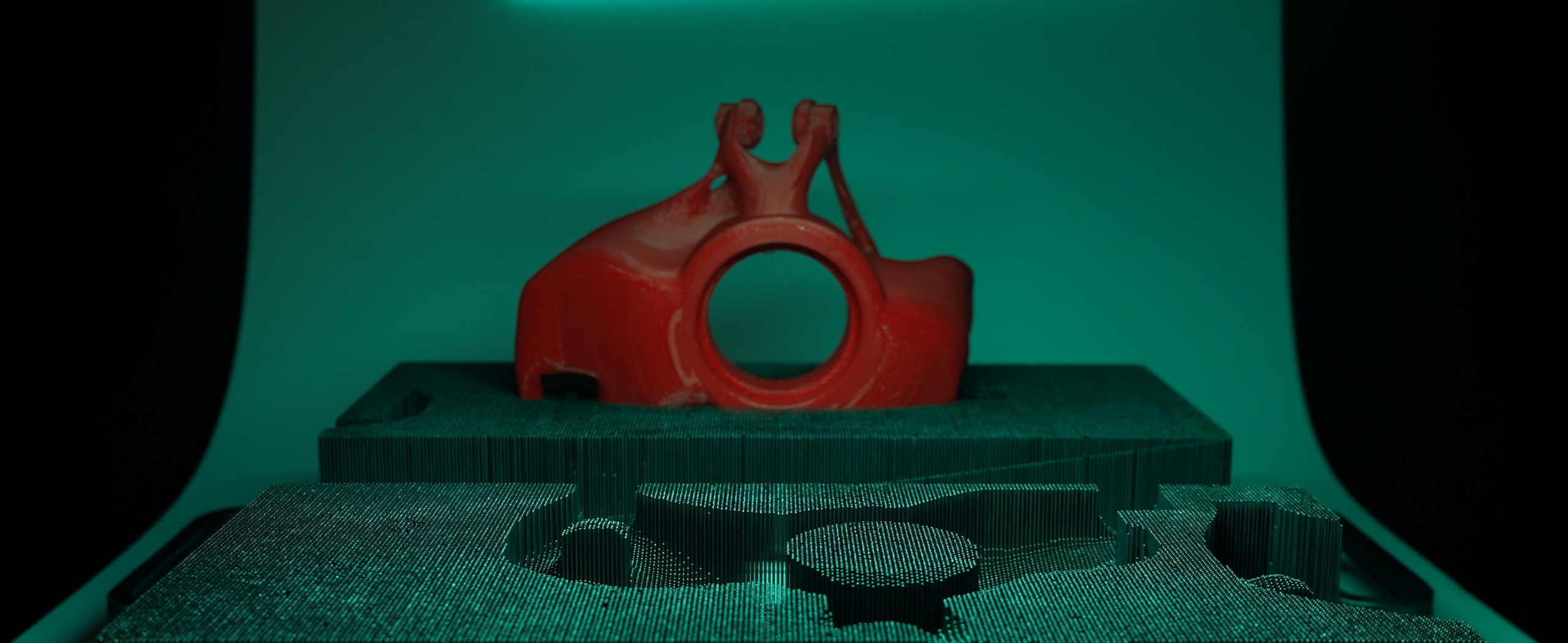
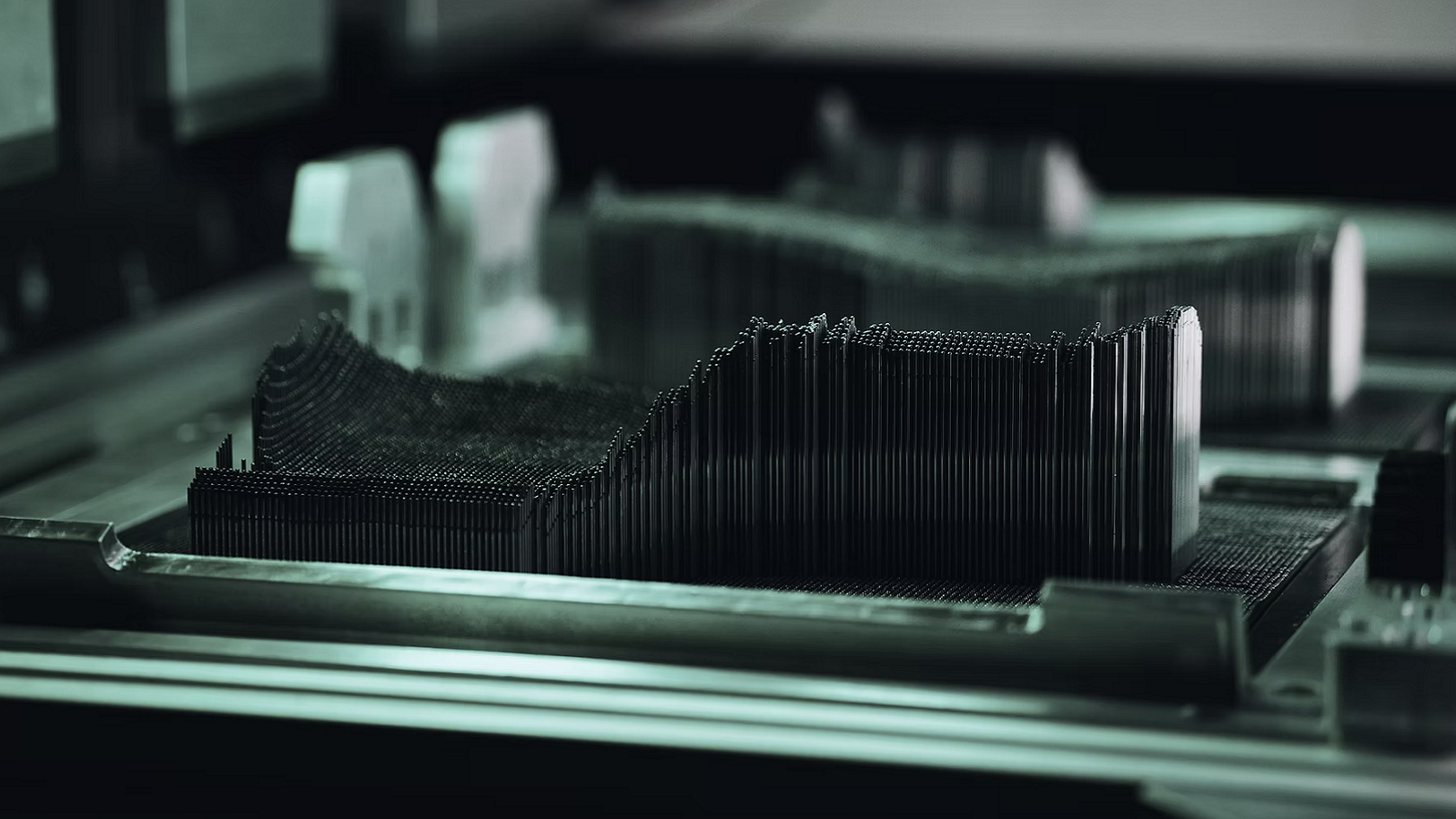
Polymorphic manufacturing offers a different solution. Fyous’s machines feature tens of thousands of precisely controlled pins that can reconfigure within minutes to create temporary, high-precision tooling. These reconfigurable surfaces can function as injection moulds, forming tools, and workholding fixtures—without the need for permanent tooling.
By digitally reshaping the tooling itself, manufacturers can move directly from design to production, supporting rapid iteration, short lead times, and economically viable production of bespoke parts.
Combining Agility With Industrial Performance
Joshua Shires, CEO of Fyous, describes polymorphic manufacturing as a step change rather than an incremental improvement.
“Polymorphic manufacturing is a fundamental change in production capability that delivers the agility of additive manufacturing with the quality, scalability and throughput associated with high-volume processes,” says Shires. “This foundational shift in manufacturing technology represents the dawn of a new manufacturing category, making it possible to produce high volumes of unique, one-of-a-kind items as quickly and profitably as traditional mass-produced batch processes.”
From a metrology and quality perspective, this convergence is significant. Unlike many additive processes, polymorphic manufacturing supports repeatable, controlled forming conditions that align more closely with established inspection, validation, and quality assurance workflows used in high-volume manufacturing.
Validation Through Industrial Collaboration
The potential of polymorphic manufacturing is already being explored through industrial partnerships. The UK’s University of Sheffield Advanced Manufacturing Research Centre (AMRC) has evaluated the technology in a workholding application, demonstrating its practical value in a production environment.
Ben Morgan, Interim CEO of AMRC, comments: “Following our first experience with polymorphic manufacturing for our workholding project, the far-reaching potential of this technology became clear. It offers a practical new route to fast, flexible manufacturing, and we’re excited to explore how it can be applied across a wide range of industries”
Applications Across High-Value Sectors
Fyous highlights several industries where polymorphic manufacturing could deliver immediate economic and sustainability benefits.
In dental manufacturing, producers of clear aligners currently rely on single-use 3D-printed moulds for every aligner. Polymorphic tooling could eliminate this requirement entirely, saving millions of kilograms of plastic waste and up to £1 billion in annual production costs.
In footwear manufacturing, polymorphic machines can produce custom shoe lasts without the need for CNC milling – a process that often wastes more than half of the original material. Fyous claims the polymorphic approach can reduce plastic waste to below 7.8%, while enabling true mass customisation at scale.
For aerospace manufacturers, frequent design changes and low production volumes make traditional tooling particularly expensive. Rapid reconfiguration of polymorphic tooling allows manufacturers to produce and refine aircraft components without weeks-long delays or five-figure tooling costs—often for tools used only once.
In healthcare, the technology supports fast, cost-effective production of patient-specific devices, combining personalisation with improved sustainability and more predictable quality outcomes.
Implications For Smart Manufacturing and Quality Control
From a broader manufacturing systems perspective, polymorphic manufacturing aligns closely with digital thread and smart factory concepts. Tool geometry becomes a digital asset, reconfigured on demand and integrated with design, production, and inspection data.
For metrology professionals, this opens new opportunities, and challenges, in measurement strategy, process validation, and inline inspection. As tooling becomes dynamic rather than fixed, measurement systems will need to adapt, ensuring consistency, traceability, and compliance across rapidly changing production configurations.
While still emerging, polymorphic manufacturing represents more than an alternative production technique. It introduces a new category of manufacturing – one that bridges the gap between prototyping and high-volume production, between customisation and cost efficiency.
For more information: www.fyous.com