Interlayer Control System Advances Quality Assurance in Industrial 3D Printing
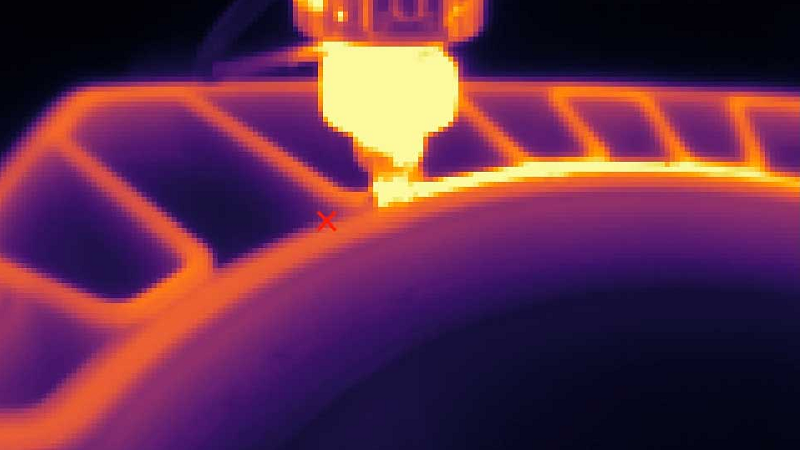
In industrial additive manufacturing, ensuring consistent part quality remains one of the sector’s most persistent challenges. Variations in thermal conditions during the build process, particularly between layers, can significantly impact layer adhesion, structural integrity, and final part performance. Addressing this issue head-on, Royal3D has announced the market readiness of its new Interlayer Control System, a solution designed to bring enhanced process control and real-time quality monitoring to 3D printing operations.
Closing the Quality Gap in Additive Manufacturing
Temperature stability is a critical parameter in 3D printing, directly influencing bonding between layers. Even minor fluctuations can lead to internal stresses, warping, and ultimately part failure. These issues are often difficult to detect visually, making in-process monitoring essential for reliable production.
Royal3D’s Interlayer Control System tackles this challenge by continuously monitoring and logging temperature data throughout the entire printing process. By capturing detailed thermal information in real time, the system provides manufacturers with actionable insights into process stability and print quality—helping to reduce misprints, minimize material waste, and avoid costly production delays.
Real-Time Thermal Insight for Smarter Process Control
At the core of the system is a thermal imaging solution that measures interlayer temperatures using a 160 × 140-pixel thermal camera. Integrated with 3D printing systems equipped with a PLC capable of returning XYZ nozzle coordinates, the system maps temperature data directly to the print geometry.
This spatially resolved thermal monitoring enables:
- Continuous tracking of interlayer temperature
- Improved understanding of layer adhesion behavior
- Early detection of process deviations
- Data-driven optimisation of print parameters
By correlating temperature data with specific locations in the build, manufacturers gain a deeper understanding of how heat distribution affects part quality—an essential step toward more robust and repeatable additive manufacturing processes.
Designed for Integration and Automation
The Interlayer Control System has been developed with practical deployment in mind. Installation is completed in four key steps, including hardware and software integration followed by system calibration to ensure measurement accuracy. Regular calibration checks are recommended to maintain optimal performance.
Once operational, the system runs fully automated on a dedicated computer, allowing it to function independently while seamlessly integrating into existing production workflows. This approach ensures minimal disruption to current operations while delivering immediate value through enhanced monitoring capabilities.
Addressing Material Complexity in 3D Printing
As additive manufacturing expands into a broader range of materials, process control becomes increasingly complex. Different polymers and composites respond uniquely to thermal conditions, meaning that parameters optimized for one material—such as polypropylene (PP)—may not be suitable for another.
The Interlayer Control System enables manufacturers to record and analyse temperature data for each print, building a deeper understanding of material-specific behaviour. This data-driven approach supports the refinement of process parameters, improving consistency across diverse applications and material sets.
From Internal Innovation to Industry Solution
The development of the Interlayer Control System is rooted in Royal3D’s own production experience. As the company expanded its portfolio of materials and applications, the need for more advanced quality monitoring became increasingly clear.
Over the past year, Royal3D has translated this internal requirement into a commercially available solution, now ready to support other 3D printing companies facing similar challenges. By bringing this technology to market, the company aims to contribute to higher standards of quality assurance across the additive manufacturing sector.
Enabling Consistent, High-Quality Output
With its ability to deliver real-time thermal insight and improve control over layer adhesion, the Interlayer Control System represents a significant step forward in 3D printing quality assurance. As manufacturers seek to scale production while maintaining tight tolerances and repeatability, such solutions will play a critical role in bridging the gap between prototyping and true industrialisation.
For an industry defined by innovation, Royal3D’s latest development underscores a growing focus on process reliability—ensuring that additive manufacturing can meet the rigorous demands of modern production environments.
For more information: www.royal3d.nl