Innovations Driving EV Hairpin Stator Measurement
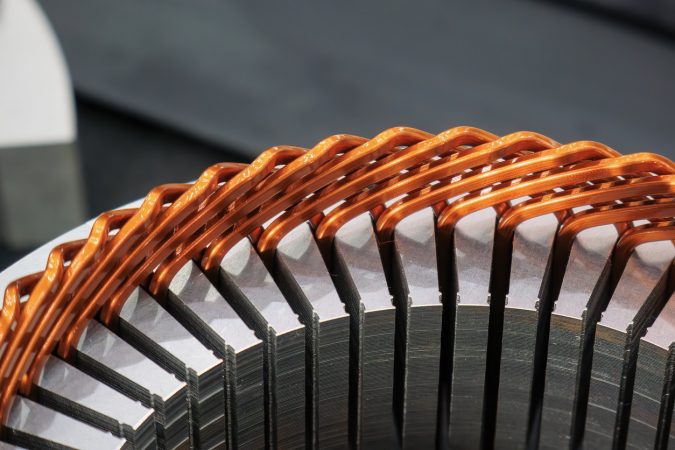 As electric vehicle (EV) production scales, metrology suppliers are racing to deliver solutions capable of reliably measuring one of the most challenging powertrain components: the hairpin stator assembly. These assemblies, comprising hundreds of bent copper ‘hairpins’ inserted into a laminated stator core, deliver improved electrical performance over traditional wound coils but pose significant inspection challenges due to their material properties, complex 3D shapes, and tight tolerances. To keep pace with automotive cycle-time demands and ever-tightening quality standards, leading metrology providers have developed specialized systems that combine high-resolution capture, automation, and data-driven analytics. In this article we look at some of the most impactful solutions available on the market today.
ZEISS: Automated 3D Digital Twins for Hairpins and Stators
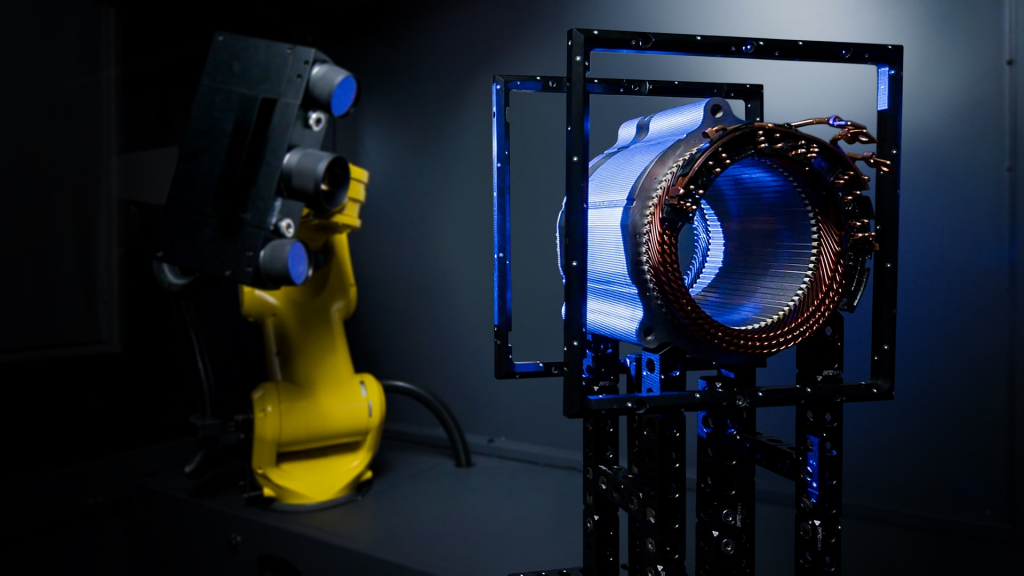
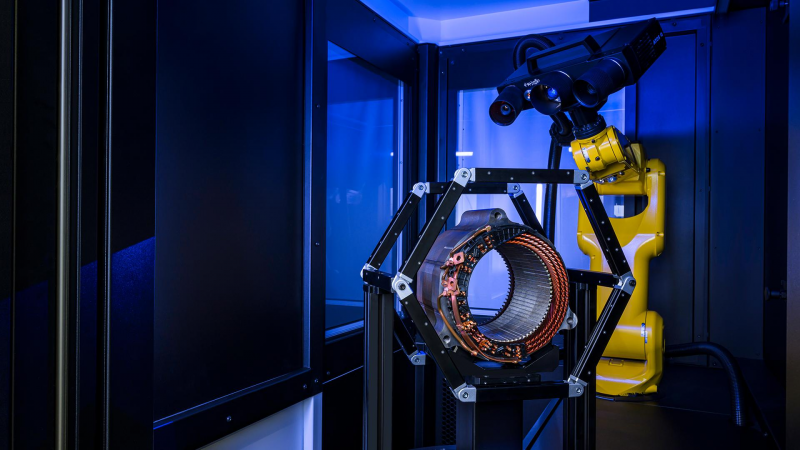 ZEISS has emerged as a leader in 3D optical and multisensor inspection solutions tailored to EV motor manufacturing. At the heart of its portfolio is the ZEISS ScanBox 4105 for eMotors, a dedicated system for automated 3D digitization and dimensional inspection of full hairpin stator assemblies, individual hairpins, or batches of hairpins. Using the ATOS Q for eMotors blue-light sensor, ScanBox captures highly detailed point clouds that form the basis of a digital twin – enabling manufacturers to detect deviations from CAD models, analyze form and position tolerances, and assess features such as bending points, radii, and leg lengths.
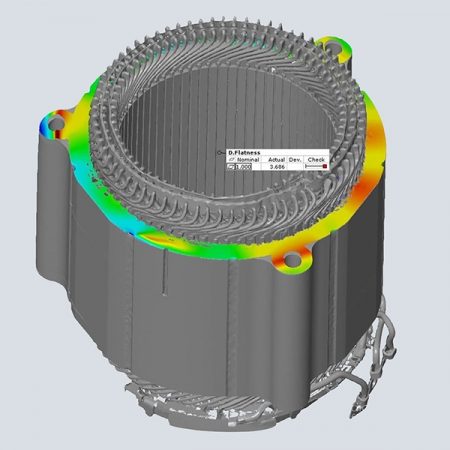 Integration with ZEISS INSPECT software and the Virtual Measuring Room (VMR) software provides an intuitive workflow from data acquisition through reporting, all driven by automated measurement sequences that support high throughput and reproducibility. ZEISS also promotes synergies between optical scanning and tactile coordinate measuring machines (CMMs) combining ScanBox data with high-precision CMM inspections for features that require tactile accuracy or CT-assisted weld-seam analysis.
Beyond pure dimensional verification, ZEISS positions its optical inspection solutions as process-enabling tools for EV motor manufacturing. The dense 3D data generated by ScanBox systems allows engineers to correlate hairpin geometry with upstream forming, insertion, and welding operations, supporting early detection of drift and systematic variation. By feeding digital twin data into ZEISS’s broader quality software environment, manufacturers can perform trend analysis, statistical evaluation, and closed-loop process optimization across multiple production stages. This data-centric approach is particularly valuable for hairpin stators, where even minor geometric deviations can impact electrical performance, thermal behavior, and overall motor efficiency.
Renishaw: Flexible Multi-Sensor CMMs for EV Component Variation
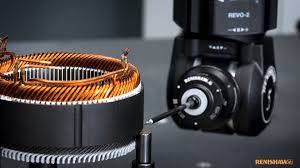 While much of the narrative around EV stator measurement focuses on automated optical scanning, traditional multisensor CMM technology remains an important backbone for many quality labs needing both flexibility and precision. Renishaw’s REVO 5-axis multi-sensor measurement system, mounted on advanced CMMs, provides a flexible platform capable of switching seamlessly between tactile probing, and optical sensors to capture complex features with high accuracy.
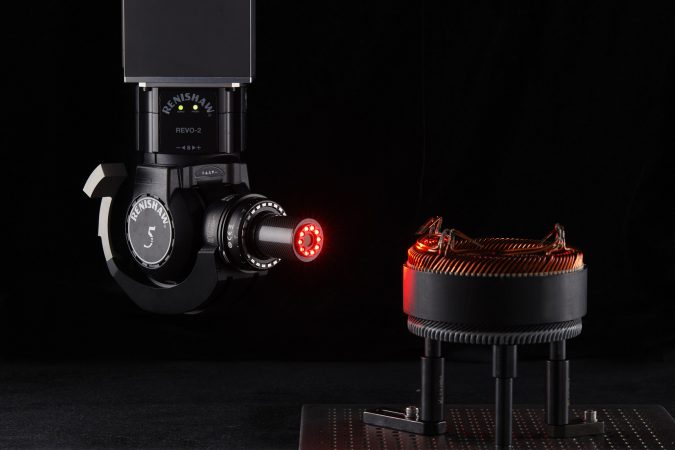 In stator and hairpin inspection, this flexibility enables manufacturers to use tactile scanning for core geometric features and non-contact vision probes for delicate or reflective surfaces such as insulation paper heights or shiny copper sections. Integration with MODUS metrology software further supports advanced inspection strategies, data management, and connectivity to enterprise systems – making CMMs with REVO ideal for development, prototype verification, or detailed failure analysis where automated optical cells may not be practical.
Renishaw also highlights its Equator in-line gauging systems as adaptable solutions for rapid ‘go/no-go’ checks of stator subassemblies and laminate stacks, contributing to real-time process control when deployed alongside high-speed metrology platforms.
Hexagon: Comprehensive CMM and CT Analysis Data Analytics
Hexagon Manufacturing Intelligence delivers a broad inspection ecosystem for EV hairpin stator assemblies centered on multisensor coordinate measuring machines (CMMs) and advanced metrology software allowing manufacturers to combine Hexagon’s dimensional inspection platforms with third-party CT scanners while maintaining a unified data-analysis environment.
For external geometry and positional inspection, Hexagon’s multisensor CMM platforms, including the GLOBAL S and Leitz Reference series, can be equipped with tactile probes, laser scanners, and optical sensors to measure stator cores, hairpin positioning, and critical form features in a single setup. Rotary tables and automated fixturing support efficient inspection of stator subassemblies and full stacks, while PC-DMIS software enables CAD-driven measurement routines and robust GD&T evaluation.
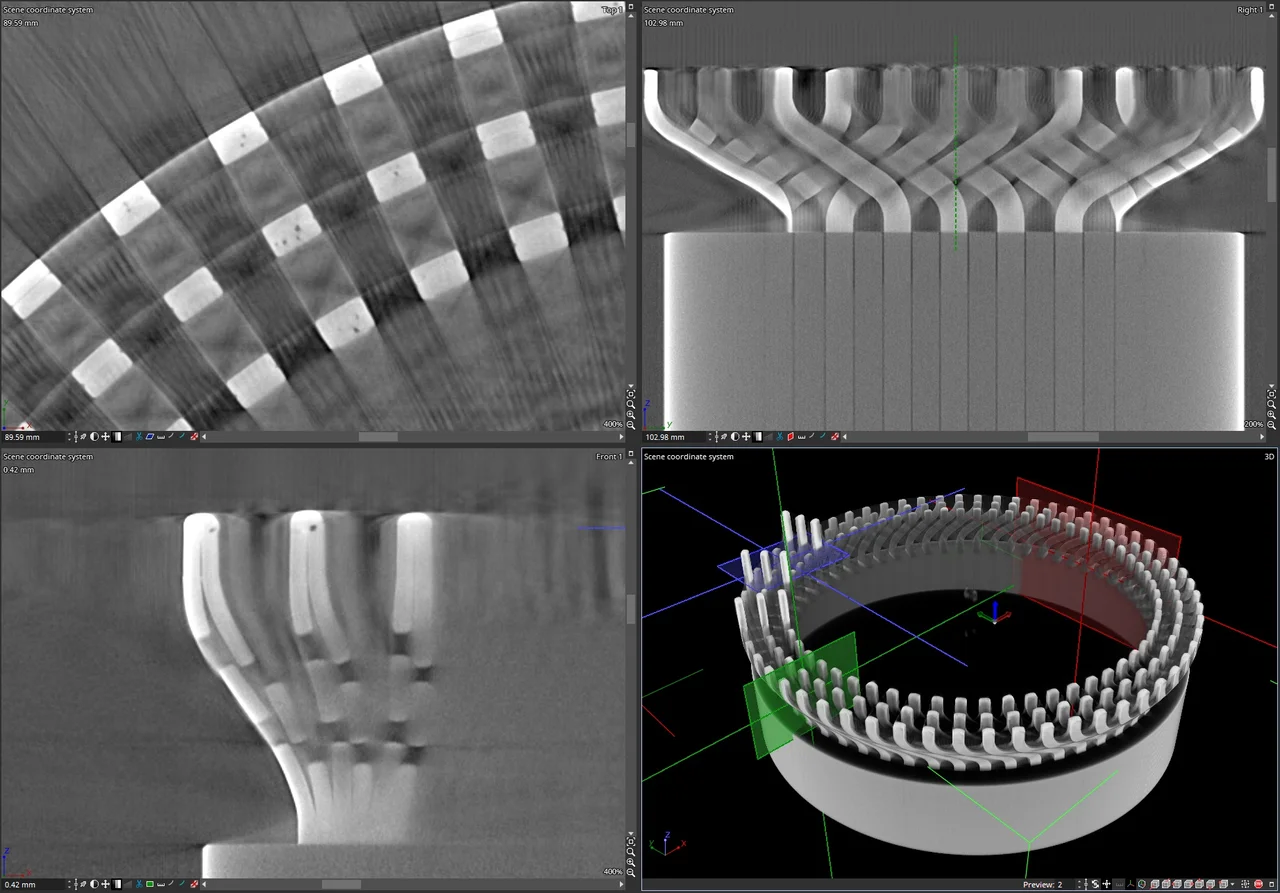
When internal features or hidden joining quality must be assessed, Hexagon contributes through its CT analysis and metrology software VGSTUDIO MAX. Used in conjunction with industrial CT scanning hardware from specialist OEMs, VGSTUDIO MAX enables volumetric visualization, CAD comparison, dimensional measurement, and defect analysis of hairpin stator assemblies. This includes evaluation of laser-welded hairpin joints, internal conductor alignment, insulation coverage, and porosity, all without destructive sectioning.
By integrating CT-derived data with traditional dimensional results, VGSTUDIO MAX supports correlation between internal and external quality characteristics, helping manufacturers identify root causes of defects and validate design intent during development and production ramp-up.
Gehring Inspection System: In-Line Precision for Stators
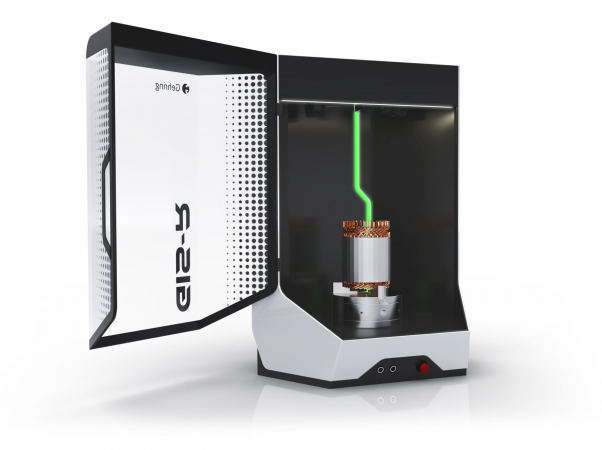 Gehring Technologies’ Gehring Inspection System (GIS) delivers a flexible and highly automated approach to stator measurement, particularly well suited for high-volume production environments. GIS is specialized for precision inspection of stators, generating a true 3D point cloud of real measurement results that can be analyzed in downstream quality-control or process-optimization software. The system autonomously calculates and validates critical measured variables and supports full integration into Gehring’s CORE data platform, enabling real-time access to measurement data and traceability across production.
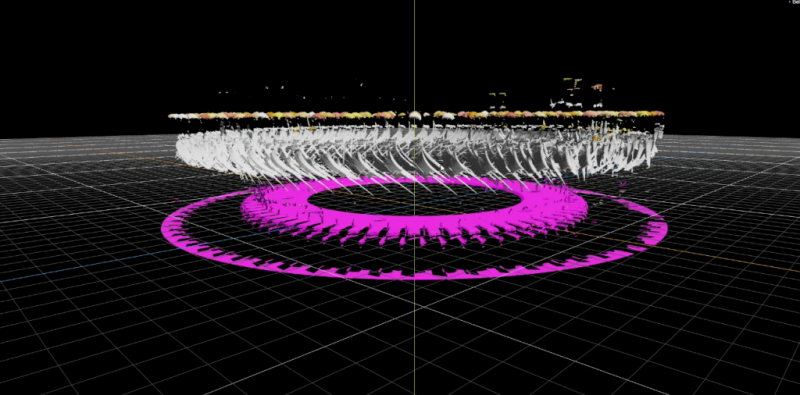 A key strength of the Gehring Inspection System is its automation and adaptability: components can be measured with minimal operator setup, and the system automatically aligns and calibrates the parts regardless of initial orientation. GIS’s ability to deliver accurate point clouds and calculated metrics quickly makes it a strong candidate for integration into production lines where rapid feedback is crucial to quality and throughput.
Marposs: High-Speed 3D Inspection with OptoCloud EDU
Marposs’ OptoCloud EDU (Electric Drive Unit) is a high-speed 3D optical inspection system. The system combines rapid 3D reconstruction, automated dimensional measurement, and vision inspection in a production-ready platform suited to complex stator and electric drive assemblies.
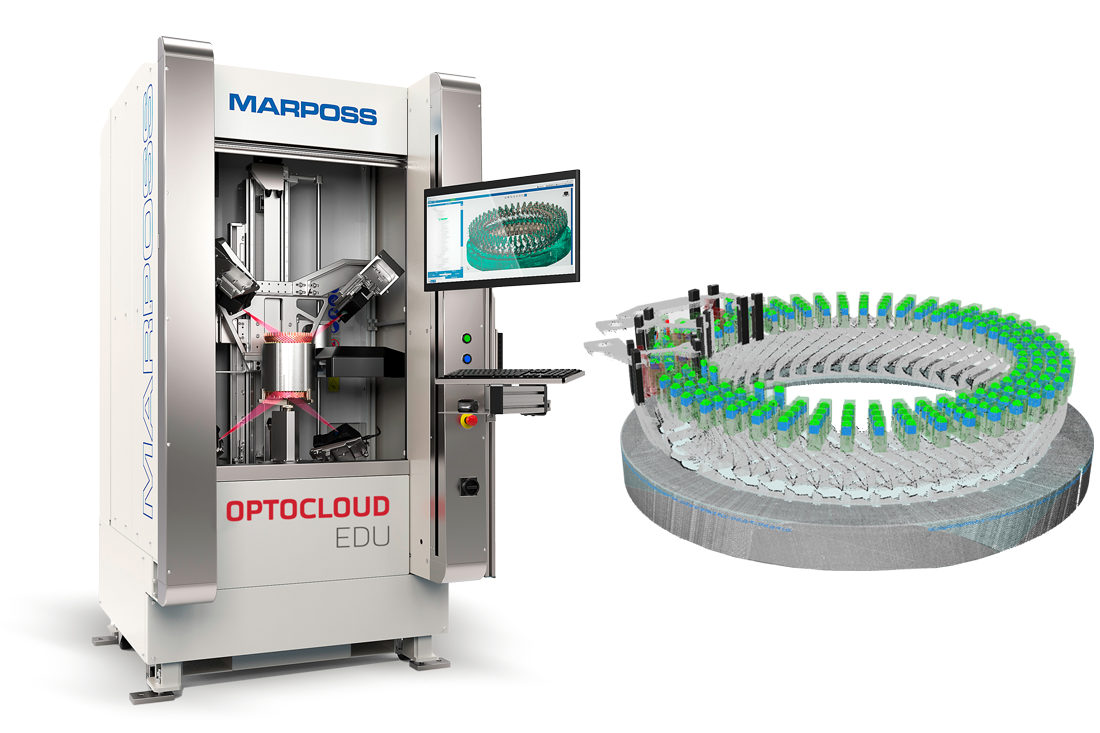 OptoCloud EDU reconstructs accurate 3D models using multiple laser scanning heads while the workpiece is rotated through 360 degrees. Point clouds captured from different spatial perspectives are automatically merged into a single high-resolution dataset, which Marposs software processes to execute predefined measurement and inspection tasks on critical stator features.
A defining advantage of the system is its inspection speed. OptoCloud EDU can perform measurements that are impractical for traditional contact systems in less than one minute, including validation of up to 240 electrical stator contacts in around 30 seconds. This performance supports in-line or near-line deployment, with compatibility for both manual and robotic loading.
Operator interaction is streamlined through intuitive 3D visualizations, where inspection results are overlaid directly onto the reconstructed model for rapid review. The system is also designed for efficient handling, with automated Z-axis retraction of the laser heads creating a clear loading area and reducing the risk of sensor damage in high-volume production environments.
ZeroTouch Metrology: High-Speed In-Line EV Stator Inspection
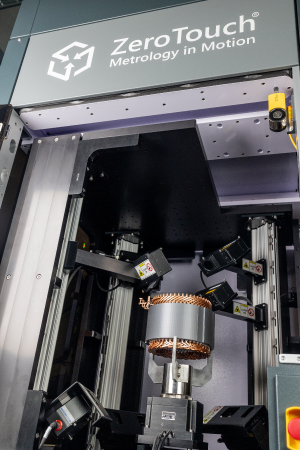 ZeroTouch Metrology brings an alternative approach optimized for production line integration with its ZT-EV solution suite, specifically engineered for EV stator measurement – including hairpin assemblies. With rapid sub-minute scan cycles and a measurement envelope capable of handling large stator stacks, ZT-EV delivers high-resolution gauging, real-time data output, and digital twin generation for process control and traceability.
ZeroTouch systems generate millions of data points quickly without contact and stream dimensional results directly into manufacturing execution systems. Their rotational and linear metrology platforms support a wide range of part sizes and materials, handling shiny copper hairpins and complex geometries with minimal operator intervention while providing actionable feedback that feeds back into upstream process adjustments.
Moving Forward
The evolution of EV stator and hairpin metrology reflects broader trends in manufacturing: the move toward digital twins, high-density point clouds, and tight integration between inspection and production systems. As automakers push toward higher outputs and lower defect rates, metrology suppliers are responding with hybridized solutions that balance speed, precision, flexibility, and automation. Whether deployed at the end of line, near production, or on the shop floor itself, these technologies are instrumental in ensuring that EV powertrains meet the performance and reliability expectations of an electrifying automotive market.
Editor