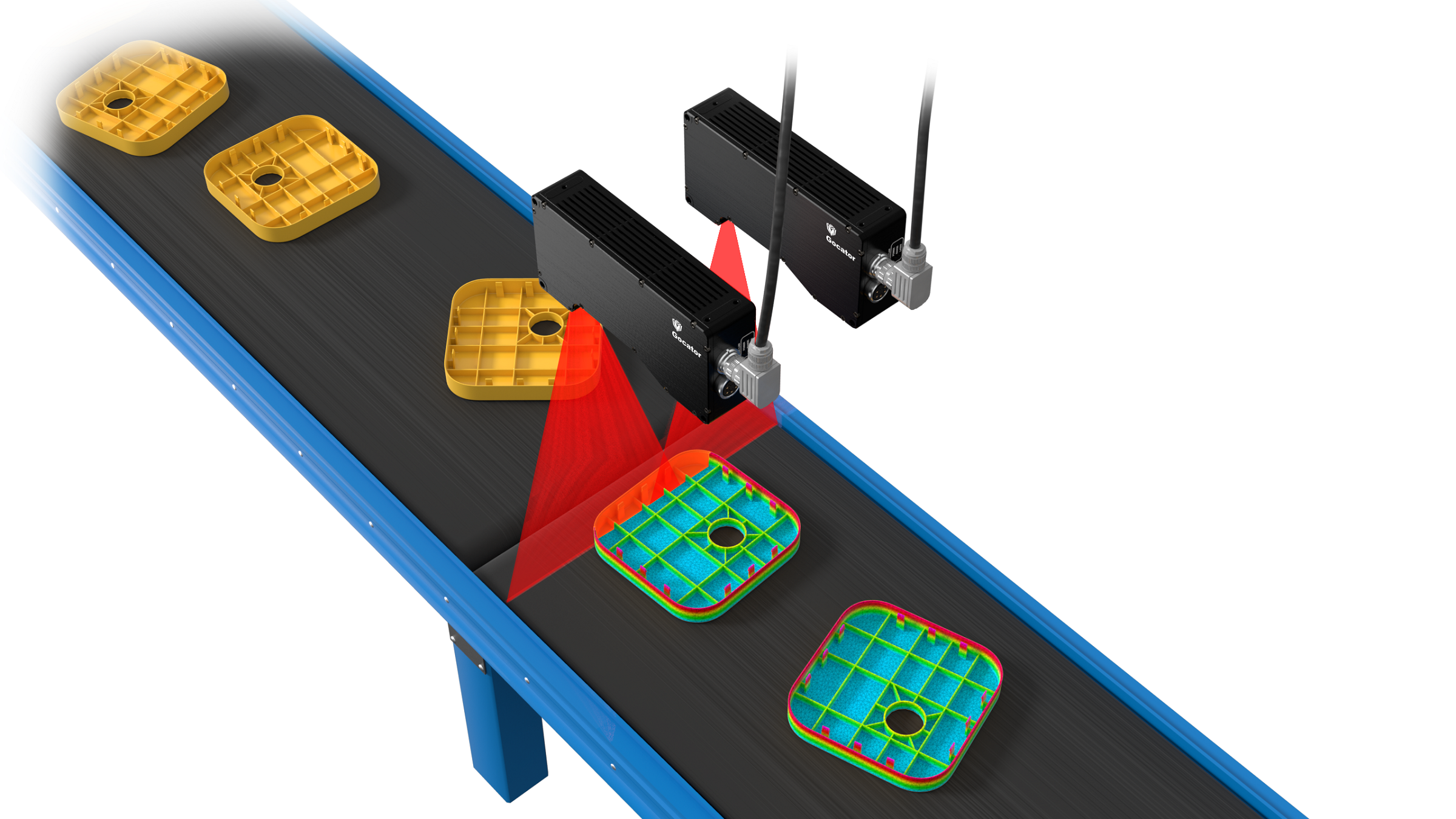
Inline Metrology at the Speed of Production
 As smart factories move from concept to reality, inline metrology is shifting from a peripheral quality check to the central nervous system of the production floor. I recently sat down with Len Chamberlain, Chief Commercial Officer at LMI Technologies, to discuss how measurement data is being transformed into immediate action and what still stands in the way of a fully closed-loop manufacturing future.
The Evolution: Beyond the Pass/Fail Paradigm
The role of metrology on the modern shop floor is evolving far beyond traditional inspection, which Chamberlain notes “started as a way to kick out bad parts.” Today, it is part of an integrated, data-driven production process focused on process accommodation.
“The big revolution,” Chamberlain states, “is that metrology can adjust the process to accommodate variability and increase throughput.” Instead of scrapping a part due to slight variations, sensors act as the ‘eyes of the factory,’ providing precise misalignment information, such as gap and flush, to adjust machinery like robots during inspection. Chamberlain anticipates this advancement will soon lead to factories that can run ‘lights out’ in the near future.
Breaking the Barriers to Closed-Loop Control
Despite these promises, many manufacturers still use inline measurement mainly for pass/fail checks. Chamberlain identifies several key technical, operational, and cultural barriers preventing broader adoption of true closed-loop process control:
Problem Complexity: Implementation often requires factory-wide engagement and complex AI models to predict necessary adjustments.
Data Security & Volume: Manufacturers have significant “concerns about securing that data,” often leading to a “reluctance to use cloud-based solutions” despite the difficulty of storing high volumes of data locally.
Validation Cycles: In sectors like medical device manufacturing, rigorous validation is required, and there are concerns about AI ‘hallucinations’ leading to a bad part being implanted.
Turning Measurement into Action
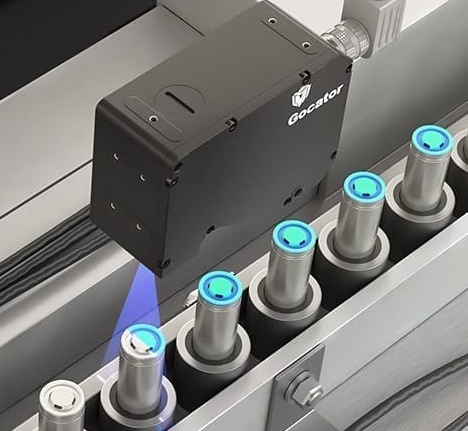 Turning measurement into action is a hallmark of LMI’s 3D smart sensors, which transform raw data into real-time adjustments rather than relying on post-process analysis.
LMI Technologies sensors minimize network traffic and reduce latency by providing precise misalignment information rather than pumping out raw data points. Rather than acting as simple data-gathering devices, these sensors utilize Edge Computing, meaning the processing happens on the device itself. This allows the sensor to act as “at least a little bit of the brain,” delivering actionable data directly where it’s needed for real-time process adjustments.
Accuracy at High Speed
Closed-loop control depends on fast, reliable, and high-volume data. The challenge in high-speed environments is ensuring this data remains accurate and consistent. Chamberlain notes that traditional metrology struggled with the idea of recalibrating thousands of sensors on a production line according to scheduled NIST standards.
LMI addresses this by building sensors engineered to withstand harsh environments, such as 15gs of vibration and shock, and ensuring they are calibrated once and guaranteed to maintain accuracy long-term.
The Power of Edge Processing
Edge processing is critical for deterministic control in applications demanding high speed, high precision, and low latency. Chamberlain identifies this as a “huge differentiator” for LMI’s smart sensors.
By running inference on the line, sensors provide “quick, consumable output for real-time adjustments” without the latency of processing full point clouds. While model training still often requires the cloud for significant storage, LMI’s Factory Smart enables remote access to data for retraining and redeploying models as processes drift.
Practical Value of AI Today
Chamberlain sees AI’s most immediate and practical value in anomaly detection and object classification. He recalls a past challenge to find every hose clamp on an 8-gigabyte jet engine scan, a task now easily handled by AI object detectors. Looking forward, he suggests ‘inspection agents’ will allow users to verbally tell a system what to look for, which will further increase adoption and ease of use.
The Business Case for Closed-Loop Metrology
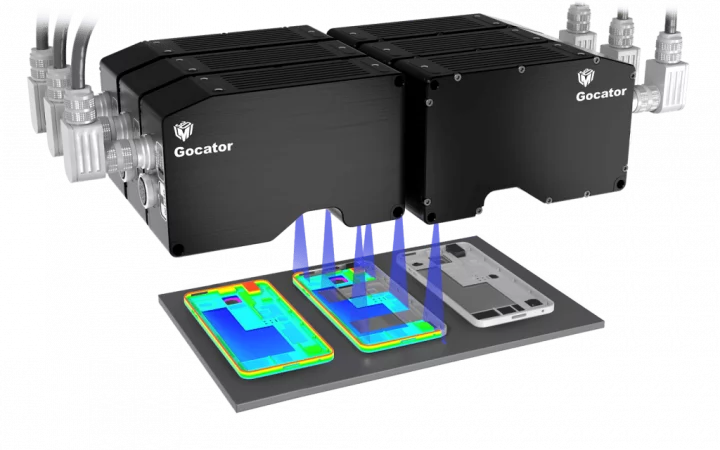 Closed-loop metrology contributes to measurable improvements in productivity, part quality, and waste reduction. Chamberlain draws from LMI’s roots in the lumber industry, where logs are scanned to maximize usable material.
Solving this highly complex issue of synchronizing multiple sensors at high speeds to scan boards moving sideways laid the groundwork for LMI’s base technologies. By optimizing for value in real-time, manufacturers can achieve significant efficiency gains and reduce waste across the factory floor.
Looking Ahead: An “Unstoppable” Trend
For measurement-driven, closed-loop manufacturing to become the standard, technical and cultural shifts must occur. Cybersecurity concerns regarding on-premise data remain a hurdle, but Chamberlain considers the adoption of these systems to be “unstoppable.” LMI Technologies aims to become ‘100% of the eyes of the factory’ by expanding its platform to include 2D and line scan data. The future belongs to those who can manage expectations and educate customers on what is truly possible at the speed of production.
For more information: www.lmi3d.com
By Zack Davis, Contributing Writer for Metrology News