
Data-Driven Additive Manufacturing Enables Advanced EOD Helmet Protection
Explosive ordnance disposal (EOD) technicians operate in environments where personal protective equipment must perform reliably under extreme conditions. Among the most critical components of this equipment are protective helmets, where the internal padding system plays a decisive role in absorbing impact energy, ensuring a secure fit, and maintaining wearer comfort during demanding missions.
Traditionally, helmet padding has relied on foam-based materials. However, advances in additive manufacturing are enabling new approaches that improve protection while also introducing greater control over manufacturing quality and reproducibility.
A recent development project led by rpm, in collaboration with amsight, Farsoon, and Fraunhofer IPA, demonstrates how 3D printing combined with data-driven quality assurance can deliver customized, safety-critical components with consistent mechanical performance in serial production.
Advanced Helmet Padding Through Additive Manufacturing
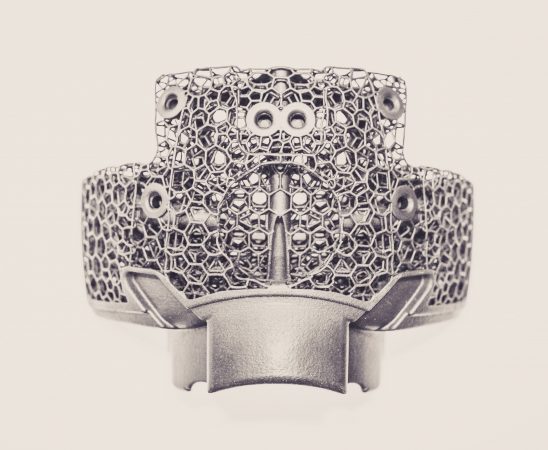 The padding system developed by rpm replaces conventional foam inserts with a lattice-based structure produced using additive manufacturing. Unlike traditional materials with uniform properties, lattice structures allow engineers to precisely control mechanical characteristics such as stiffness and damping through geometric design.
By tailoring the lattice architecture, different regions of the helmet padding can be optimized to respond to the specific protection needs of different areas of the head. This enables improved energy absorption and impact management while simultaneously reducing material use.
The resulting padding is lighter than conventional solutions and offers improved wearer comfort. The open lattice structure also enhances ventilation and simplifies cleaning, providing additional functional benefits for field use.
Lattice Engineering for Targeted Energy Absorption
A key advantage of lattice-based design is the ability to engineer localized mechanical responses. By adjusting cell size, strut thickness, and geometry within the lattice, the padding can deliver different stiffness or damping characteristics across the component.
This localized tuning allows areas that require greater impact resistance to be reinforced while maintaining flexibility and comfort in other regions.
Such design freedom is difficult or impossible to achieve with traditional foam manufacturing processes. Additive manufacturing, however, enables these complex geometries to be produced directly from digital designs with high precision.
Reproducible Production of Safety-Critical Components
For safety-critical equipment such as EOD helmets, innovative design must be matched by reliable and repeatable manufacturing processes.
rpm developed the padding system with a strong focus on ensuring reproducibility in serial production. Design parameters, material selection, and additive manufacturing process settings were carefully aligned to ensure consistent mechanical properties across production batches.
The company manages both development and manufacturing of the padding components, while the helmet manufacturer integrates and markets the final protective system.
Ensuring that every component meets the required performance characteristics, however, requires more than just stable machine operation. It also requires deep visibility into the manufacturing process itself.
Digital Quality Backbone for Additive Manufacturing
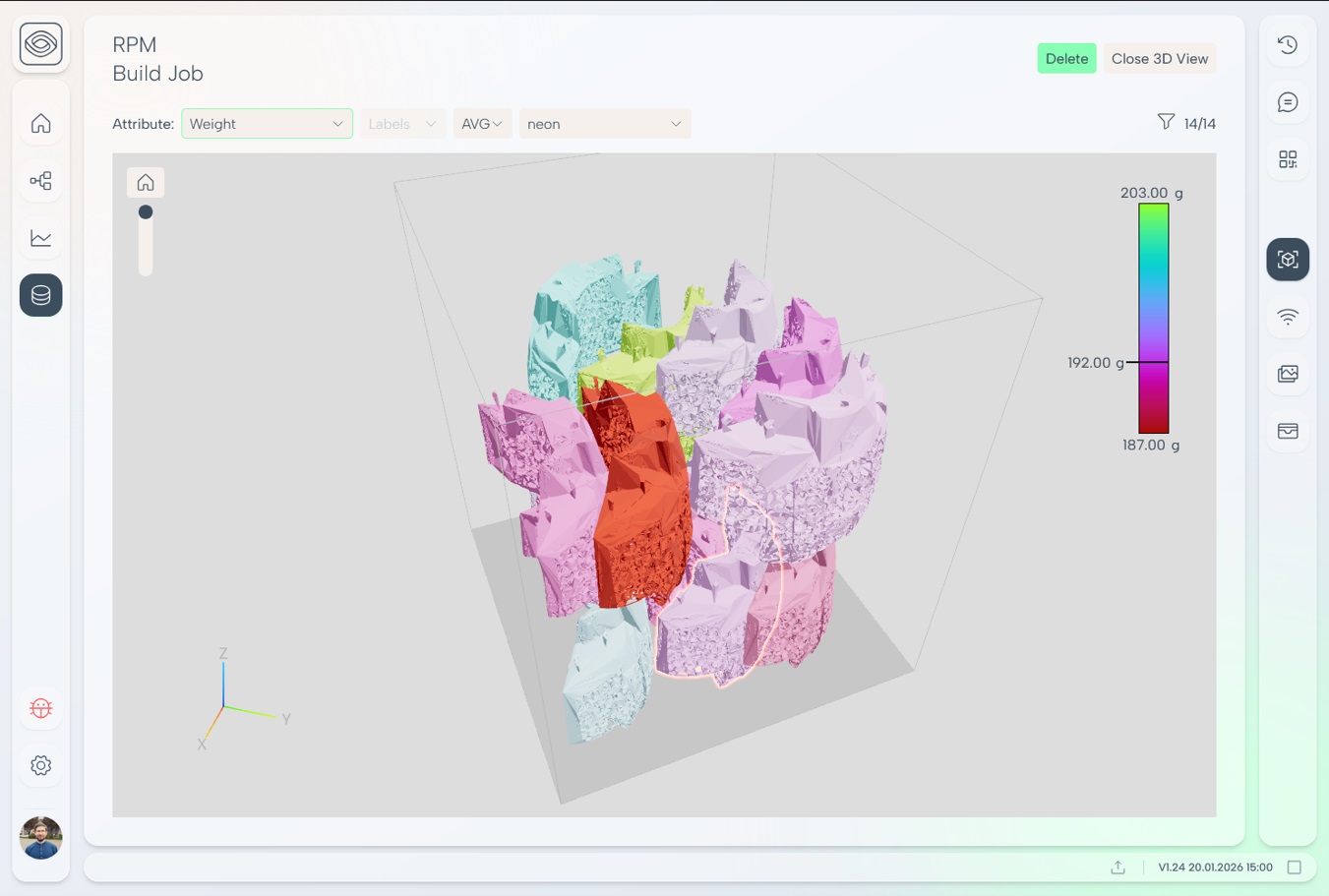
To support long-term quality assurance, rpm implemented a data-driven quality management approach using software solutions from amsight.
The system captures and analyzes process and machine data across the entire additive manufacturing workflow. By continuously monitoring key parameters, the platform enables early identification of deviations from defined process targets.
This capability allows manufacturers to intervene proactively before defects occur, reducing scrap rates and preventing quality issues from propagating into finished components.
For safety-critical applications, such visibility is particularly important, as it ensures that functional performance requirements can be consistently met.
Process Transparency and Statistical Quality Control
Beyond real-time monitoring, systematic evaluation of production data plays an important role in maintaining stable manufacturing processes.
Through statistical process control (SPC) and data analytics, rpm can track trends in material behavior, machine parameters, and part characteristics over time. This creates a transparent dataset that supports both process optimization and detailed documentation.
Traceability is another essential element of quality assurance for protective equipment. The data infrastructure implemented in this project enables comprehensive documentation of production conditions, which is critical for regulatory compliance and long-term product reliability.
Industrial 3D Printing Systems from Farsoon
The padding components are manufactured using industrial additive manufacturing systems from Farsoon.
These platforms provide the level of process stability and parameter control required for safety-critical applications. Their open system architecture also allows precise adjustment of manufacturing parameters, enabling rpm to fine-tune process conditions for the specific lattice structures used in the padding design.
In combination with rpm’s engineering expertise and the data-driven monitoring capabilities provided by amsight, the Farsoon systems support reliable additive production of complex functional components.
Scientific Support from Fraunhofer IPA
The development of the data-driven quality assurance framework was supported scientifically by the Fraunhofer Institute for Manufacturing Engineering and Automation IPA.
Fraunhofer IPA assisted rpm in implementing the amsight platform and analyzing machine and process data generated during additive manufacturing on the Farsoon systems. The collaboration focused on identifying relevant process variables, defining appropriate quality metrics, and evaluating manufacturing data to assess process stability and reproducibility.
This work helped establish a transparent and reliable data foundation that allows rpm to detect deviations early, stabilize manufacturing processes, and maintain consistent component quality.
Enabling Reliable Additive Manufacturing for Safety-Critical Applications
“As the development and manufacturing partner of our customer, our focus was on creating a padding system that can be produced reproducibly and reliably meets the required quality characteristics,” explains Dr. Jörg Gerken, Technical Managing Director at rpm. “The combination of additive manufacturing and data-driven quality assurance plays a central role in this.”
The project illustrates how additive manufacturing, industrial machine platforms, and digital quality management can work together to enable reliable production of complex components for safety-critical applications.
As manufacturers increasingly adopt data-driven process monitoring and structured quality frameworks, additive manufacturing is moving closer to becoming a dependable production technology for demanding industrial and protective equipment applications.
For more information: www.rpm-factories.de