Camera Sets New Standard in High-Speed Industrial 3D Scanning
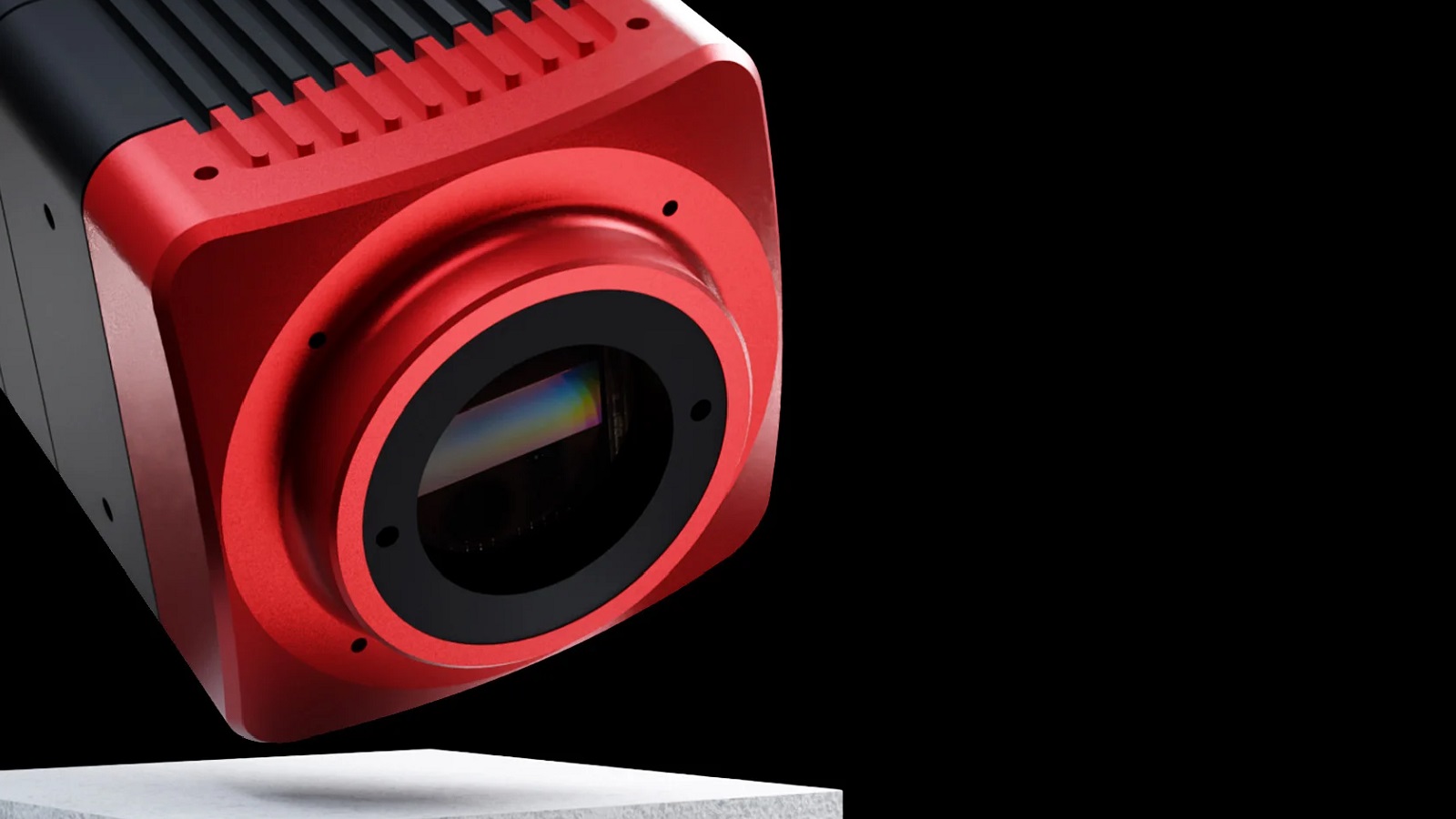
AT Sensors has introduced the C7 triangulation camera, marking a significant development in industrial 3D measurement technology. As the first model in the newly developed C7 series, the system delivers up to five times higher data throughput and significantly faster 3D scanning performance compared with previous generations.
A key enabling factor is the integration of an NBASE-T interface supporting data transfer rates of up to 5 Gb/s. With a resolution of 3072 pixels per profile, the camera is designed for data-intensive, high-resolution inline inspection tasks where conventional 1-GigE interfaces have increasingly become a limiting factor.
The improvement does not come from a faster image sensor itself but from the expanded transmission bandwidth. The higher data rate allows up to five times more features to be transmitted simultaneously or enables existing feature sets to be read out up to five times faster. This capability makes it possible to output multiple data types – such as 3D profile information, intensity, reflectance and scatter data—in parallel without compromising measurement quality. For high-throughput production environments, this removes a common bottleneck in the data pipeline.
Combined with AT Sensors’ proprietary WARP technology, the system can reach profile rates of up to 95 kHz. WARP is an on-sensor data-processing approach in which measurement information is processed and pre-selected directly within the image sensor. With a usable region height of 50 lines, representative of many practical measurement tasks, the resulting performance significantly exceeds that of many conventional sensors, which typically reach maximum profile speeds of around 32 kHz.
The C7 camera also introduces a direct laser connection designed to simplify system architecture. Using the integrated Laser Link Connector, communication between the camera and the laser line projector is handled through the camera’s GenICam interface, including direct interaction with the laser controller. This approach reduces the need for external components and simplifies system integration for OEMs and system integrators while maintaining compatibility with existing AT sensor platforms, allowing straightforward upgrades or system expansion.
Optical flexibility is another design focus. The camera features a TFL-mount lens interface with a larger diameter that, when used with TFL lenses, prevents vignetting at the image edges—an important advantage in high-resolution measurement applications. A C-mount adapter is also provided, giving users broader options in lens selection. For demanding measurement geometries or large height ranges, the camera can be equipped with an integrated Scheimpflug adapter in various angles to maintain sharp focus across the entire light section plane. In harsh industrial environments, an optional lens protection tube ensures the camera and optics remain compliant with IP67 protection requirements.
Typical application areas for the C7 3D camera include environments where large volumes of measurement data, parallel feature extraction and stable, high-speed inspection are required. These include electronics manufacturing, semiconductor advanced packaging, and high-performance inline inspection processes.
For more information: www.at-sensors.com