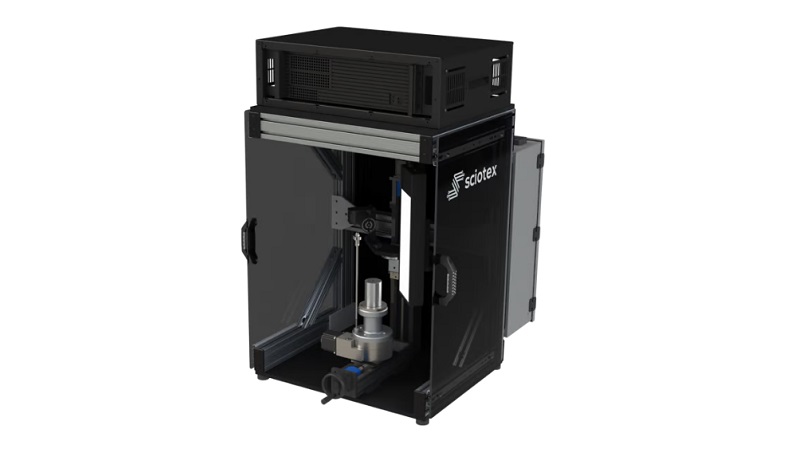
Benchtop Automated Inspection Systems Lowers Barriers to AI in Manufacturing
Artificial intelligence is increasingly reshaping quality control in manufacturing, but many companies, particularly small and mid-sized firms, still face significant barriers when it comes to adopting AI-driven inspection technologies. High system costs, complex integration requirements, and the need for specialist programming skills have often limited the practical implementation of automated vision systems on the factory floor.
A new benchtop automated inspection platform introduced by Sciotex aims to make AI-based quality inspection more accessible. By delivering a compact, self-contained system designed for rapid deployment, the company is targeting manufacturers that want to introduce intelligent inspection capabilities without the cost and complexity typically associated with traditional machine vision installations.
Simpler Route to Automated Inspection
Automated inspection has become an essential part of modern manufacturing, especially in industries where high production volumes demand consistent quality verification. However, implementing such systems has traditionally required the development of customized inspection cells, integration with production equipment, and specialist engineering expertise.
Sciotex’s benchtop system takes a different approach. The platform integrates imaging hardware, controlled lighting, computing power, and AI-based inspection software into a single workstation-sized unit. Rather than installing a fully integrated production-line solution, manufacturers can deploy the system as a standalone inspection station for targeted quality control tasks.
This simplified architecture allows manufacturers to introduce automated inspection incrementally. A benchtop system can be placed within an existing workflow to inspect parts without requiring major production line modifications or infrastructure investments.
Opening AI Inspection to a Wider Market
The growing role of AI in manufacturing has largely been driven by large enterprises with the resources to invest in advanced automation projects. Smaller manufacturers, however, often struggle to justify the upfront cost and technical complexity of traditional AI-based inspection systems.
Compact benchtop platforms can help address this gap. By reducing system footprint and simplifying installation, the technology provides a more accessible entry point for companies that are interested in exploring automated inspection but may not yet be ready to commit to full-scale inline systems.
The reduced investment requirement also allows manufacturers to deploy inspection capabilities where they are most needed. Rather than relying entirely on centralized quality control operations, companies can add automated inspection stations to support specific processes, components, or product lines.
Supporting Multiple Inspection Tasks
The flexibility of the benchtop system enables it to support a broad range of quality inspection applications throughout the manufacturing process.
Surface defect detection is one of the most common use cases. AI-powered vision models can identify scratches, dents, contamination, or other cosmetic defects that might be difficult to detect consistently through manual inspection alone. The system analyzes visual patterns and surface characteristics to identify anomalies that may indicate quality issues.
Dimensional verification represents another important application. Using high-resolution imaging and measurement algorithms, the system can confirm that parts meet specified dimensional requirements. This capability helps manufacturers ensure components remain within tolerance limits before they move further into production.
The platform can also perform feature validation tasks, confirming the presence or absence of specific product features such as drilled holes, threaded elements, labels, markings, or assembled components. These checks are particularly valuable in preventing assembly errors and ensuring that products meet design specifications.
Inspection can occur at multiple stages of the production process. Incoming inspection of supplier components allows manufacturers to identify defective parts before they enter production. During manufacturing, intermediate inspections help detect problems early, reducing the risk of scrap or rework. Final quality assurance checks provide an additional safeguard before products are shipped to customers.
Simplifying AI Training and Deployment
One of the most significant obstacles to implementing AI vision systems has historically been the process of creating inspection models. Traditional machine vision systems often rely on rule-based programming, requiring engineers to define precise measurement algorithms and detection thresholds.
Sciotex’s platform uses modern AI training methods designed to simplify this process. Instead of writing complex code, users train the system using image examples of acceptable and defective parts. By analyzing these examples, the AI model learns to distinguish normal variations from actual defects.
This approach significantly reduces the time and expertise required to deploy inspection routines. It also allows the system to adapt more easily when product designs change or when new defect types need to be detected.
A Step Toward Smarter Quality Control
Automated inspection technologies are becoming an important part of the broader transition toward digital manufacturing and smart factories. As manufacturers pursue higher levels of process visibility and traceability, inspection systems are increasingly expected to do more than simply pass or fail parts.
AI-based vision systems can capture detailed inspection data that supports process monitoring, root-cause analysis, and continuous improvement initiatives. By identifying defect patterns or production trends, manufacturers can gain insights that help improve product quality and manufacturing efficiency.
Benchtop inspection systems provide a practical way to begin building this data-driven approach to quality control. Even when used as standalone inspection stations, they generate valuable information that can support broader quality management strategies.
Reducing Dependence on Manual Inspection
Manual visual inspection remains widely used in many industries, but it is inherently limited by human variability. Inspectors may experience fatigue during repetitive tasks, and subjective judgement can lead to inconsistent inspection outcomes.
AI-powered automated inspection systems address these limitations by applying consistent inspection criteria to every part. The result is more repeatable quality verification and the ability to detect subtle defects that may be overlooked during manual inspection.
Rather than eliminating the role of skilled inspectors, automated inspection often complements human expertise. Personnel can focus on higher-value activities such as investigating root causes of defects, improving processes, and managing quality systems.
Lowering the Entry Barrier for AI
The introduction of compact automated inspection systems reflects a broader trend across manufacturing technology: making advanced tools easier to adopt and deploy. As artificial intelligence and machine vision capabilities continue to evolve, solutions that prioritize simplicity and accessibility will likely play a significant role in expanding their use.
For many manufacturers, benchtop inspection platforms provide an opportunity to evaluate AI-driven quality control in a practical, low-risk way. By reducing cost and complexity, such systems make it possible to begin integrating intelligent inspection into everyday manufacturing operations—bringing the benefits of AI closer to the factory floor.
For more information: www.sciotex.com