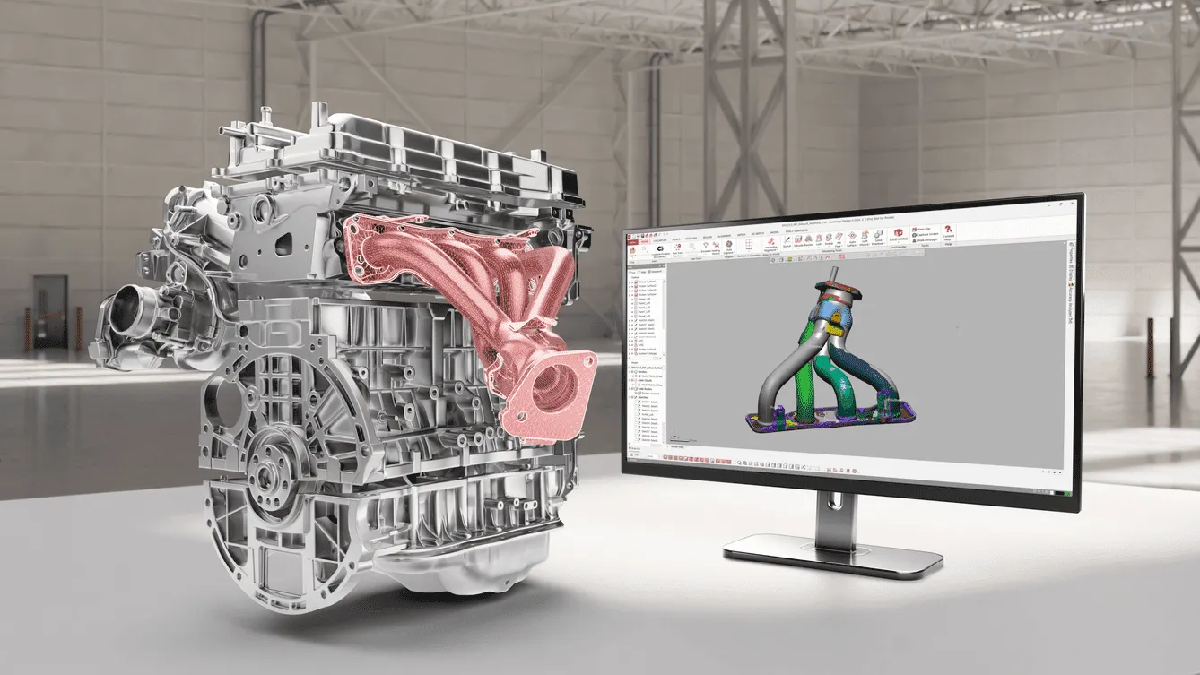
Automotive Aftermarket Embracing 3D Reverse Engineering
Scanning is not a new technology, but its maturation has enabled a quiet transformation in the automotive aftermarket sector. When used together with CAD modelling, it allows teams to design and make parts more efficiently than ever and grow their business.
The Scan-to-CAD Method
Whatever the size of the organisation, the approach is the same. Imagine a legacy part of a vintage car is worn and replacements are no longer in production. The part can be scanned, its 3D model can be rebuilt in reverse engineering software and 3D printed in the same garage or sent for remanufacture. All of this takes place in a matter of hours.
The process described is called reverse engineering. While traditionally the parts are measured with manual tools and designed in CAD software, here 3D scanning is used instead. This is also why it’s sometimes called a scan-to-CAD approach.
Scanning software can also be a vital aid after manufacturing. When it’s necessary to ensure the part has been remanufactured correctly or that it complies to technical regulations, scan-based inspection software can be used to compare the scan of the remanufactured part and the CAD model.
From Small Garages to Automotive Giants
It may sound like a high-end solution reserved for the industry titans. Over the years, however, this approach gained ground among automotive garages and small shops. They’ve embraced it for several reasons:
Faster Measuring: When they need to manufacture a part to fit an existing car assembly or create an exact replica, getting the measurements right will be key. With 3D scanning, measuring is faster than with manual tools. It’s the difference between capturing one measurement at a time versus millions of point cloud data.
Tech That Doesn’t Break The Bank: The economics have shifted. 3D scanners aren’t just for big players. Handheld 3D scanners are now starting at a few hundred dollars. Car enthusiasts are scanning entire vehicles with devices for just over a thousand dollars. The technology is accessible to anyone.
Flexibility With Portable Scanners: Customers no longer have to bring a car to a shop to get it measured. The shop comes to them. With a portable 3D scanner and good laptop, they can go to any location to capture all the data, go back to the shop and model the parts.
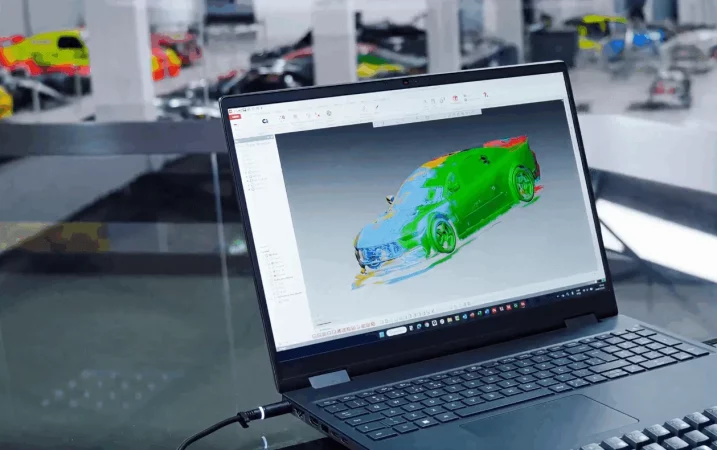 3D Modelling Made Simple: A key development in the 3D scanning space is the emergence of software fully geared towards reverse engineering. It’s always been possible to create a CAD model of a physical part on top of its scan. Engineers have been doing this for years with standard CAD tools, but are always limited by the complexity of scan data that software can handle. Plus, this approach entails a lot of fiddly, manual work and usually several iterations in order to get the part right.
Now you have software specifically developed for scan-based reverse engineering. Geomagic Design X has automated tools that facilitate building 3D models from scans and allow you to check that you’ve done it correctly. A process that took expert users days of work has come down to just a few hours.
Software For Any Budget: Just as hardware has become more affordable, the cost of reverse engineering software has come down. As solutions are now available on subscription, the upfront investment required for reverse engineering is much lower. Geomagic Design X, for example, is available in three plans, at different prices. Organisations are choosing the plan that best suits their budget and project.
An Automotive Essential
Today, reverse engineering is on its way to becoming the standard for any type of automotive aftermarket work. While it has always existed in some shape in manufacturing, it’s more recently entered the mainstream. This is mainly thanks to advancements in 3D scanning and specialised software for processing that scan data.
Reverse engineering’s evolution is a shining example of how digital tools can level the playing field in manufacturing. What was once a technology reserved for companies with big budgets, and highly skilled staff is now accessible, practical and easy to implement.
Author: Gregory George – Applications Engineer Manager Geomagic @ Hexagon’s Manufacturing Intelligence
For more information: geomagic.hexagon.com