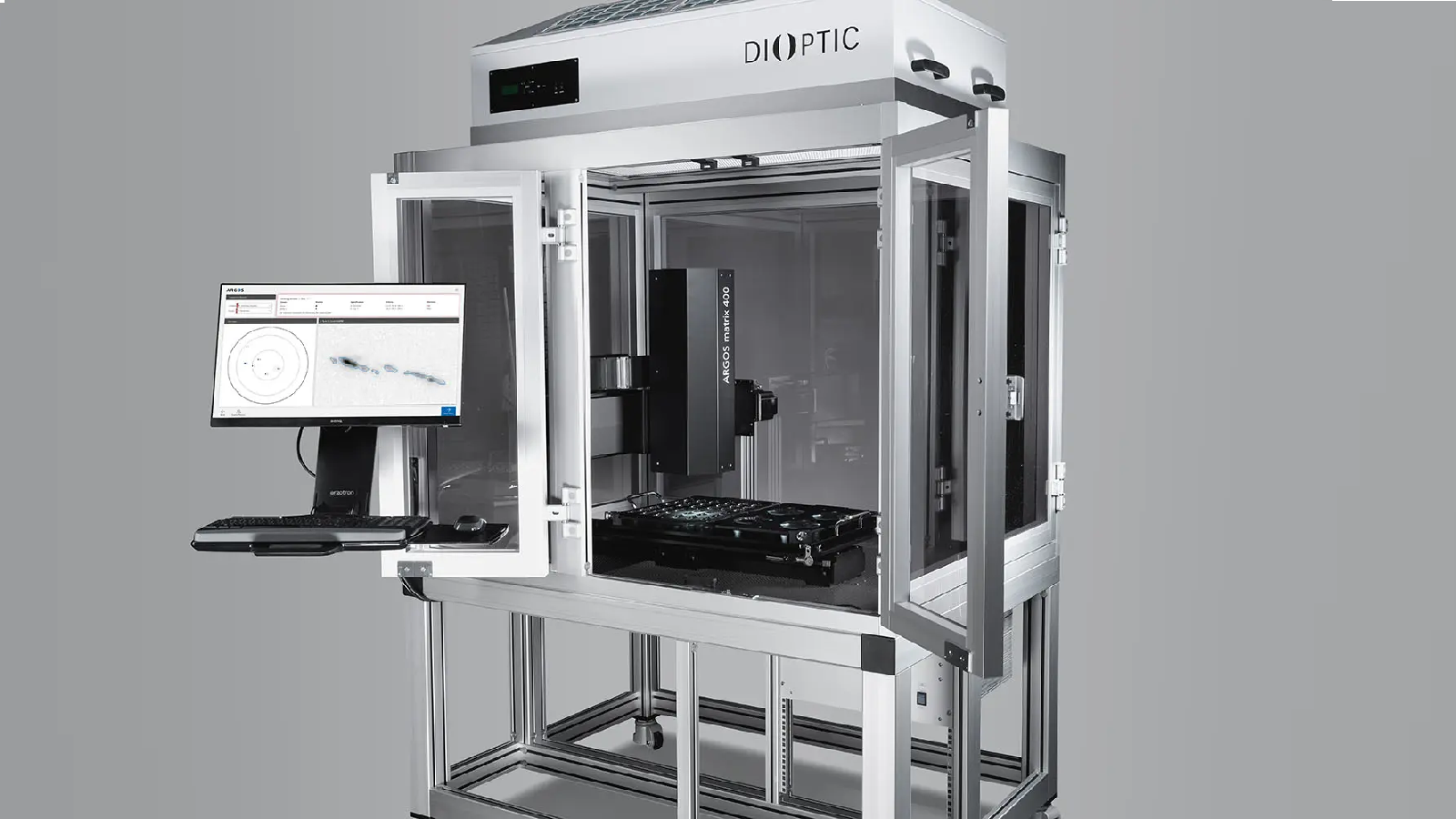
Automated Surface Quality Inspection: A Critical Enabler for Modern Optical Manufacturing
In modern optical manufacturing, surface quality inspection has become one of the most critical steps in ensuring product performance, reliability, and safety. From high-precision lenses and coated mirrors to semiconductor wafers, optical surfaces must meet increasingly stringent specifications. Even minor surface imperfections can have serious consequences, particularly in advanced applications where optical performance is paramount.
Challenges of Traditional Visual Inspection
Historically, surface inspection in optics manufacturing has relied on manual visual methods. Trained inspectors examine components under microscopes or bright illumination setups, searching for surface defects and classifying them according to established standards. While this approach has been widely used for decades, it comes with inherent limitations.
Manual inspection is highly subjective and dependent on the experience, fatigue level, and consistency of individual inspectors. It is also time-consuming, making it difficult to scale for high-volume production environments. Furthermore, the availability of skilled inspectors is becoming increasingly limited, creating a growing bottleneck in quality control processes.
Another key challenge is traceability. Manual inspection methods offer limited documentation and make it difficult to generate objective, repeatable records of surface quality. In industries with strict quality requirements, this lack of traceability can complicate audits, supplier qualification, and process optimization.
The Shift Toward Automated Surface Quality Inspection
To address these challenges, optics manufacturers are increasingly adopting automated surface quality inspection systems. By replacing subjective visual assessments with objective, data-driven measurements, automated inspection ensures consistent and repeatable results across production batches.
Automated systems are capable of detecting scratches, digs, and other surface defects with micrometer-level precision, enabling compliance with international standards such as ISO 10110-7 and relevant military specifications. Unlike manual inspection, automated solutions can evaluate entire surfaces systematically, reducing the risk of missed defects.
Beyond accuracy, automation significantly improves inspection efficiency. Large batches of optics can be inspected automatically, entire trays can be analyzed in a single run, and stitched image techniques allow for reliable inspection of large surfaces. This results in higher throughput, reduced inspection time, and lower overall cost per part—without compromising quality.
Objectivity and Traceability as Competitive Advantages
As demand grows from sectors such as aerospace, defense, biomedical engineering, and semiconductor manufacturing, the importance of objective and traceable inspection data continues to increase. In these industries, undetected surface defects or quality disputes can lead to costly delays, rework, or system failures.
Automated surface inspection systems provide several critical advantages:
- Objective inspection results with clear pass/fail criteria
- Detailed defect characterization, including size, type, and location
- Comprehensive inspection reports that support traceability and audits
This level of transparency strengthens internal quality control while also building confidence with customers and regulatory bodies. Traceable inspection data enables manufacturers to monitor processes over time, identify trends, and continuously improve production quality.
Advancing Automated Surface Inspection
To meet the evolving requirements of optical manufacturing, DIOPTIC has developed the ARGOS matrix product line for automated surface quality inspection. Systems such as the ARGOS matrix 200 and ARGOS matrix 400 combine high-resolution camera technology with advanced illumination techniques to reliably detect even sub-micron surface defects.
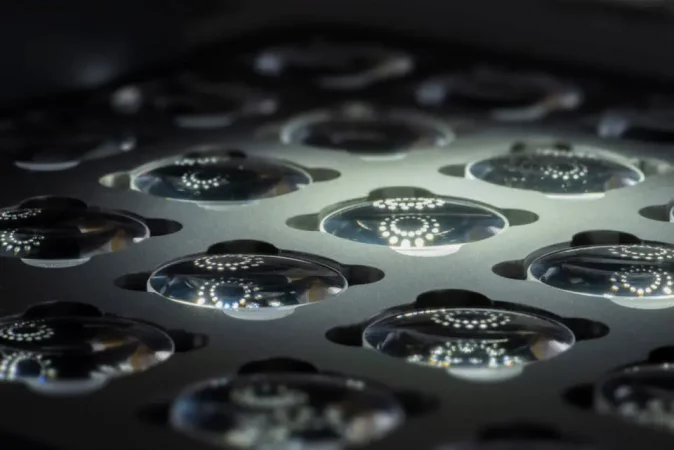 The ARGOS systems are designed to cover a wide range of applications, from micro-optics to wafers up to 12 inches in diameter. Automated serial inspection minimizes user interaction, ensuring consistent inspection workflows and reducing operator influence. Objective defect classification delivers reproducible results down to 1.5 µm, while automatically generated PDF test reports support process documentation and quality audits.
With scalable configurations suitable for both research and development environments and high-volume production lines, the ARGOS matrix provides a future-proof solution for optics manufacturers facing increasing quality demands.
Enabling the Future of Optical Quality Assurance
As optical systems continue to advance, surface quality inspection must evolve in parallel. Automated inspection technologies are no longer just productivity tools—they are enablers of reliability, traceability, and customer trust.
By automating defect detection, improving consistency, and reducing inspection costs, systems like the ARGOS matrix help manufacturers meet today’s quality standards while preparing for tomorrow’s challenges in optical manufacturing.
For more information: www.dioptic.de