3DMakerpro Lowers the Barrier to LiDAR-Based Metrology
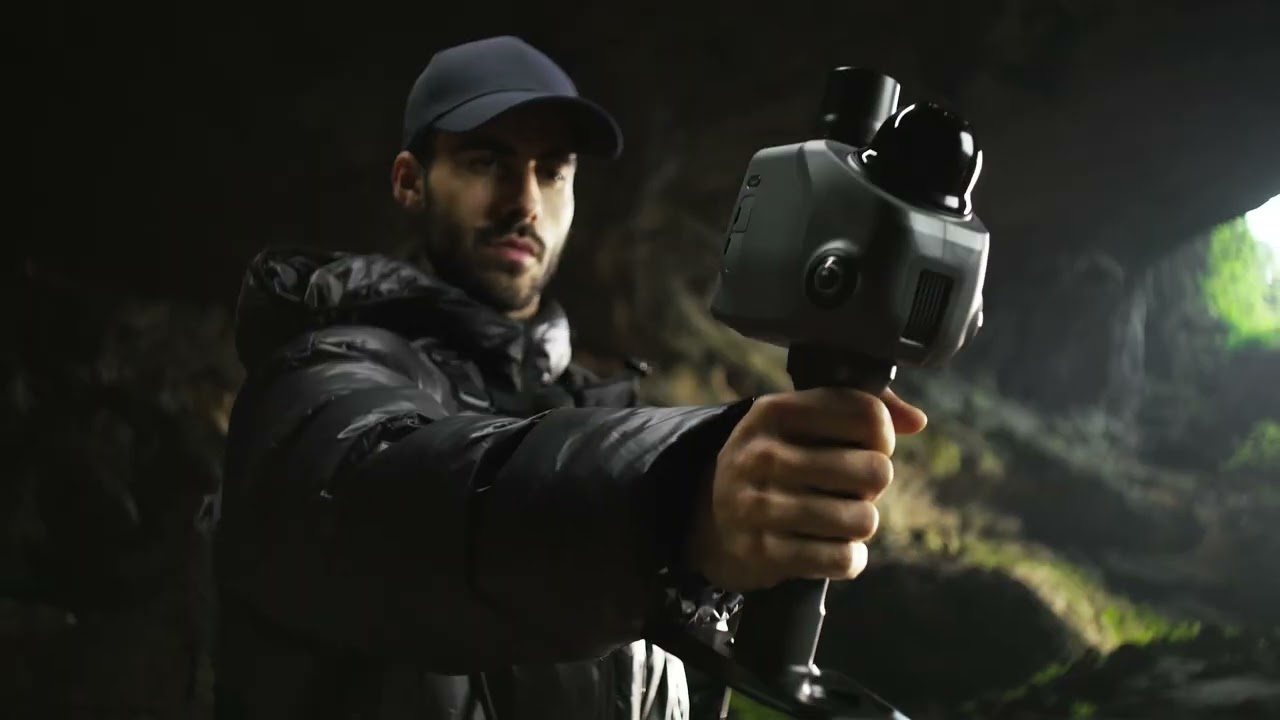
The launch of the Raven LiDAR Scanner from 3DMakerpro marks a notable shift in the accessibility of LiDAR-based spatial measurement, bringing survey-grade capabilities into a more affordable and portable format. Raven opens a new entry point into professional reality capture workflows and has the potential to expand adoption across a wide range of metrology-adjacent industries.
A New Tier in LiDAR Metrology
LiDAR-based 3D scanning systems have traditionally occupied the upper end of the metrology spectrum, both in terms of cost and operational complexity. Raven positions itself as a disruptive alternative to conventional handheld SLAM scanners, which typically cost several times more.
This price shift is significant because it broadens access to spatial data capture. What was once primarily the domain of surveying professionals and large engineering organizations is now becoming viable for small and medium-sized enterprises, construction teams, and even advanced users working in digital content creation. As a result, LiDAR is moving closer to becoming a standard tool rather than a specialist technology.
Compact Design with Practical Capability
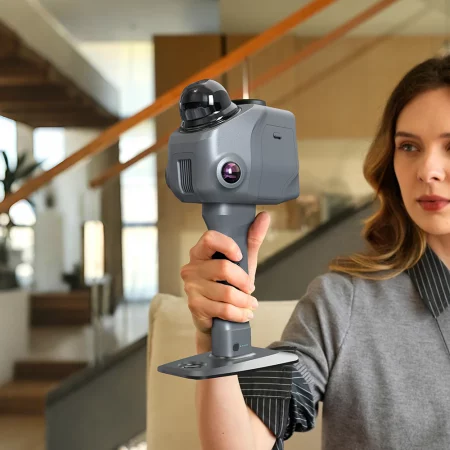 Despite its positioning as an entry-level system, Raven delivers performance that aligns with many real-world metrology applications. The system achieves accuracy of up to 2 cm at a distance of 10 meters and supports a LiDAR detection range of approximately 50 meters. Its ability to capture around 150,000 points per second, combined with a 360-degree horizontal field of view and a 40-degree vertical field of view, enables efficient capture of large environments.
Weighing approximately 1.1 kilograms, the device is designed for portability without sacrificing functionality. It also incorporates a 12-megapixel camera, allowing for the generation of colorized point clouds. Output formats such as PLY point clouds and OBJ meshes ensure compatibility with a wide range of downstream software tools, supporting workflows that extend from inspection to visualization.
While Raven does not aim to compete with high-end metrology systems in terms of absolute precision, its capabilities are well suited to applications such as construction documentation, facility mapping, asset capture, and pre-fabrication verification. In these contexts, the balance between speed, usability, and sufficient accuracy is often more valuable than ultra-high precision.
Designed for Field Efficiency
One of Raven’s most compelling attributes is its focus on operational efficiency in the field. Its compact form factor enables rapid deployment, making it particularly useful for mobile workflows where time and ease of use are critical factors.
The system incorporates features such as hot-swappable batteries, onboard data processing, and real-time visualization. These capabilities reduce reliance on external hardware and streamline the capture-to-processing pipeline. The option to integrate RTK positioning further enhances its utility in applications where geospatial accuracy is required, bridging the gap between traditional surveying tools and modern 3D scanning systems.
Implications for Digital Twins and Spatial Data
The introduction of Raven highlights the ongoing convergence between metrology, reality capture, and digital twin technologies. While traditional coordinate metrology systems remain essential for high-precision inspection, LiDAR-based solutions are expanding the scope of measurement into larger and more complex environments.
Raven’s ability to support modern visualization techniques and real-time data capture underscores a shift toward more integrated and visually driven workflows. In many applications, having immediate access to usable spatial context is becoming just as important as achieving maximum measurement precision.
This evolution is particularly relevant in sectors such as construction, infrastructure, and smart manufacturing, where the ability to quickly capture and interpret spatial data can significantly impact efficiency and decision-making.
Toward More Accessible 3D Capture
Raven is unlikely to replace high-end systems used in precision metrology, such as structured light scanners or laser trackers. However, its true significance lies in enabling “good enough” measurement at scale. This capability is increasingly important in modern industrial environments, where speed, flexibility, and digital integration are key priorities.
By lowering both cost and complexity, Raven contributes to a broader shift toward ubiquitous 3D capture. As spatial data becomes a foundational component of digital workflows, tools like Raven are helping to bridge the gap between specialized metrology equipment and everyday industrial practice.
For more information: www.3dmakerpro.com